Physical Address
304 North Cardinal St.
Dorchester Center, MA 02124
Physical Address
304 North Cardinal St.
Dorchester Center, MA 02124

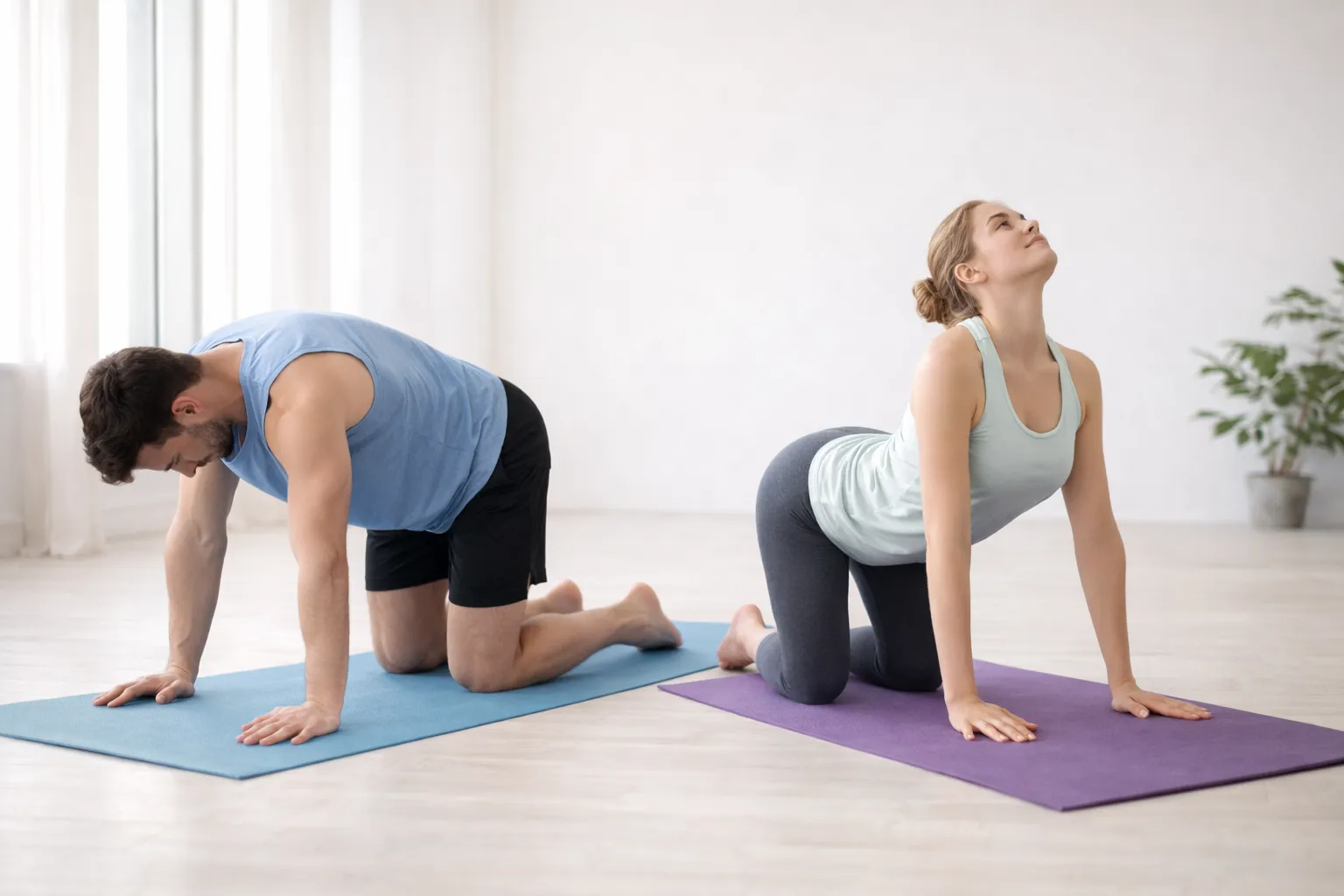
Long periods of sitting and screen use gradually reduce how often the spine moves through its full range. When movement becomes limited, the back can start to feel stiff, compressed, and out of balance. Cat–Cow Stretch (Marjaryasana–Bitilasana) offers a gentle way to reintroduce spinal motion without placing stress on the body.Cat Cow Stretch for beginners is a gentle yoga movement that improves spinal mobility and helps reduce stiffness caused by prolonged sitting. Through slow, breath-guided movement, this yoga sequence supports flexibility, comfort, and everyday spinal health.
The spine is built for motion, yet daily habits often keep it in one position for too long. Sitting, driving, and device use can leave the back feeling tight and restricted. Cat–Cow addresses this by moving the spine gradually, one segment at a time, rather than forcing large or sudden movements.
During Cat Pose (Marjaryasana), the spine moves into flexion as the shoulder blades widen, gently stretching the muscles along the back. In Cow Pose (Bitilasana), the spine shifts into extension, lifting the chest and tilting the pelvis to support natural spinal curves and postural muscles.
Breathing sets the pace for these movements. A steady rhythm helps relax the nervous system, allowing the spine to move more smoothly and comfortably with repeated practice.
Cat–Cow is often introduced early in yoga practice because it focuses on awareness rather than effort. It does not require strength, flexibility, or prior experience, making it suitable for most beginners. The slow pace encourages attention to how the spine feels and moves, helping build confidence and body awareness from the start.
With regular practice, Cat–Cow can contribute to:
Many beginners also find the slow, repetitive rhythm mentally settling, especially when paired with relaxed breathing.
For deeper practice guidance, you can explore Yoga International’s beginner-friendly yoga resources to learn proper alignment and breathing techniques.
👉 Yoga International’s beginner-friendly yoga resources
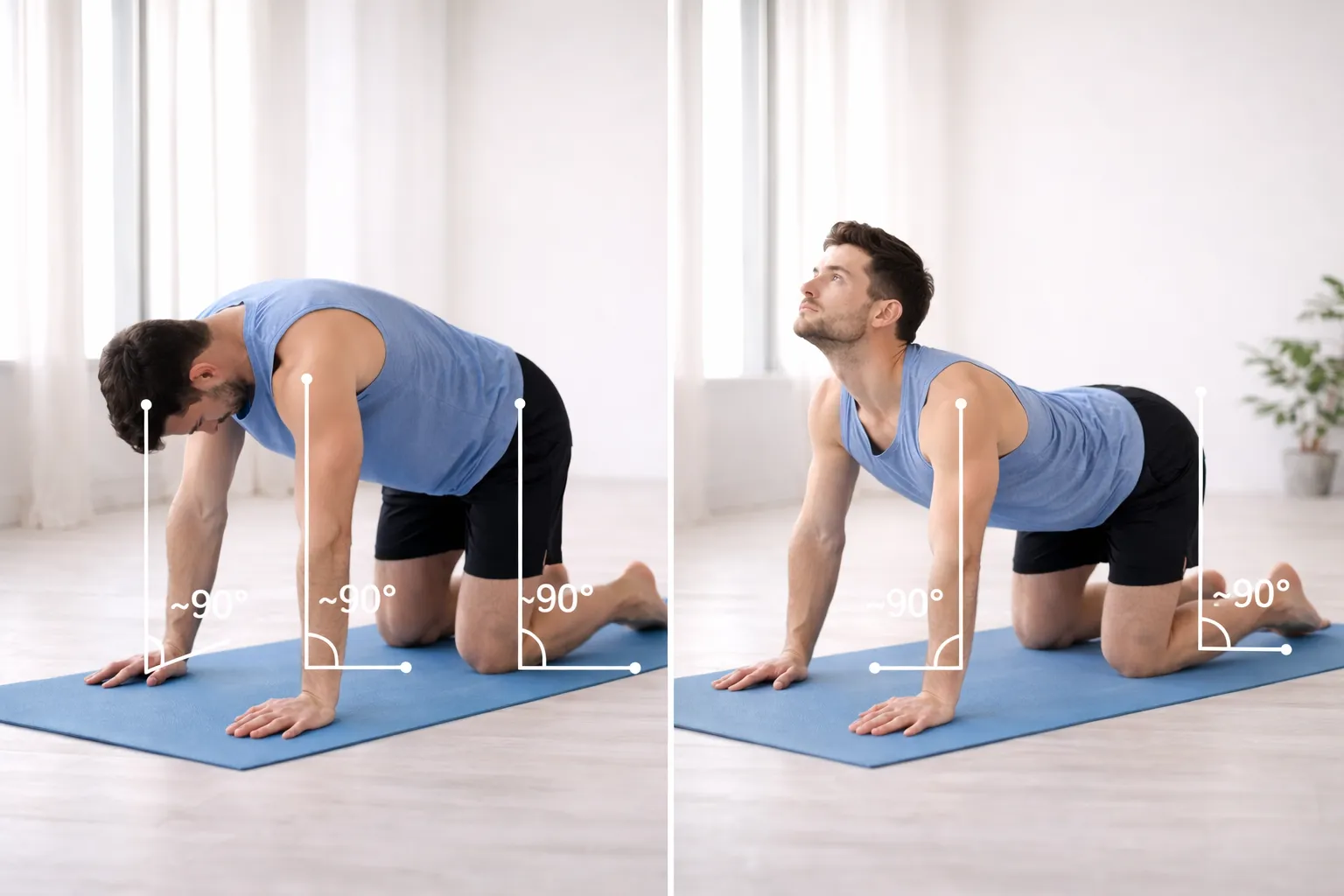
Begin slowly and move only within a comfortable range. Smooth motion is more important than depth.
Start in a hands-and-knees position. Align the hands beneath the shoulders and place the knees under the hips. Let the spine rest in a neutral position, with the head relaxed and eyes facing the floor.
As you breathe in, allow the front of the body to open gently. The chest lifts slightly while the pelvis tilts, creating a soft arch through the spine. Keep the neck relaxed and the gaze neutral.
With the breath out, press lightly into the hands and round the back upward. Let the head follow naturally as the abdomen draws inward, supporting the movement.
Move between these two shapes at a steady pace—inhale to open, exhale to round. Complete 6–10 slow cycles, staying relaxed and pain-free.
Avoid forcing the spine; ease and consistency are what create lasting benefits.
Breathing is what turns Cat–Cow into a mobility practice rather than simple stretching.
A smaller, well-controlled range with calm breathing is far more effective than large, hurried movements.
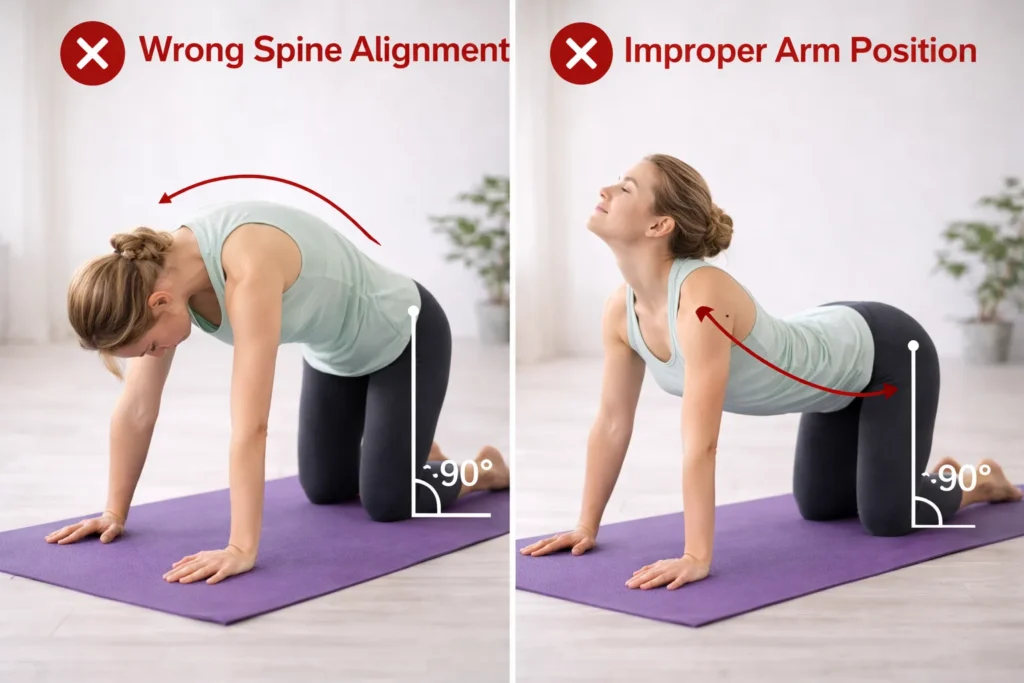
Even in gentle movements, alignment matters.
Keep the shoulders stacked above the hands. If the wrists feel strained, adjust by shifting weight slightly back, using fists or blocks, or practicing on the forearms.
Lengthen the spine before curving it. Avoid collapsing into the lower back during extension or over-rounding a single area during flexion.
Let the head move naturally with the spine. Avoid forcing the gaze up or tucking the chin aggressively.
These adjustments reduce strain and help the movement feel balanced.
Beginners may find Cat–Cow more comfortable with basic yoga props. A non-slip mat supports the hands and knees, while yoga blocks can help reduce wrist strain and improve alignment.
Cat–Cow can fit easily into daily routines:
Even a short daily practice can significantly improve spinal comfort over time.
For those who sit for long hours, Cat–Cow helps counter forward-head posture, reduce lower-back compression, and refresh spinal movement between work sessions. Practicing briefly in the morning or after work can help restore mobility and comfort.
Small, consistent efforts often produce better results than occasional long sessions.
A folded towel or soft knee cushion can be placed under the knees to reduce pressure and improve comfort during Cat–Cow practice, especially for beginners or those with sensitive joints.
This one-week approach builds comfort and consistency without overwhelm.
| Day | What to Practice | Focus for the Day |
| Day 1 | 5 slow rounds | Learn the movement |
| Day 2 | 6 rounds with longer exhales | Release tension |
| Day 3 | 8 steady rounds | Build rhythm |
| Day 4 | 8 rounds + pause in neutral spine | Improve awareness |
| Day 5 | 10 controlled rounds | Increase spinal mobility |
| Day 6 | 8 very slow rounds | Emphasize ease and control |
| Day 7 | Choose 5–10 rounds | Establish a daily habit |
Author Note:
This routine is based on beginner-friendly yoga principles and is intended to support safe, everyday spinal movement. Always move within a comfortable range and consult a professional if you have existing back conditions.
While Cat–Cow is generally safe, practice gently or consult a professional if you have:
Cat–Cow Stretch shows that meaningful progress doesn’t require force or complex movements, especially for beginners. When practiced with steady breathing and regularity, this gentle sequence supports spinal mobility, eases everyday stiffness, and encourages a greater sense of physical ease. By keeping the practice simple, controlled, and consistent, Cat–Cow becomes an easy habit that supports long-term comfort and movement health.Practiced consistently, Cat–Cow becomes less of an exercise and more of a daily reset for the spine.
For beginners, Cat Cow Stretch works best when practiced slowly and consistently with breath awareness.
👉 New to yoga? Start with Understanding Yoga: A Comprehensive Beginner’s Guide to build a safe foundation.
Ans: Slow movement is more effective. Moving gradually with the breath improves control, supports the nervous system, and reduces the risk of strain.
Ans: Yes. After long travel, Cat–Cow helps ease spinal stiffness caused by prolonged sitting. A few slow, breath-led rounds restore gentle movement and release tension in the back and neck without strain.
Ans: Cat–Cow is generally safe for mild back stiffness and tension. However, if you have sharp pain, recent injury, or a medical condition, it’s best to move within a very small range or consult a professional first.
Ans: Most beginners benefit from 5–10 slow rounds. Focus on smooth breathing and controlled movement rather than increasing repetitions too quickly.
Ans: Yes. Cat–Cow is gentle enough for daily practice when done slowly and without force. Regular, mindful movement helps maintain spinal mobility and reduce stiffness over time.
Ans: No prior yoga experience is required. A mat is helpful, but folded towels or blocks can be used for comfort if needed.
Ans: Yes. By improving awareness of spinal movement and alignment, Cat–Cow can support better posture—especially for people who sit for long hours.
View Recommended Products for Practice
Disclosure: Some links in this article are affiliate links. We may earn a small commission from Amazon and other affiliate partners if you make a purchase, at no additional cost to you.
Disclaimer: The information provided on this website is for educational purposes only and should not be considered medical advice. Please consult a qualified professional before starting any new yoga or wellness practice.

Ajay Jaswal is the founder of Fitness Dose Club, where he shares beginner-friendly guides on posture improvement, fitness training, and responsible supplement use. His goal is to make healthy living simple, practical, and safe for everyday people.