Physical Address
304 North Cardinal St.
Dorchester Center, MA 02124
Physical Address
304 North Cardinal St.
Dorchester Center, MA 02124

Health supplements guide helps you understand what supplements are, their types, benefits, risks, and safe usage for better health. Good health depends largely on proper nutrition, yet meeting all nutritional needs through daily meals alone is not always easy. Modern lifestyles often involve irregular eating habits, time constraints, and increasing reliance on processed foods, which can gradually reduce the intake of essential nutrients required for normal body functions.
When the body does not receive adequate vitamins, minerals, or other vital nutrients over time, it may begin to affect energy levels, physical performance, immune strength, and overall well-being. This is where dietary supplements are commonly used as supportive nutritional aids.
Health supplements are specially formulated products designed to provide concentrated nutrients that may be lacking in regular diets. They are intended to complement healthy eating patterns rather than replace natural food sources.
Understanding the role of supplements, their appropriate use, and the situations in which they may be beneficial helps individuals make responsible and informed decisions about their health. This health supplements guide helps beginners understand types, benefits, risks, and safe usage tips.
| What health supplements are | The different types of supplements available |
| Why people use supplements | Their potential benefits and possible risks |
| Who may benefit from taking them | How to choose supplements safely and responsibly |
Health supplements are products designed to provide additional nutrients to the body. They are not medicines, but supportive nutritional products that help fill gaps when the body does not receive enough nutrients from daily food.
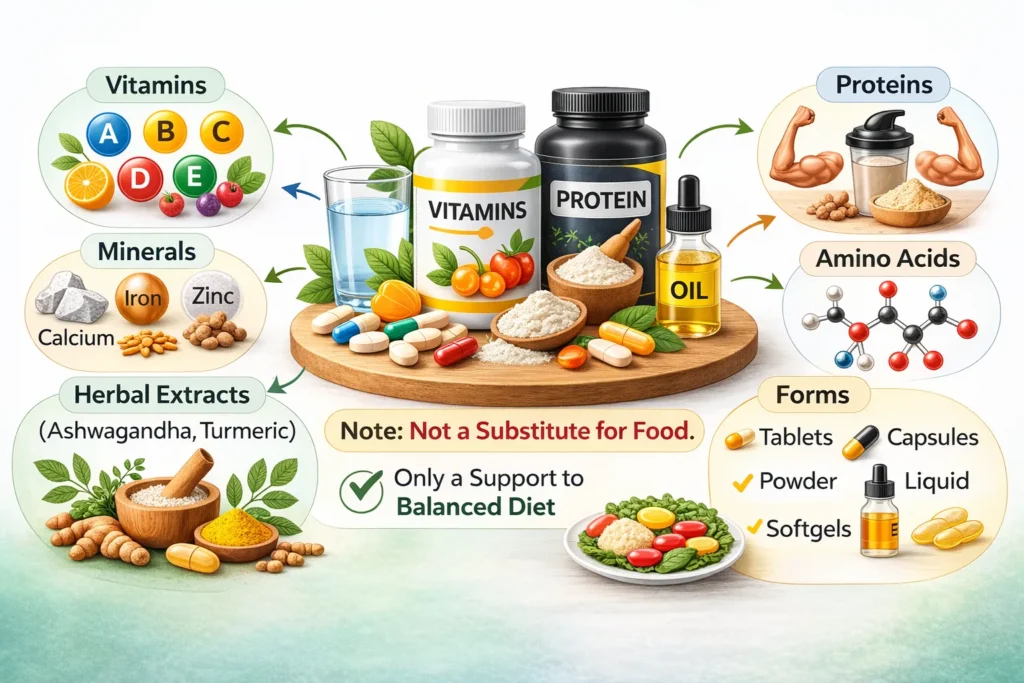
Different Forms of Supplements
| Tablets | Powders |
| Capsules | Liquids |
| Soft gels |
| Vitamins (such as A, B, C, D, and E) | Minerals (such as calcium, iron, and zinc) |
| Proteins | Amino acids |
| Herbal ingredients (such as ashwagandha and turmeric) |
Each individual may have different reasons for using supplements, but they are commonly taken for the following purposes:
Some people take supplements when they experience low energy levels or general fatigue.
Individuals who exercise regularly or go to the gym often use protein supplements to support muscle growth and recovery.
Certain vitamins and minerals help support the body’s immune system.
Sometimes daily meals do not provide all the essential nutrients the body requires.
As people grow older, they may require additional nutrients to support bone health and overall well-being.
Supplements are not necessary for everyone. They should be taken based on individual needs and preferably with professional guidance.
People involved in regular exercise, sports, or intense physical activity may require additional nutrients to support performance and recovery.
Individuals who are unable to maintain a balanced diet may consider supplements to support their nutritional intake.
With increasing age, extra nutrients may be needed to support bone health and immune function.
Those who have been diagnosed with specific nutrient deficiencies through medical tests may require targeted supplementation.
Supplements should be taken only under the supervision and advice of a qualified healthcare professional.
Caution: Taking supplements without expert advice is not recommended.
Vitamin supplements are commonly used to support the body’s daily functions when regular food intake does not provide sufficient nutrients. These micronutrients play an important role in maintaining overall health, energy levels, and immune strength.
Vitamin D3, B-Complex, Vitamin C
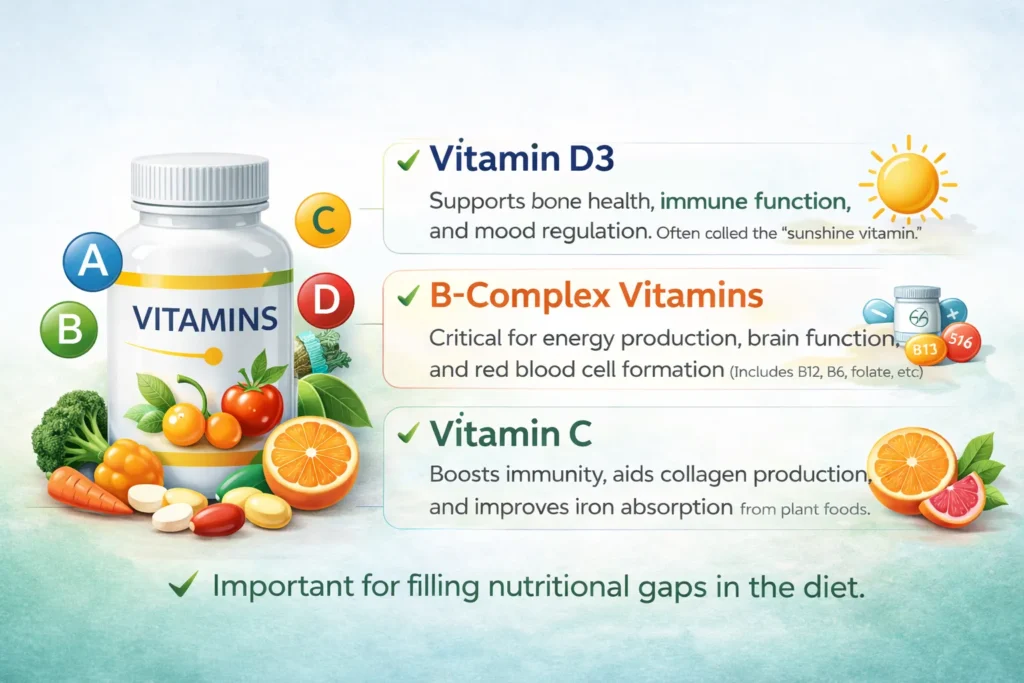
Vitamin D3
Often known as the “sunshine vitamin,” Vitamin D3 helps maintain strong bones, supports immune health, and contributes to mood balance. Many people may have low levels due to limited sun exposure.
B-Complex Vitamins
This group of vitamins, including B12, B6, and folate, is essential for energy production, brain function, and healthy red blood cell formation. Vitamin B12 is especially important for individuals following vegetarian or vegan diets.
Vitamin C
Vitamin C is a powerful antioxidant that helps support the immune system, aids in collagen production for healthy skin and joints, and improves iron absorption from plant-based foods.
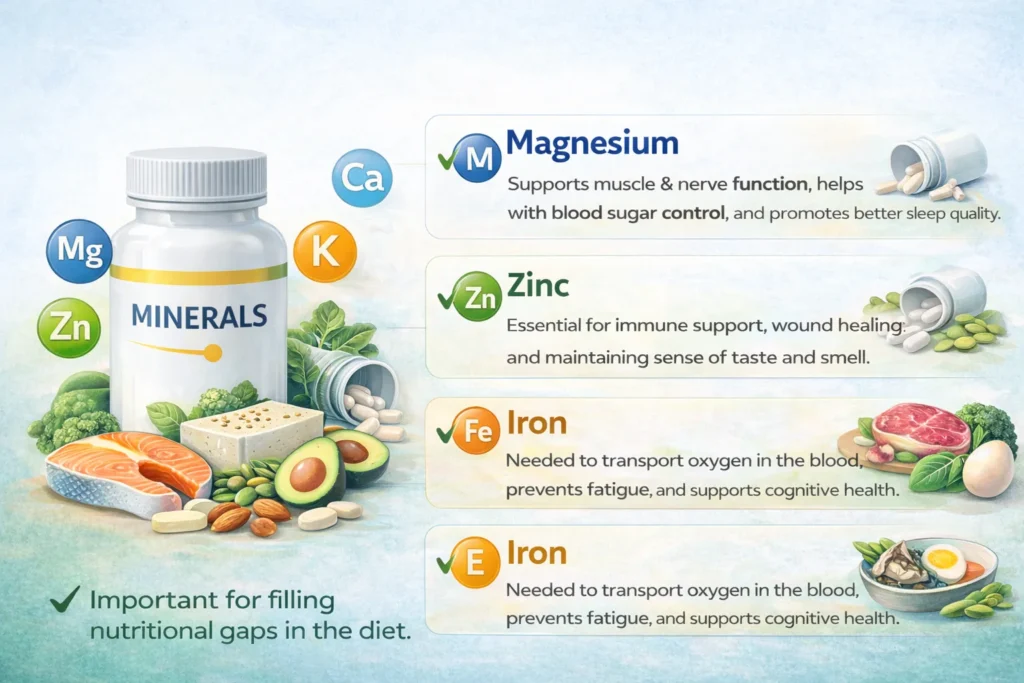
Mineral supplements help support various essential processes in the body, including bone strength, nerve function, and blood health. Deficiencies may occur due to dietary imbalance or lifestyle factors.
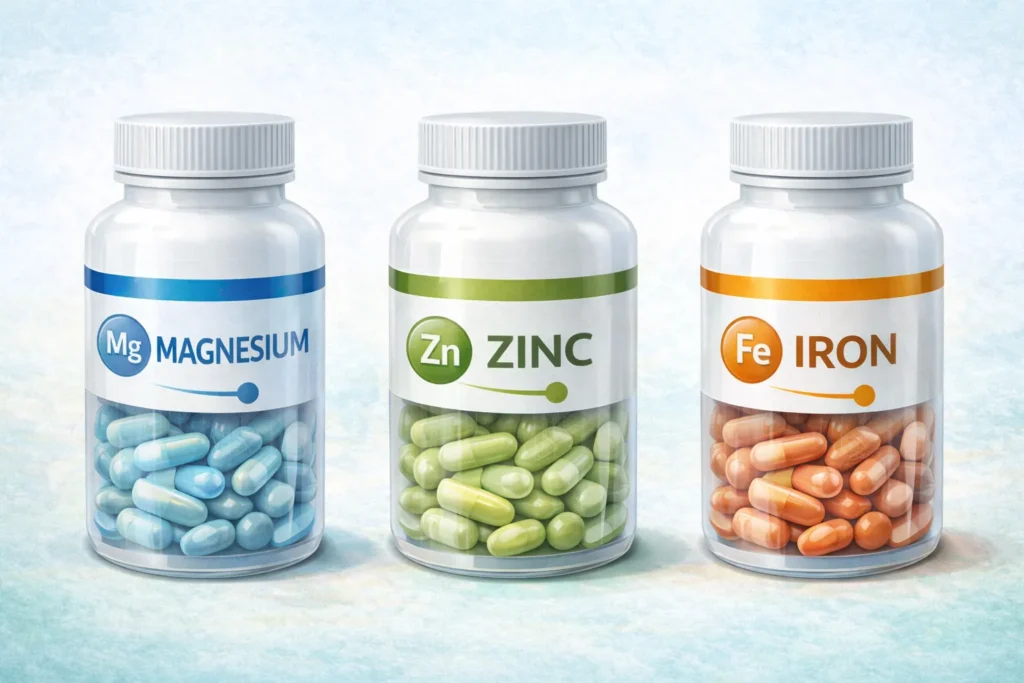
Magnesium
Magnesium supports muscle and nerve function, helps regulate blood sugar levels, and plays a role in sleep quality. It is involved in hundreds of biochemical reactions within the body.
Zinc
Zinc is important for immune function, wound healing, and cell growth. It also supports the senses of taste and smell.
Iron
Iron is necessary for transporting oxygen in the blood. Low iron levels may cause fatigue and weakness. Iron supplements should only be taken after proper medical advice and confirmed deficiency.
Essential Vitamin Supplements
Protein supplements are commonly used to support muscle repair, growth, and overall recovery. They are especially beneficial for individuals who engage in regular exercise, strength training, sports activities, or those who are unable to meet their daily protein requirements through food alone.
Whey Protein
Whey protein is one of the most popular and fast-digesting protein sources. It is commonly used after workouts to support muscle recovery and growth.
Casein Protein
Casein is a slow-digesting protein that provides a steady release of amino acids. It is often taken at night to support muscle repair during sleep.
Plant-Based Protein
Plant proteins such as pea protein, soy protein, and brown rice protein are suitable options for vegetarians, vegans, or individuals with lactose intolerance.
Protein Blends
These combine different protein sources to provide both fast and slow digestion benefits.
Important Note: Protein supplements should complement a balanced diet and not replace whole food sources like pulses, dairy, eggs, nuts, and seeds.
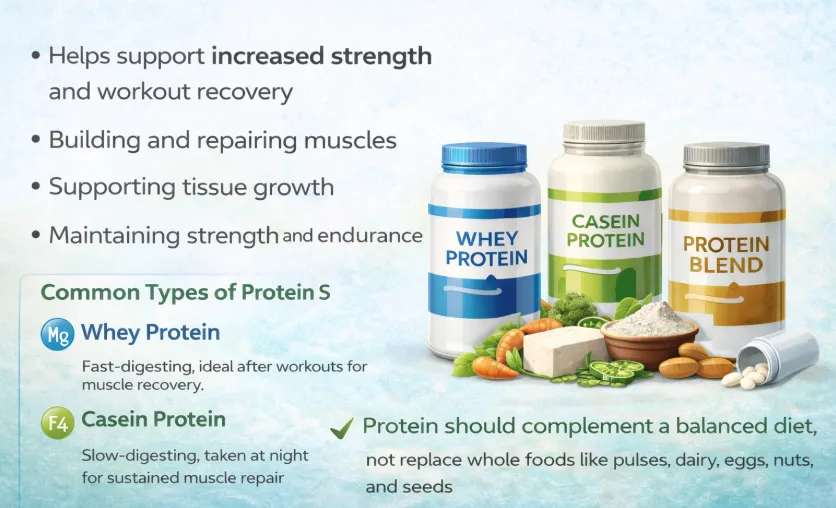
Protein supplements types for muscle growth
whey protein powder jar
You can also read our complete Health Supplements Guide to understand how supplements support muscle recovery.
Herbal supplements are made from natural plant-based ingredients and are commonly used to support overall wellness and traditional health practices. These supplements are often derived from roots, leaves, seeds, or extracts of medicinal plants.
They are typically used to support:
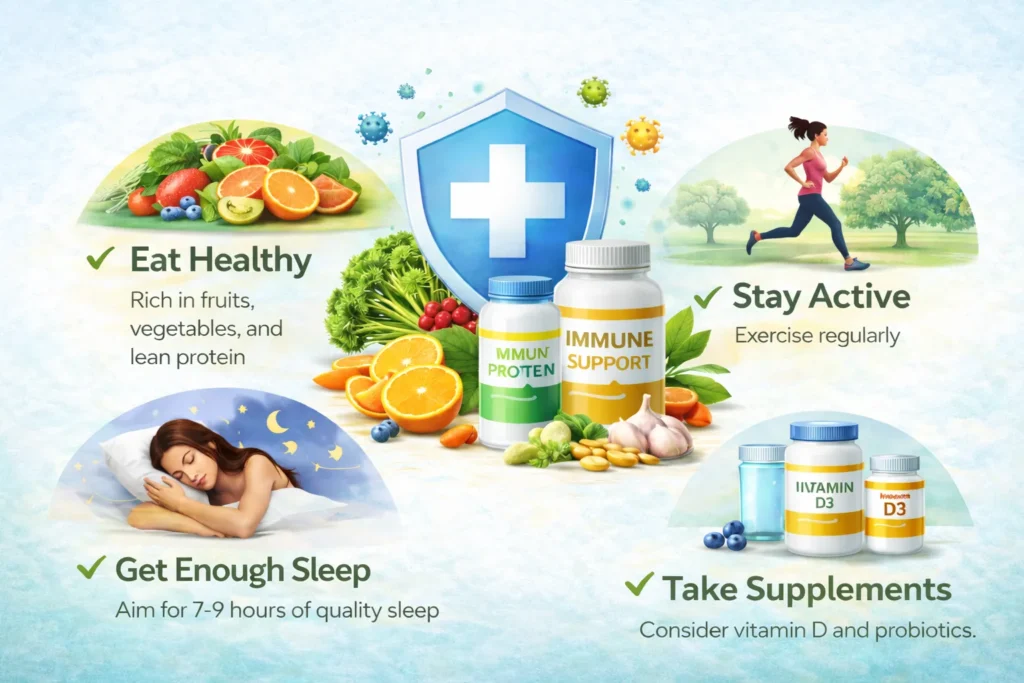
Important Note: Even though herbal supplements are plant-based, they can still interact with medications. It is advisable to consult a healthcare professional before regular use.
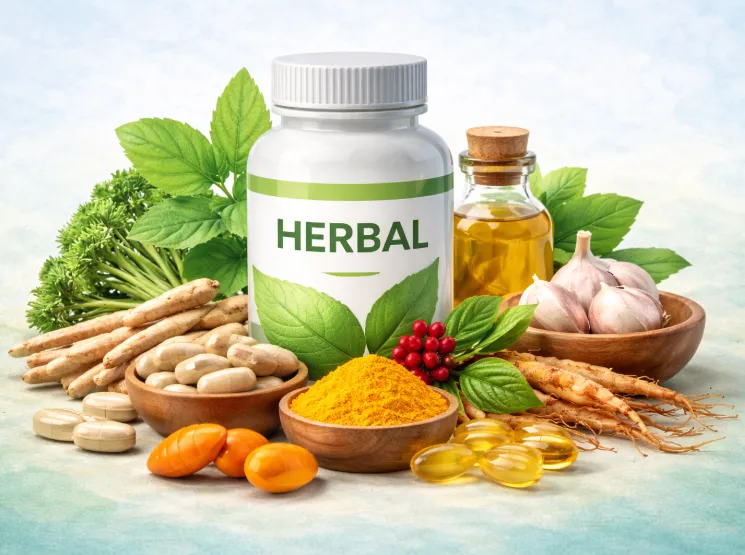
Ashwagandha
Often used to support stress management and overall vitality.
Turmeric (Curcumin)
Known for its antioxidant properties and support for joint health.
Ginseng
Commonly used to help maintain energy levels and mental focus.
Garlic Extract
Traditionally used to support heart health.
Specialty supplements are designed to support specific health needs or targeted body functions. These are usually concentrated forms of particular nutrients or compounds.
They may support:
Omega-3 Fatty Acids
Commonly derived from fish oil or plant sources, Omega-3 supports heart and brain health.
Probiotics
These are beneficial bacteria that help maintain gut balance and digestive health.
Collagen
Often used to support skin elasticity and joint health.
Glucosamine
Commonly taken to support joint comfort and mobility.
Important Note: Specialty supplements should be selected based on individual health needs and professional guidance.
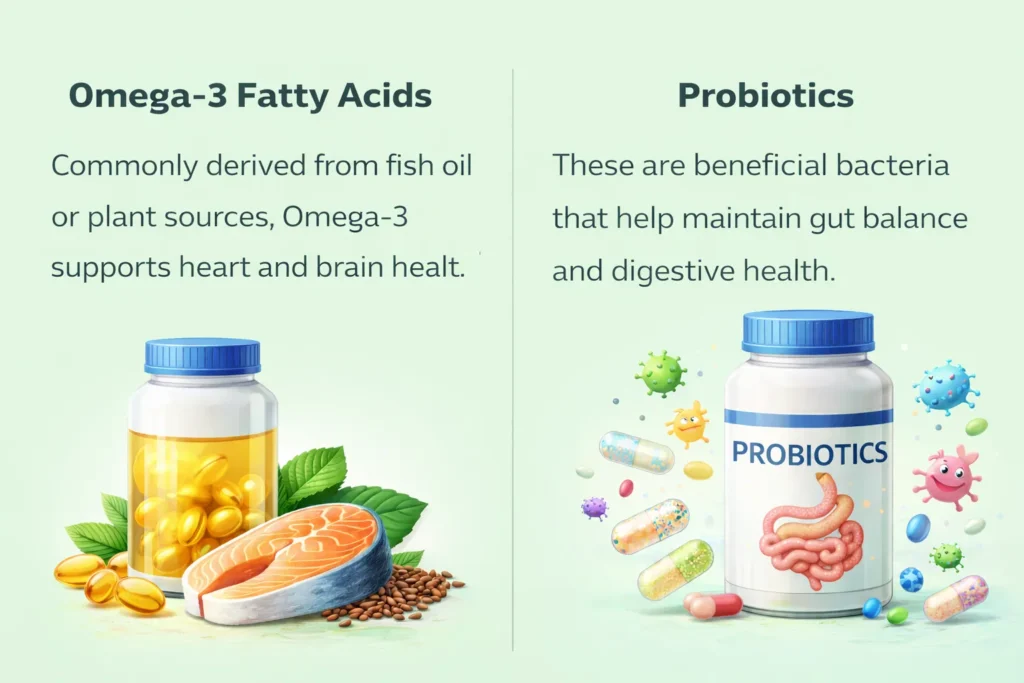
Omega-3 and probiotics help support overall health and body functions.
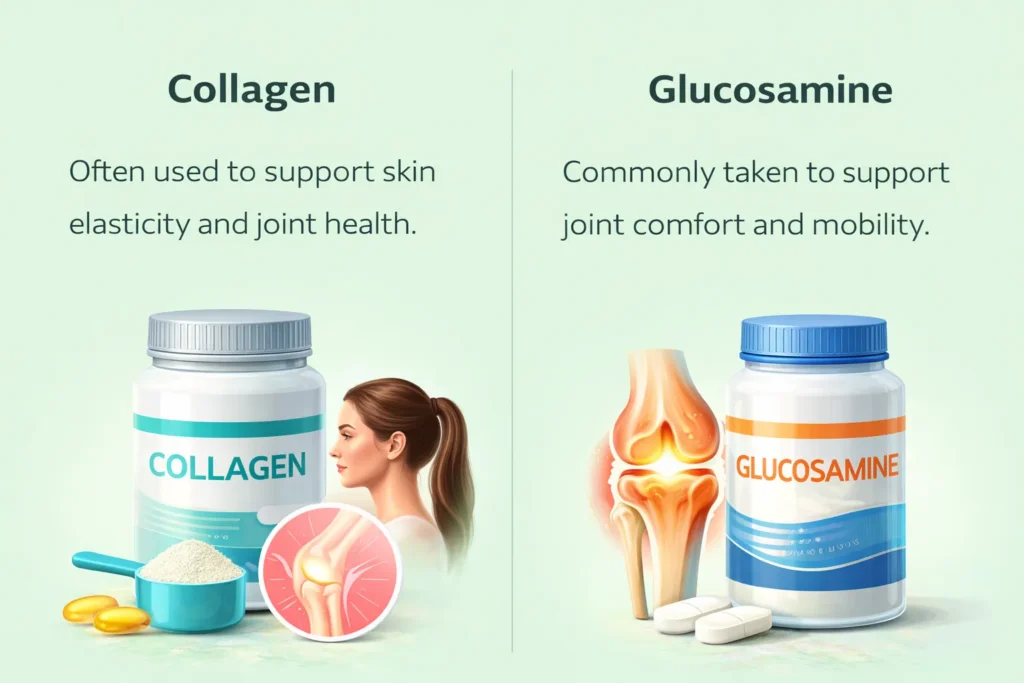
Specialty Health Supplements
The best nutrition always comes from natural foods such as:
Supplements should only be used when there is a specific need and not as a replacement for a healthy diet.
Along with a healthy diet, natural wellness practices like yoga can greatly improve overall health. You can also read our complete Yoga Benefits Guide to understand how yoga supports physical and mental well-being.
According to the World Health Organization (WHO), balanced nutrition is essential for overall health.
To make a safe and informed choice, keep the following points in mind:
You can also read our guide on healthy diet and fitness tips for overall wellness.
When used properly, supplements can be helpful in several ways:
Excessive or incorrect use of supplements may lead to certain problems, such as:
Therefore, it is important to follow the recommended dosage and use supplements responsibly.
No.
Health supplements do not cure diseases. They only provide nutritional support and help maintain overall health when used appropriately.
Every individual has different nutritional needs and health conditions.
It is especially important to seek professional guidance if:
In such situations, consulting a qualified healthcare professional before taking supplements is essential.
If you are new to using supplements, consider the following steps:
Health supplements can be helpful in supporting the body, but they are not a substitute for a healthy lifestyle.
Good health primarily depends on:
Supplements should only play a supportive role in maintaining overall well-being.
This complete health supplements guide can help you make safe and informed choices.
No, supplements are not necessary for everyone. Most people can meet their nutritional needs through a balanced diet. Supplements may be helpful only when there is a specific deficiency or increased requirement.
No. Supplements are designed to support a healthy diet, not replace natural food sources like fruits, vegetables, grains, and proteins.
Some supplements may be taken daily if recommended and used in the correct dosage. However, long-term use should ideally be guided by a healthcare professional.
A blood test or medical evaluation can help determine whether you have a nutrient deficiency. It is best to consult a healthcare professional before starting any supplement.
Yes, improper use or excessive intake may cause side effects such as stomach discomfort, nausea, headaches, or allergic reactions. Always follow the recommended dosage.
The timing depends on the type of supplement. Some are better taken with meals, while others may be taken on an empty stomach. Always read the label instructions.
Not necessarily. Even plant-based supplements can interact with medications or cause side effects. Professional guidance is recommended.
Disclaimer: This article is for educational purposes only and should not be considered medical advice. Always consult a qualified healthcare professional before starting any supplement.
Disclosure: Some links on this page may be affiliate links, which means we may earn a small commission at no extra cost to you.
Health Note: Supplements are not a substitute for a balanced diet and healthy lifestyle.
Information Accuracy: We strive to provide accurate and updated information based on research and reliable sources.