Physical Address
304 North Cardinal St.
Dorchester Center, MA 02124
Physical Address
304 North Cardinal St.
Dorchester Center, MA 02124

The term Paschimottanasana (पश्चिमोत्तानासन) is derived from Sanskrit, where paschima refers to the back side of the body, uttana means an intense stretch, and asana denotes a posture. In yogic understanding, the “back” represents the entire posterior chain from the heels and calves to the spine and the crown of the head.
This seated forward bend gently works through this often overlooked pathway, helping release stored tension while inviting stillness into both body and mind. When practiced with steady breathing and mindful awareness, Paschimottanasana not only improves flexibility and digestive comfort but also cultivates deep calm and inner balance.
Paschima = back side of the body | Uttana = intense stretch | Asana = posture
This pose is commonly practiced in Hatha Yoga, Ashtanga Yoga, and therapeutic yoga routines.
● Sit on the mat with legs extended straight in front of you
(Knee angle: 170°–180°, knees straight but not locked)
● Keep the spine tall and shoulders relaxed
(Spine upright angle: ~90° before folding)
● Inhale and raise both arms overhead
(Shoulders flexed: ~170°–180°)
● Exhale, hinge forward from the hips, and fold gently
(Hip flexion angle: 70°–110° | Movement from hips, not lower back)
● Hold the toes, ankles, or shins comfortably
(Spine-to-legs angle: 45°–90°, based on flexibility)
● Keep the neck relaxed and breathe deeply.
(Neck angle: Neutral, 0° – avoid strain)
● Hold the pose for 20–60 seconds, then release slowly.
(Ankle angle: 90°–100°, toes pointing upward)
Angles are approximate and may vary according to body flexibility, age, and experience level.
Explore more foundational postures in our Yoga General Guide to deepen your overall yoga practice.
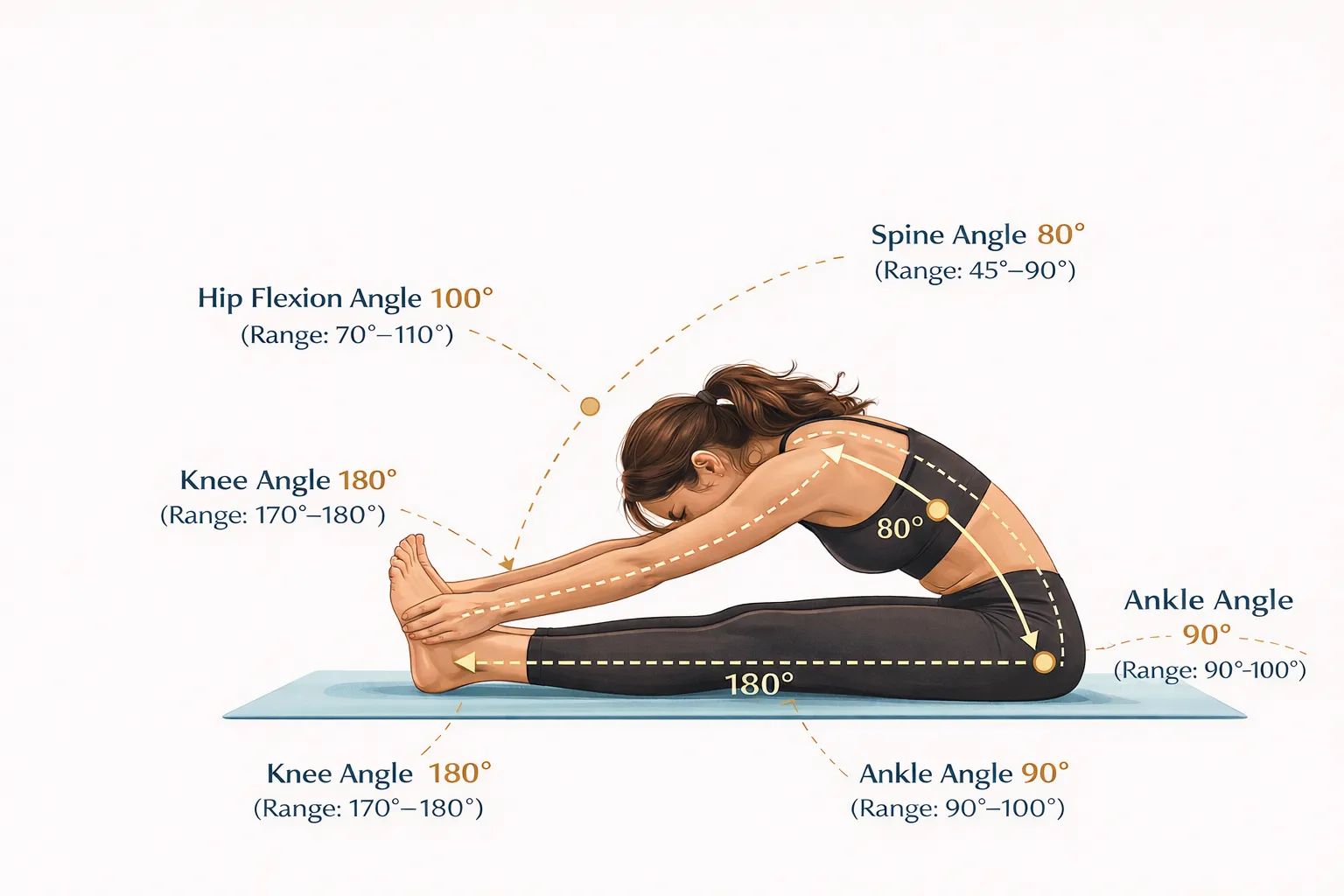
Seated Forward Bend – Anatomical Alignment
Paschimottanasana Practice Angles
Gently stretches the entire back body, improving overall mobility
Forward bends activate the parasympathetic nervous system, promoting relaxation
Massages abdominal organs and helps improve digestion
Encourages better spinal alignment and body awareness
Promotes mental clarity and a sense of calm
Elongates the spine and eases tension in the lower back
Helps relax pelvic muscles when practiced gently
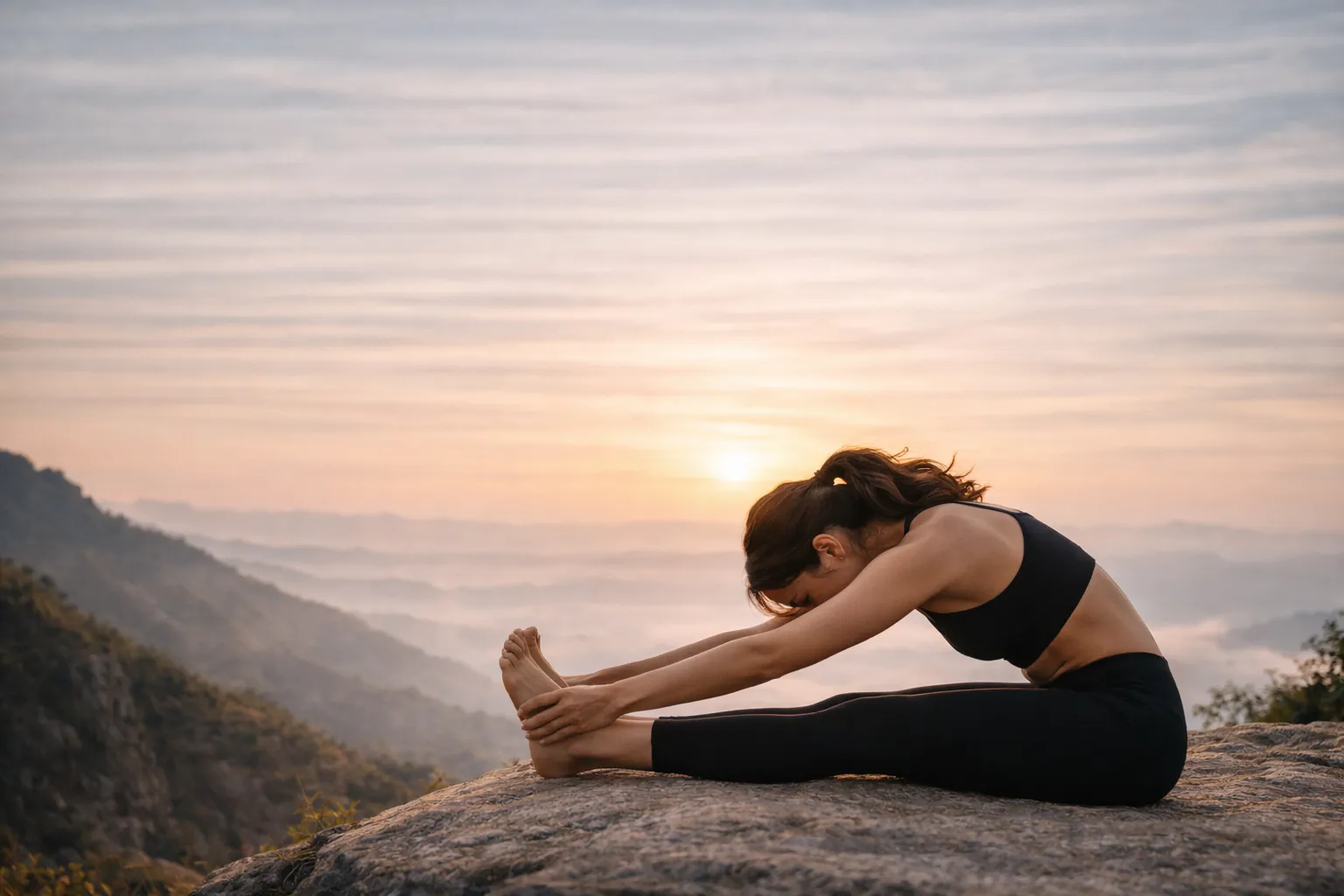
Paschimottanasana (Seated Forward Bend) Practice
While Paschimottanasana appears simple, incorrect alignment or excessive effort can reduce its benefits and increase the risk of discomfort or injury. Being mindful of posture, breath, and body limitations is essential. Practicing the pose with patience and awareness helps ensure a safe, effective, and relaxing experience, and beginners or individuals with physical concerns are advised to learn and practice it under the guidance of a qualified yoga professional.
Key errors beginners should watch out for
● Rounding the lower back
● Forcing the stretch
● Holding breath
● Locking the knees
Paschimottanasana should be practiced with caution, especially by individuals with existing medical conditions or physical limitations. Performing the pose without proper modifications may aggravate injuries or cause discomfort. Listening to the body and avoiding forceful movements is essential for safe practice.
Avoid or modify this pose if you have:
● Slip disc or severe back injury
● Hamstring tear
● Pregnancy (without expert guidance)
● Early morning on an empty stomach
● Or evening, 4–5 hours after meals
A gentle back-bending posture that supports spinal flexibility and relaxation.
👉 Read the complete Setu Bandhasana guide
If you’re over 40 and want to improve posture, flexibility, and overall fitness safely, this program is designed for you.
👉 View Fitness After 40 Program
Paschimottanasana is a powerful yet calming yoga posture that benefits both body and mind. When practiced regularly with proper technique and mindful breathing, it enhances flexibility, supports digestion, and promotes deep relaxation.
Q: Can Paschimottanasana be practiced daily?
Ans: Yes, Paschimottanasana can be practiced daily if done correctly. Regular practice improves flexibility, digestion, and mental calmness.
Q: Is Paschimottanasana suitable for beginners?
Ans: Yes, beginners can practice this pose by slightly bending the knees or using a yoga strap to maintain proper alignment.
Q: How should breathing be done during Paschimottanasana?
Ans: Exhale while bending forward and maintain slow, deep breathing while holding the pose. Avoid holding the breath.
Q: Is Paschimottanasana good for digestion?
Ans: Yes, this asana gently massages the abdominal organs and supports healthy digestion when practiced on an empty stomach.
Q: How long should Paschimottanasana be held?
Ans: Beginners can hold the pose for 20–30 seconds. With regular practice, it can be increased to 1–2 minutes without strain.
View Recommended Products for Practice
Disclosure: This page may contain affiliate links. If you choose to purchase or enroll through these links, we may earn a small commission at no extra cost to you.
Disclaimer: The information provided on this website is for educational purposes only and should not be considered medical advice. Please consult a qualified professional before starting any new yoga or wellness practice.

Ajay Jaswal is the founder of Fitness Dose Club, where he shares beginner-friendly guides on posture improvement, fitness training, and responsible supplement use. His goal is to make healthy living simple, practical, and safe for everyday people.