Physical Address
304 North Cardinal St.
Dorchester Center, MA 02124
Physical Address
304 North Cardinal St.
Dorchester Center, MA 02124

Most people do not realize how much time they actually spend sitting each day. From working at a desk to using a phone or watching videos, sitting has quietly become a major part of modern life. Because of this, posture problems have become extremely common.
Posture rarely becomes poor overnight. It changes slowly. At first, the shoulders begin to lean forward. Then the back loses its natural curve. Eventually, discomfort appears in the form of stiffness, tired muscles, and constant tightness around the neck and lower back.
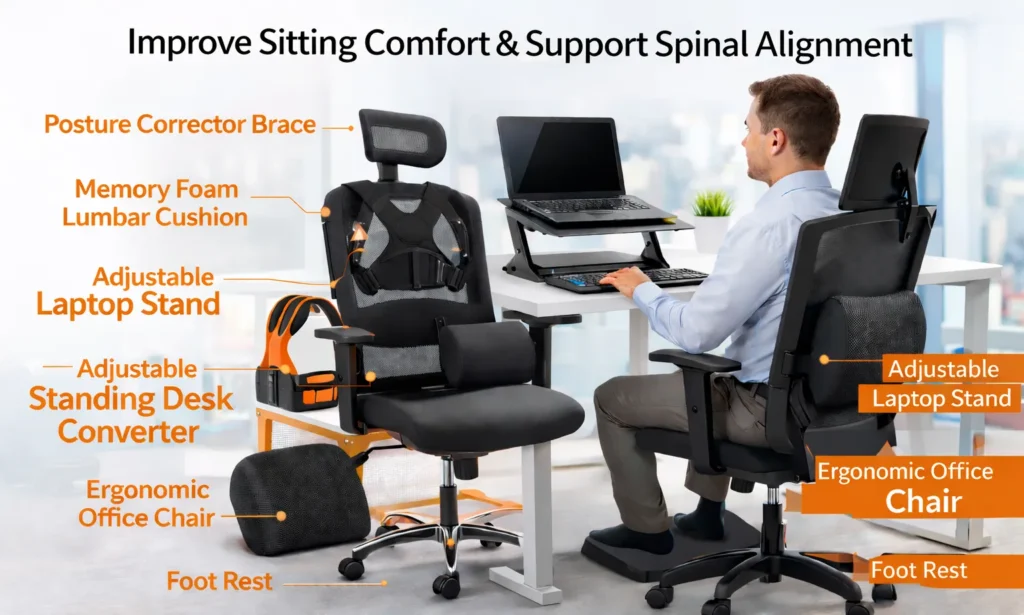
Different posture tools serve different purposes. Some help with alignment, while others reduce strain caused by long sitting. Below are carefully selected posture tools that help improve sitting comfort and support proper spinal alignment.
| Top-Rated Posture Tools for Global & USA Users | Posture Support Tools for India (₹) |
|---|---|
| Posture Corrector Brace – View on Amazon (Provides back support and posture correction) | Posture Corrector Belt – View on Amazon (Helps align shoulders and prevents slouching) |
| Ergonomic Mesh Chair – View on Amazon (Offers adjustable lumbar and neck support) | Ergonomic Office Chair – View on Amazon (Supports lower back and improves sitting comfort) |
| Memory Foam Lumbar Pillow – View on Amazon (Reduces back pressure during long sitting hours) | Lumbar Support Cushion – View on Amazon (Maintains natural lower-back curve) |
| Adjustable Standing Desk – View on Amazon (Reduces continuous sitting pressure) | Standing Desk Converter – View on Amazon (Helps alternate between sitting and standing) |
| Ergonomic Foot Rest – View on Amazon (Reduces strain on lower back) | Foot Rest Support – View on Amazon (Improves leg positioning and posture) |
| Adjustable Monitor Stand – View on Amazon (Keeps screen at eye level) | Laptop Stand – View on Amazon (Prevents neck bending and improves posture) |
Tip: Choose a posture tool based on your daily sitting time and workspace setup.
Common examples include:
Using a combination of these tools often produces the best results.
This is where posture support tools become useful. They do not force the body into position but instead provide gentle support that makes proper alignment easier to maintain.
Some tools focus on awareness. For example, shoulder support straps gently guide the upper body backward. Their biggest benefit is that they help users notice when they start slouching. Over time, this awareness alone can gradually improve posture habits.
Other tools provide physical support by helping distribute body weight evenly and reducing pressure on the spine. This can make long sitting periods significantly more comfortable.
Many people try to correct posture simply by reminding themselves to sit straight. However, the body naturally returns to its most comfortable position, even if that position is unhealthy. Long sitting hours, lack of movement, and improper workstation setup are some of the biggest reasons posture issues continue to increase.
Modern lifestyles make it easy to ignore body alignment. Over time, this leads to muscle imbalance and strain on the spine.
Sitting continuously for long hours is one of the biggest causes of posture problems. A standing desk helps solve this issue by allowing users to alternate between sitting and standing positions.
Standing while working reduces pressure on the spine, improves blood circulation, and prevents muscle stiffness. It also encourages movement throughout the day.
Height-adjustable standing desks are especially useful because they allow you to switch positions easily based on comfort.
This tool is highly recommended for people who work long hours at a desk.
While posture tools provide support, daily habits play an equally important role.
Some simple habits that help include:
Combining these habits with posture tools helps improve results more quickly.
Posture Tools
Posture improvement is not something that happens instantly. It is a gradual process that requires consistent awareness and supportive environments.
Using posture tools can help reduce strain, improve alignment, and make daily activities more comfortable. Small adjustments in sitting setup often create significant long-term benefits for spinal health and overall well-being.
Q: What are posture tools used for?
Posture tools help maintain proper body alignment during sitting, standing, or working. They reduce strain on muscles and support the natural curve of the spine, making daily activities more comfortable.
Q: Do posture corrector belts really help?
Yes, posture corrector belts can help improve awareness of body alignment. They gently guide the shoulders backward, which helps reduce slouching habits over time when used properly.
Q: Which posture tool is best for long sitting hours?
Ergonomic chairs and lumbar support cushions are considered the most effective tools for long sitting hours because they provide continuous support to the lower back and spine.
Q: Can posture tools permanently fix posture problems?
Posture tools do not permanently fix posture on their own. They work best when combined with healthy habits such as regular stretching, proper desk setup, and frequent movement breaks.
Q: Is it safe to use posture tools every day?
Yes, most posture tools are safe for daily use. However, they should be used in moderation and not relied on continuously, as natural muscle strength and posture awareness are equally important.
Q;’ Do standing desks help improve posture?
Standing desks can help reduce prolonged sitting and relieve pressure on the spine. Alternating between sitting and standing helps maintain better overall posture.
Q: How long does it take to see posture improvement?
Posture improvement varies for each person, but with consistent use of posture tools and healthy habits, noticeable changes can usually be seen within a few weeks.
Regular stretching and yoga practice can significantly improve posture over time. Using proper yoga tools can make these exercises more effective.
👉Best Yoga Tools for Beginners
If you’re over 40 and want to improve posture, flexibility, and overall fitness safely, this program is designed for you.
👉 View Fitness After 40 Program
Affiliate Disclosure: This article may contain affiliate links. If you purchase through these links, we may earn a small commission at no extra cost to you. This helps support our website and allows us to continue providing helpful content. We only recommend products that we believe are helpful for improving posture and sitting comfort.
Health Disclaimer: The information provided in this article is for educational purposes only and is not intended as medical advice. Always consult a healthcare professional before using any posture support tools, especially if you have existing medical conditions or chronic pain.
General Disclaimer: While we strive to provide accurate and up-to-date information, we do not guarantee the completeness or reliability of any product details mentioned. Readers are encouraged to conduct their own research before making purchasing decisions.