Physical Address
304 North Cardinal St.
Dorchester Center, MA 02124
Physical Address
304 North Cardinal St.
Dorchester Center, MA 02124

At first glance, Shavasana (शवासन) looks like the least demanding pose in yoga. There is no visible effort, no movement, and nothing to “perform.” That is exactly why many people underestimate it.
What actually happens in Shavasana is a controlled pause. The body stops moving, but awareness stays on. Muscles release their grip, breathing settles on its own, and the nervous system begins to recognize that it does not need to stay on high alert. With practice, this teaches the body how to rest without completely switching off.
Stress is rarely caused by physical activity alone. More often, it comes from constant internal pressure, thinking, planning, reacting, and staying mentally “on” for too long. Even during rest, the body often stays guarded.
Shavasana breaks this habit.
When movement stops and sensory input drops, the body receives a simple signal: nothing is required right now. Breathing naturally slows, muscles soften without effort, and the nervous system begins to settle on its own terms rather than being pushed into relaxation.
For this reason, Shavasana is commonly used to support recovery from mental overload, emotional fatigue, and long periods of tension.
According to yoga research and traditional practice, Shavasana plays a key role in nervous system recovery.
Shavasana does not work like a quick fix. Its effects build quietly over time. While a single session may feel calming, the real change shows up in how easily the body returns to balance during daily life.
Physical Benefits
Mental Health Benefits of Shavasana (Corpse Pose)
Many people looking for “yoga for body relaxation” or “how to release tension naturally” benefit greatly from consistent Shavasana practice.
Mental and Emotional Benefits
Over time, Shavasana helps you notice stress earlier and respond more calmly instead of reacting automatically. Shavasana (Corpse Pose) is one of the most effective yoga poses for deep relaxation.
Shavasana is suitable for almost everyone, regardless of age or fitness level.
It is especially helpful for:
Because it places very little physical demand on the body, Shavasana is often recommended as a starting point for relaxation practices.
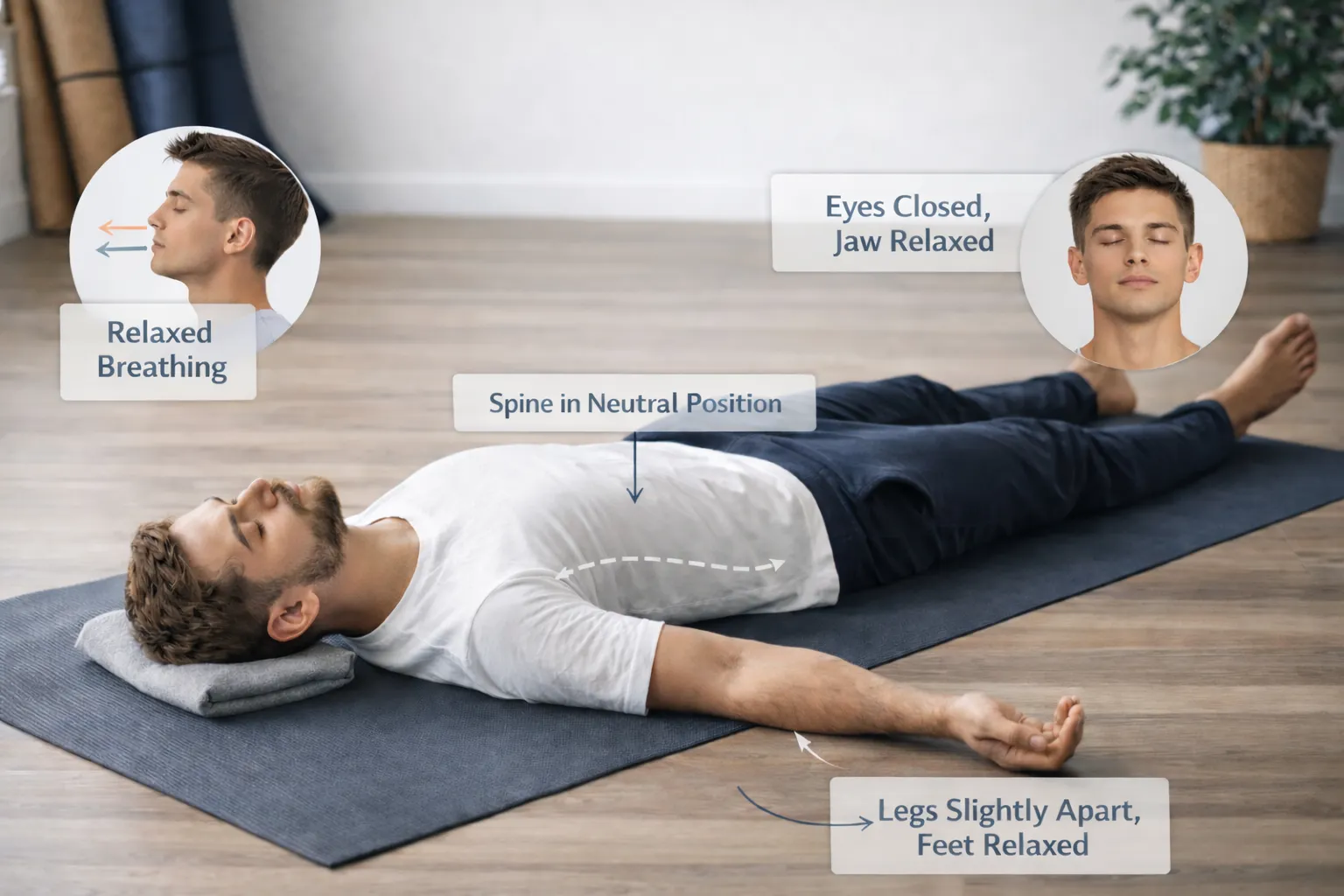
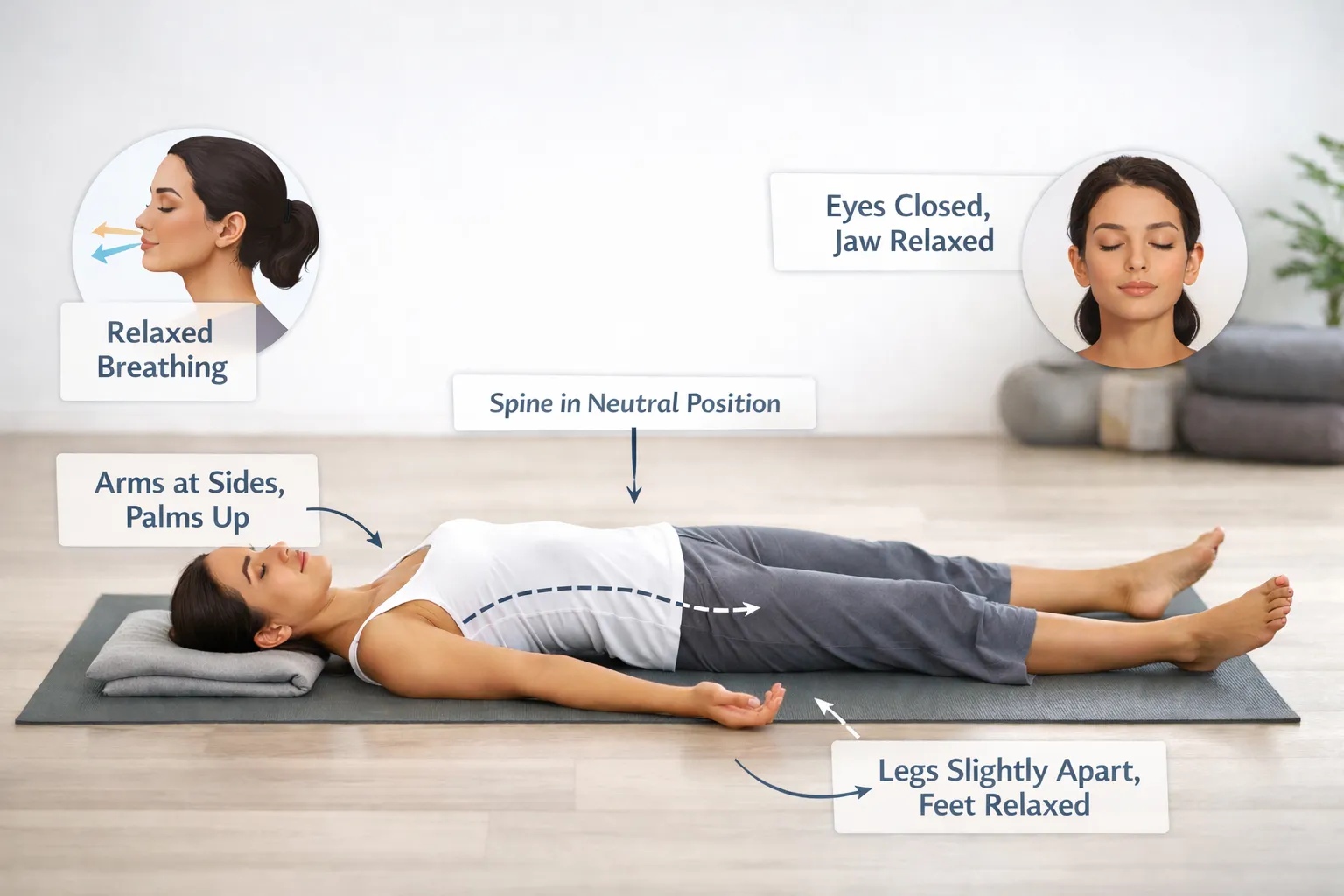
Shavasana works best when the body is well supported, the breath is natural, and attention moves gently rather than forcefully.
Set Up Your Position
Establish a Calm Breathing Rhythm
Surface tip: A yoga mat on the floor provides the most stable support. Avoid overly soft surfaces such as beds or couches.
Establish a Calm Breathing Rhythm
This natural breathing pattern helps activate the body’s relaxation response.
Scan the Body and Release Tension
Move your attention gradually through the body, inviting each area to soften.
Take your time. There is no need to rush this process.
Rest in Conscious Stillness
After completing the scan, remain aware of the body as a whole. If thoughts arise, notice them without engagement and gently return your attention to the breath and the sensation of heaviness.
Regular Shavasana practice helps calm the nervous system.
Timing: Aim for 5–15 minutes. Short, consistent practice is often more effective than occasional long sessions.
Shavasana After Yoga or Exercise
Practicing Shavasana after movement helps the body absorb the benefits of the session. Muscles recover more efficiently, and the nervous system settles faster.
Shavasana for Stressful Workdays
A short 5–10 minute Shavasana after work can help you mentally transition out of “work mode” and prevent stress from carrying into the evening.
Shavasana Before Sleep
While it is not meant to replace sleep, Shavasana before bedtime can calm racing thoughts and prepare the body for deeper rest.
These variations match common searches like “Shavasana after workout,” “Shavasana for stress,” and “Shavasana for better sleep.”
Small adjustments can make a big difference in how restorative Shavasana feels.
Mistake: Falling Asleep
Why it happens: Overtiredness or loss of awareness
Fix: Practice earlier in the day, maintain gentle breath awareness, or silently count exhales to stay present
Mistake: Holding Tension in the Jaw
Why it happens: Stress often hides in the jaw
Fix: Slightly part the teeth, relax the tongue, and soften the corners of the mouth
Mistake: Practicing on a Very Soft Surface
Why it happens: Soft surfaces misalign the spine
Fix: Use a firm mat on the floor; a small support under the knees is fine if needed
Note: Unlike active yoga poses, Shavasana focuses on conscious rest.
Consistency matters more than duration.
Q: Can Shavasana replace meditation?
Shavasana can feel meditative, but it is primarily a relaxation practice. It can support meditation but does not fully replace it.
Q: Is it okay to do Shavasana every day?
Yes. Daily practice is safe and beneficial for most people.
Q: Is falling asleep during Shavasana bad?
Occasional sleep is not harmful, but staying lightly aware brings deeper benefits.
Q: Can beginners practice Shavasana alone at home?
Absolutely. Shavasana is one of the safest and most accessible yoga practices.
If improving flexibility is one of your goals, this yoga and flexibility guide explains how foundational poses like Warrior 1 support safe and gradual mobility.
Shavasana is not about “doing nothing.” It is about allowing unnecessary effort to fall away while awareness stays steady. Practiced regularly, it teaches the body how to rest without collapsing and the mind how to pause without drifting. Over time, this makes stress easier to manage both on and off the mat.
If you want deeper guidance beyond self-practice, traditional yoga institutions such as Jiva Yoga offer structured programs that include Shavasana and other relaxation techniques as part of a complete yoga system.👉 Jiva Yoga Academy Teacher Training in Rishikesh
For those looking to build strength, improve posture, and maintain mobility with age, this program can be a supportive next step.
View Recommended Products for Practice
Disclosure: This page may contain affiliate links. If you choose to purchase or enroll through these links, we may earn a small commission at no extra cost to you.
Disclaimer: The information provided on this website is for educational purposes only and should not be considered medical advice. Please consult a qualified professional before starting any new yoga or wellness practice.

Ajay Jaswal is the founder of Fitness Dose Club, where he shares beginner-friendly guides on posture improvement, fitness training, and responsible supplement use. His goal is to make healthy living simple, practical, and safe for everyday people.