Physical Address
304 North Cardinal St.
Dorchester Center, MA 02124
Physical Address
304 North Cardinal St.
Dorchester Center, MA 02124

Sukhasana (Easy Sitting Pose) is a comfortable seated yoga posture that helps the body relax and the mind settle in modern life. It offers a gentle return to ease by creating a relaxed yet upright seated position. It is commonly used for meditation, pranayama, and mindful breathing because it supports natural spinal alignment without strain.
Although Sukhasana (सुखासन) looks effortless, its real value lies in how the body is arranged. When the spine is balanced, the shoulders soften, and the seat feels stable, both physical comfort and mental clarity begin to arise naturally.
Sukhasana is widely used in traditional yoga and meditation practices. It is known as the Easy Sitting Pose because it allows the body to rest in a relaxed, cross-legged position without demanding flexibility. Rather than forcing the hips or knees, this posture emphasizes comfort, stability, and long-term sustainability.
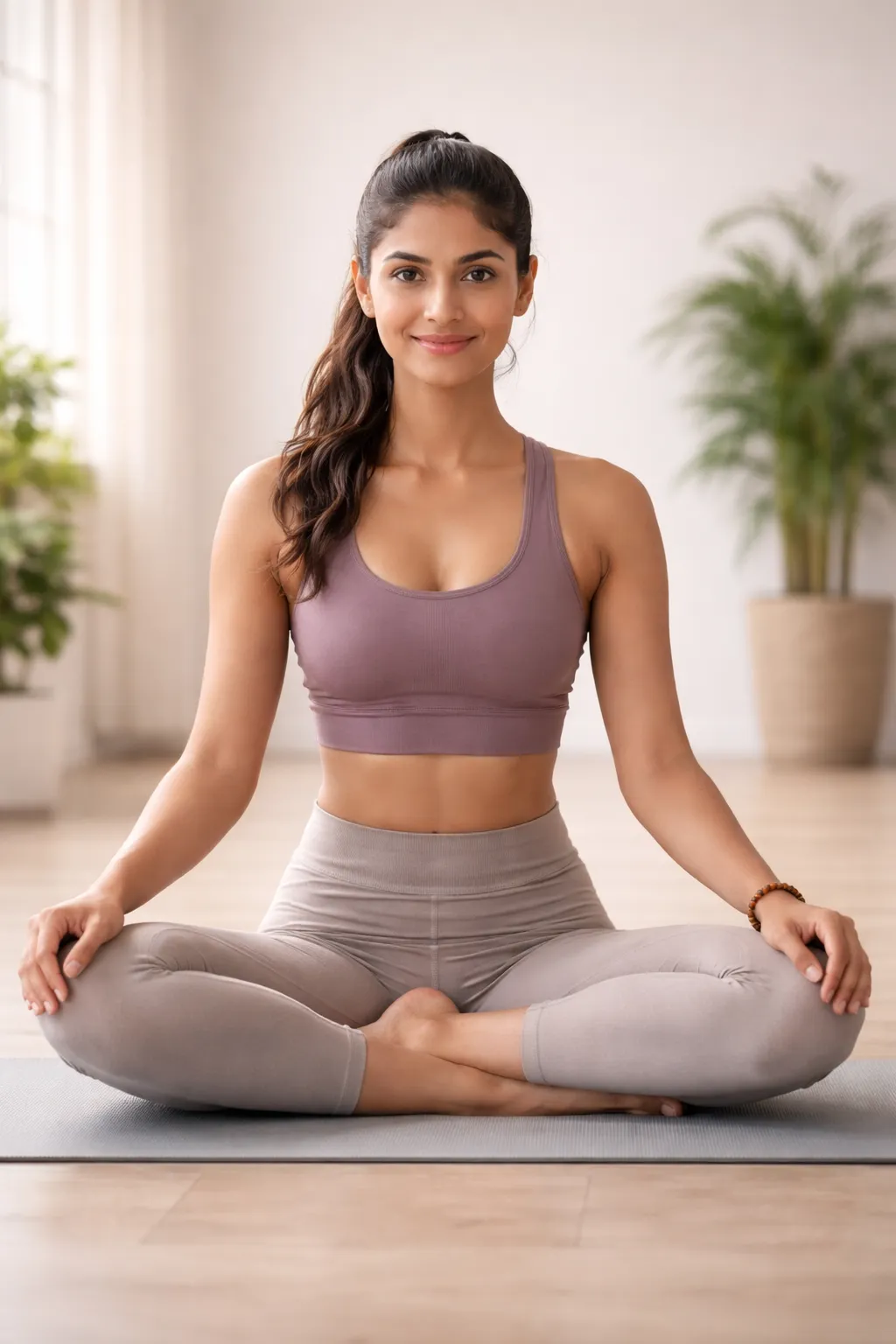
Sukhasana Easy Sitting Pose for meditation
With the help of cushions or blankets, Sukhasana can be comfortably practiced by beginners as well as experienced meditators who sit for longer periods.
The word Sukhasana comes from two Sanskrit words:
Sukha = comfort or ease Asana = posture
In practice, Sukhasana is a comfortable seated position where the legs are crossed naturally, the spine is upright, and the body is relaxed. It is commonly used for meditation, pranayama (breathing exercises), and mindfulness practices.
Sukhasana is often the first seated posture taught in yoga because it supports the core requirements of meditation practice: a stable base, an upright spine, and a calm, receptive mind. This pose is less about forcing flexibility and more about organizing the body in a way that allows effort to soften into ease.
• Grounding through the sit bones: A wide, stable base promotes a sense of safety and balance.
• Spinal alignment: When the pelvis is positioned correctly, the spine naturally lengthens upward.
• Mental clarity: Reduced muscular strain allows the breath to flow easily and the mind to settle.
• Accessibility: With props like blankets, blocks, or a wall, Sukhasana suits many body types.
Sukhasana is widely used in traditional yoga and meditation practices.
Sit on a yoga mat or the floor. If your hips feel tight, place a folded blanket or cushion under your hips to slightly elevate the pelvis.
Bring one shin in front of the other in a comfortable cross-legged position. Keep the ankles under or slightly in front of the knees, allowing the knees to relax downward without force.
Lift through the crown of your head to lengthen the spine. Keep your pelvis neutral and your ribcage stacked over your hips. Gently roll the shoulders down and back to open the chest.
Rest your hands on your knees or thighs. Keep the palms facing down for grounding or turn them upward for a calm, meditative quality.
Breathe slowly and deeply through your nose. Hold Sukhasana for 1 to 5 minutes for posture practice, or longer during meditation as long as you remain comfortable.
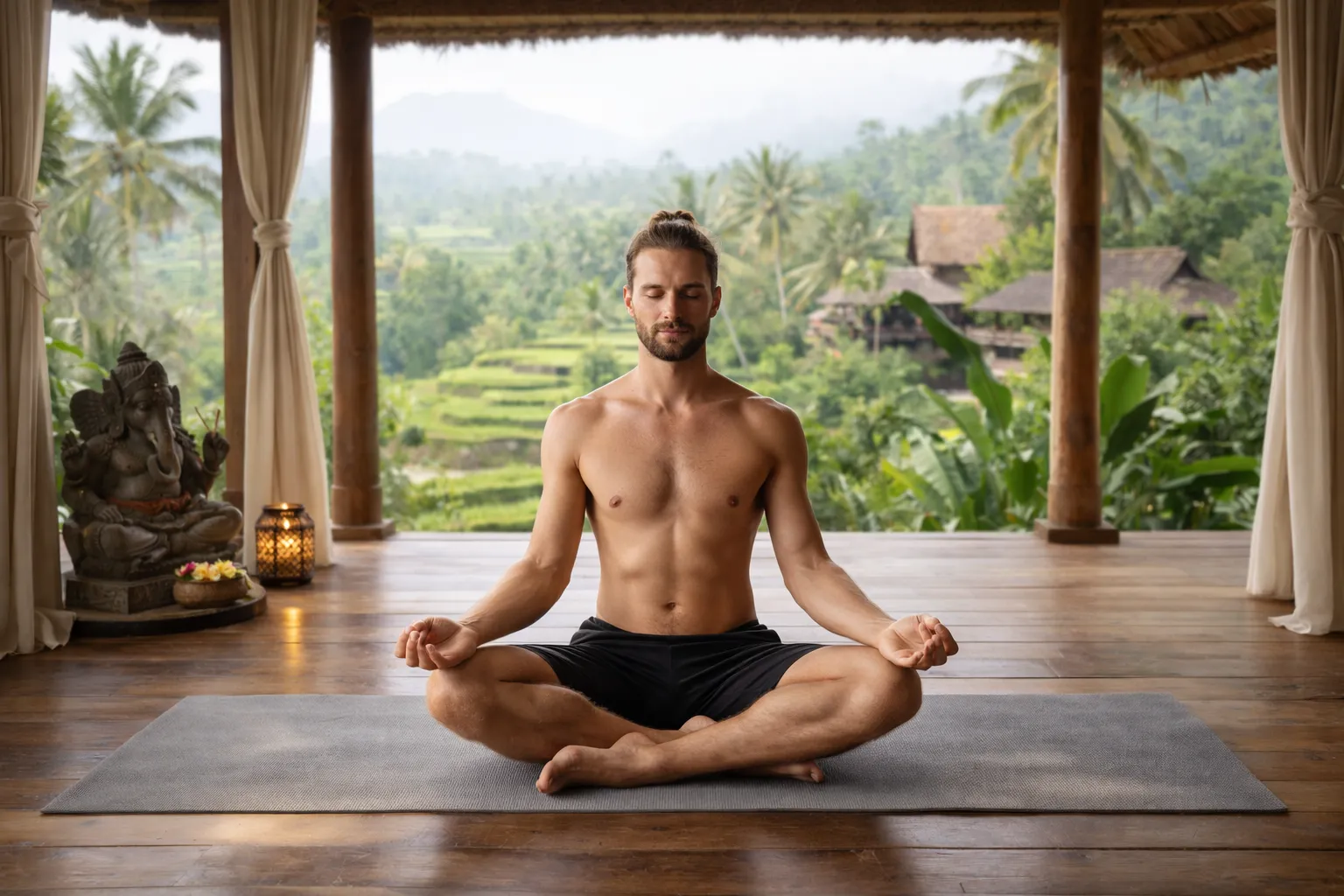
Sukhasana Easy Sitting Yoga Pose step by step
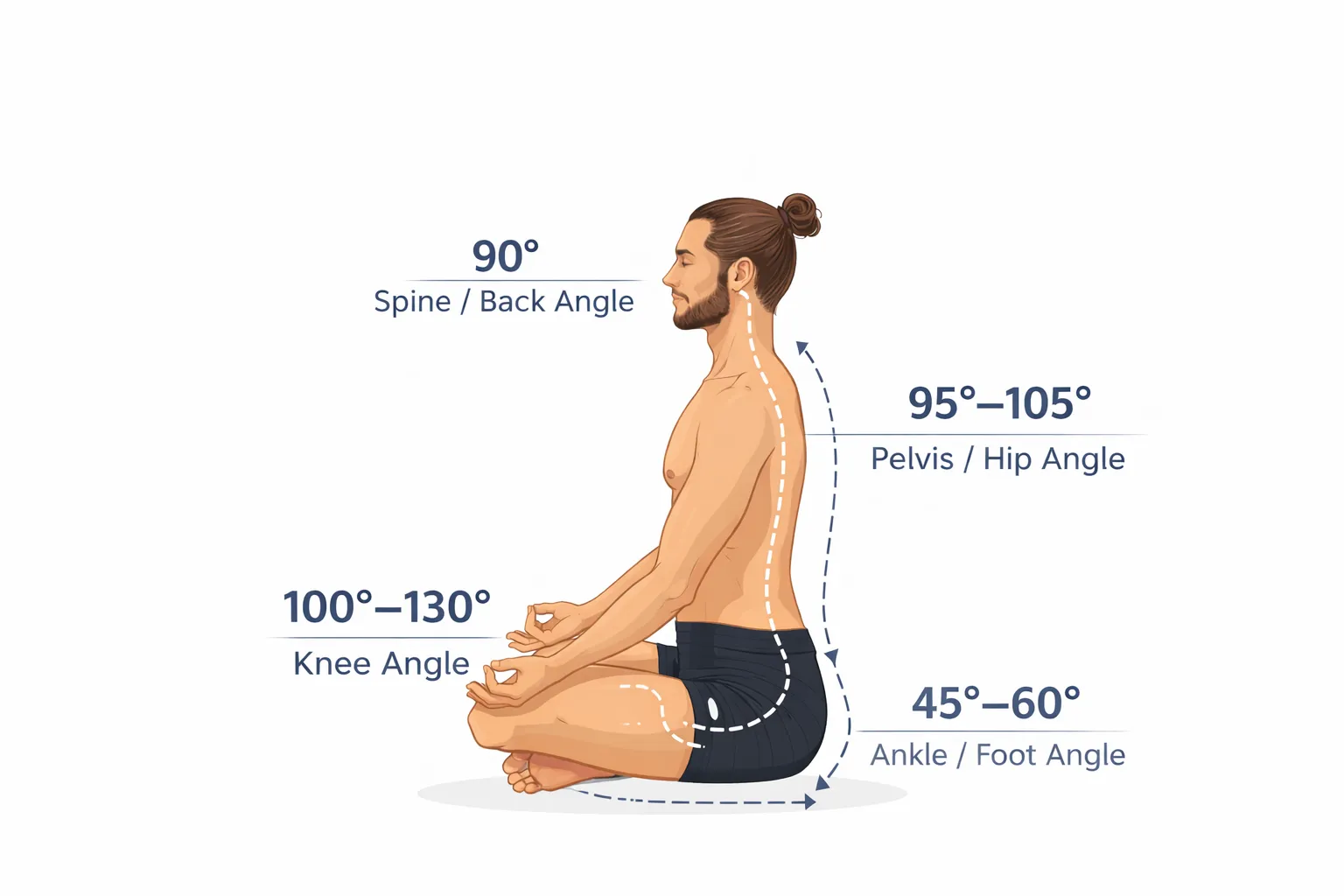
Easy Sitting Pose – Correct Body Angles
• Sit evenly on both sit bones to avoid leaning to one side
• Keep your hips slightly higher than your knees to protect the lower back and relax the inner thighs
• Maintain a level chin to keep the neck long and the breath smooth
• Relax the jaw and facial muscles to reduce tension and improve focus during meditation
• Calms the mind and reduces stress
• Improves posture and spinal alignment
• Opens hips and groin gently
• Enhances focus and concentration
• Supports meditation and breathing practices
• Helps reduce anxiety and mental fatigue
• Improves blood circulation in the lower body
Sukhasana becomes easier and more sustainable when the body feels supported.
• Sit lightly against a wall to learn upright posture without fatigue
• Place a blanket or yoga block under the hips to lift the pelvis and reduce strain
• Support the knees with cushions or folded blankets to ease hip tension
Using the right yoga props can make Sukhasana more comfortable and sustainable.
The quality of Sukhasana depends largely on the relationship between the pelvis and the spine. When the pelvis is in a neutral position (not tucked under), the lumbar spine can maintain its natural curve, and the chest can lift effortlessly without tension.
Key Alignment Cues
• Sit on height if needed so the knees are level with or below the hips
• Gently rock forward and back to find the sit bones
• Lengthen upward through the spine while softening the shoulders
• Allow gravity not force to support the knees
In a balanced Sukhasana, the outer hip rotators and inner thighs soften gradually, the deep spinal stabilizers support an upright posture, and the diaphragm moves freely for effortless breathing. When the seat is too low or the pelvis is tucked, excess effort often shows up in the hip flexors, jaw, shoulders, and lower back.
Sukhasana is ideal for breathing practices because it supports an upright yet relaxed breathing pattern.
• Inhale through the nose, allowing the lower ribs to expand gently.
• Exhale slowly, letting the ribs soften inward without force.
• Relax the face, tongue, and shoulders.
• Equal breathing (Sama Vritti): Inhale and exhale for equal counts to steady the mind.
• Extended exhalation: Lengthen the exhale slightly to encourage relaxation.
• Nadi Shodhana (Alternate Nostril Breathing): Supports balance and mental clarity.
• Gentle Ujjayi: A subtle throat sound to lengthen and smooth the breath.
• Lift through the sternum without flaring the ribs.
• Keep the lower belly soft and responsive.
• Relax the pelvic floor and glutes.
Long-duration sitting becomes easier with proper setup and mindful adjustments.
• Choose the right hip height first
• Support the knees if needed
• Balance weight evenly on both sit bones
• Keep hands relaxed on the thighs or in a comfortable mudra
• Change position if numbness begins.
• Make small adjustments to maintain circulation
If you are interested in exploring yoga beyond personal practice, Certified Yoga Teacher Training in Rishikesh offers a deeper understanding of traditional yoga, including foundational postures such as Sukhasana, Setu Bandhasana, Vajrasana (Thunderbolt Pose) along with breath awareness and alignment principles.
👉 Jiva Yoga Academy – Teacher Training in Rishikesh
Sukhasana is generally safe for most people, but some individuals may need to avoid the pose or practice it with modifications and proper support.
Knee pain or injury: Sitting cross-legged may increase pressure on the knees. Use cushions under the thighs or practice on a chair if discomfort occurs.
Hip injury or tight hips: People with hip injuries or limited mobility should use props such as blankets or blocks, or choose an alternative seated position.
Recent surgery (hips, knees, or lower back): Avoid Sukhasana or practice only under professional guidance until full recovery.
Some people also explore alternative relaxation and energy-based practices for better sleep.
👉 Explore this guided Reiki session for deep relaxation
Disclaimer: This product is for relaxation and educational purposes only. It is not intended to diagnose, treat, or cure any medical condition. Results may vary.
Sukhasana reminds us that steadiness and comfort can exist together. When the body feels supported and the breath flows freely, sitting becomes less of a task and more of a practice of awareness. With regular use and proper support, Sukhasana can quietly transform how we meditate, breathe, and rest within ourselves.
Sukhasana is commonly included in beginner yoga and flexibility routines to improve comfort, posture, and calm breathing.
If you’re new to yoga, start with simple poses designed for beginners.
Q: Is Sukhasana suitable for beginners?
Ans: Yes, Sukhasana is one of the most beginner-friendly yoga poses. It requires minimal flexibility and can be easily modified with cushions, blankets, or blocks to make sitting more comfortable.
Q: Can Sukhasana help with meditation?
Ans: Yes, Sukhasana is commonly used for meditation because it supports an upright spine, steady breathing, and mental focus without creating unnecessary strain in the body.
Q: Is Sukhasana better than Padmasana for beginners?
Ans: For beginners, Sukhasana is generally better than Padmasana because it does not require deep hip flexibility and is easier to maintain comfortably for longer periods.
Q: Can I practice Sukhasana every day?
Ans: Yes, Sukhasana can be practiced daily. Regular practice helps improve posture, calm the mind, and build comfort for meditation and breathing exercises.
Q: What is the best time to practice Sukhasana?
Ans: Sukhasana can be practiced at any time of day. Early morning is ideal for meditation and pranayama, while evening practice can help release stress and mental fatigue.
Q: Can Sukhasana improve posture?
Ans: When practiced with proper alignment, Sukhasana helps strengthen postural awareness and encourages a naturally upright spine, which can support better posture over time.
Q: Is Sukhasana safe during pregnancy?
Ans: Sukhasana may be practiced during pregnancy only with proper support and medical guidance. Using cushions and avoiding strain is essential.
Q: Do I need a yoga mat to practice Sukhasana?
Ans: A yoga mat is helpful but not mandatory. Sukhasana can also be practiced on the floor, on a folded blanket, or even on a chair for added comfort.
Affiliate Disclosure: Some links on this page may be affiliate links. This means I may earn a small commission at no extra cost to you if you choose to make a purchase through these links.

Ajay Jaswal is the founder of Fitness Dose Club, where he shares beginner-friendly guides on posture improvement, fitness training, and responsible supplement use. His goal is to make healthy living simple, practical, and safe for everyday people.