Physical Address
304 North Cardinal St.
Dorchester Center, MA 02124
Physical Address
304 North Cardinal St.
Dorchester Center, MA 02124

Trikonasana (त्रिकोणासनम्), commonly referred to as the Triangle Yoga Pose, is a standing asana that emphasizes structural alignment, balance, and lateral movement performed with awareness. The name comes from the Sanskrit words trikona (three angles) and asana (posture), referring to the triangular structure formed by the body. When practiced with proper technique, the pose creates clear relationships between the legs, arms, and torso, encouraging structural awareness rather than depth.
Unlike flexibility-focused poses, Trikonasana emphasizes stability during controlled sideways movement. As weight is evenly distributed through the legs, the waist and spine respond naturally, promoting balance without strain. This makes Trikonasana a foundational posture suitable for practitioners at all levels.
Most daily movements happen in straight lines, which limits natural body mobility. Trikonasana restores this missing side movement in a safe and controlled way, helping the hips and spine move more freely. With regular practice, it improves balance, posture, spinal alignment, and supports smoother breathing during physical effort.
Modern life limits natural movement through long hours of sitting, screen use, and forward-focused activities. Over time, this reduces spinal flexibility, tightens the hips, and affects posture and energy levels.
Side-to-side movement is rarely used in daily routines. Trikonasana restores this missing lateral motion in a controlled manner, creating space in the spine, improving balance, and increasing overall body awareness.
By supporting both physical mobility and mindful movement, Trikonasana is especially valuable for individuals living a sedentary, screen-focused lifestyle.
Correct alignment is the foundation of a safe and effective Trikonasana practice. Paying attention to proper alignment helps prevent strain and allows the body to receive the full benefits of the pose.
The feet form the base of Trikonasana and play a key role in stability and balance. They are placed wide apart to create a strong and supportive foundation.
The front foot is turned outward at approximately 90°. This position allows the pelvis to open comfortably and supports smooth lateral movement of the torso.
The back foot is turned inward at approximately 15–30°. This angle helps ground the back leg and prevents the foot and knee from collapsing inward.
Weight should be distributed evenly across both feet, with special attention given to grounding the outer edge of the back foot. Together, correct foot angles and balanced weight distribution create a stable triangular base, allowing the rest of the body to align safely and efficiently.
Both legs remain active throughout the pose. The front leg is straight but not locked, while the back leg stays firm and supportive. The angle between each leg and the floor remains close to 180°. Engaging the thigh muscles helps protect the knee joints and improves overall stability.
The torso moves sideways by hinging at the hip joint rather than collapsing the waist. This action preserves spinal length and balance. During the middle phase of the pose, the torso forms an angle of approximately 30–45° from the upright position. In the final position, the torso approaches a 90° lateral tilt relative to the legs.
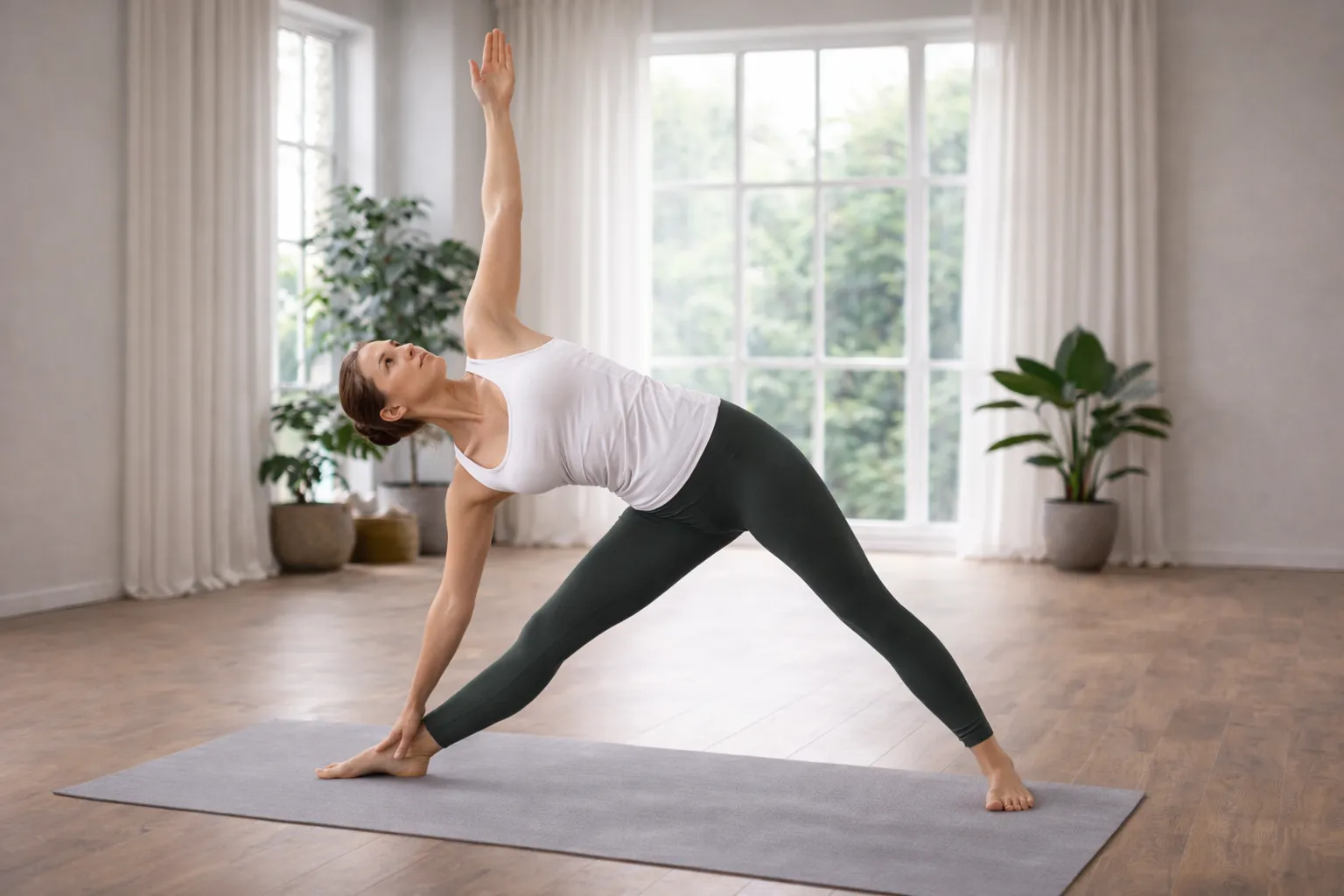
Visual Guide to Trikonasana Alignment
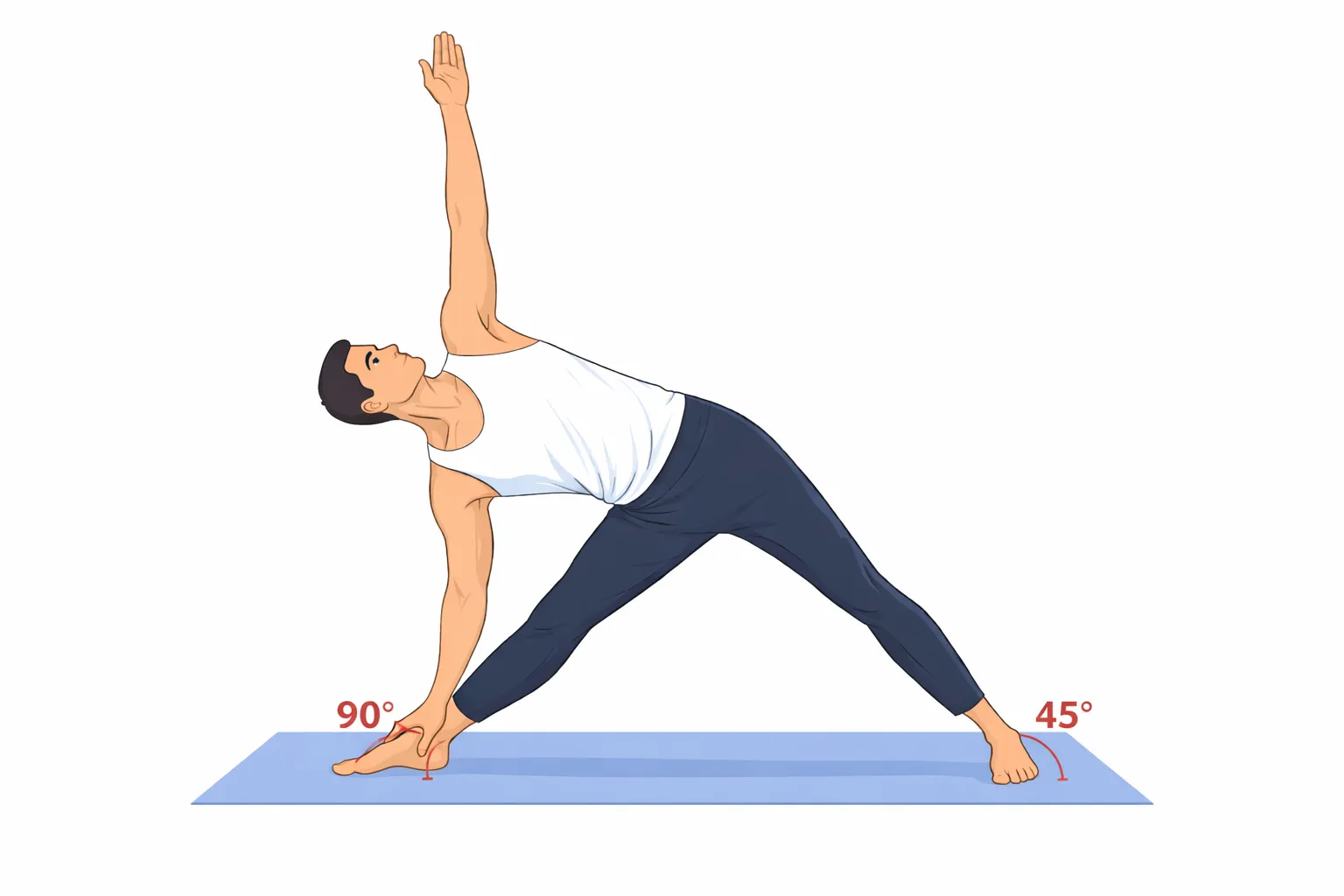
Triangle Pose
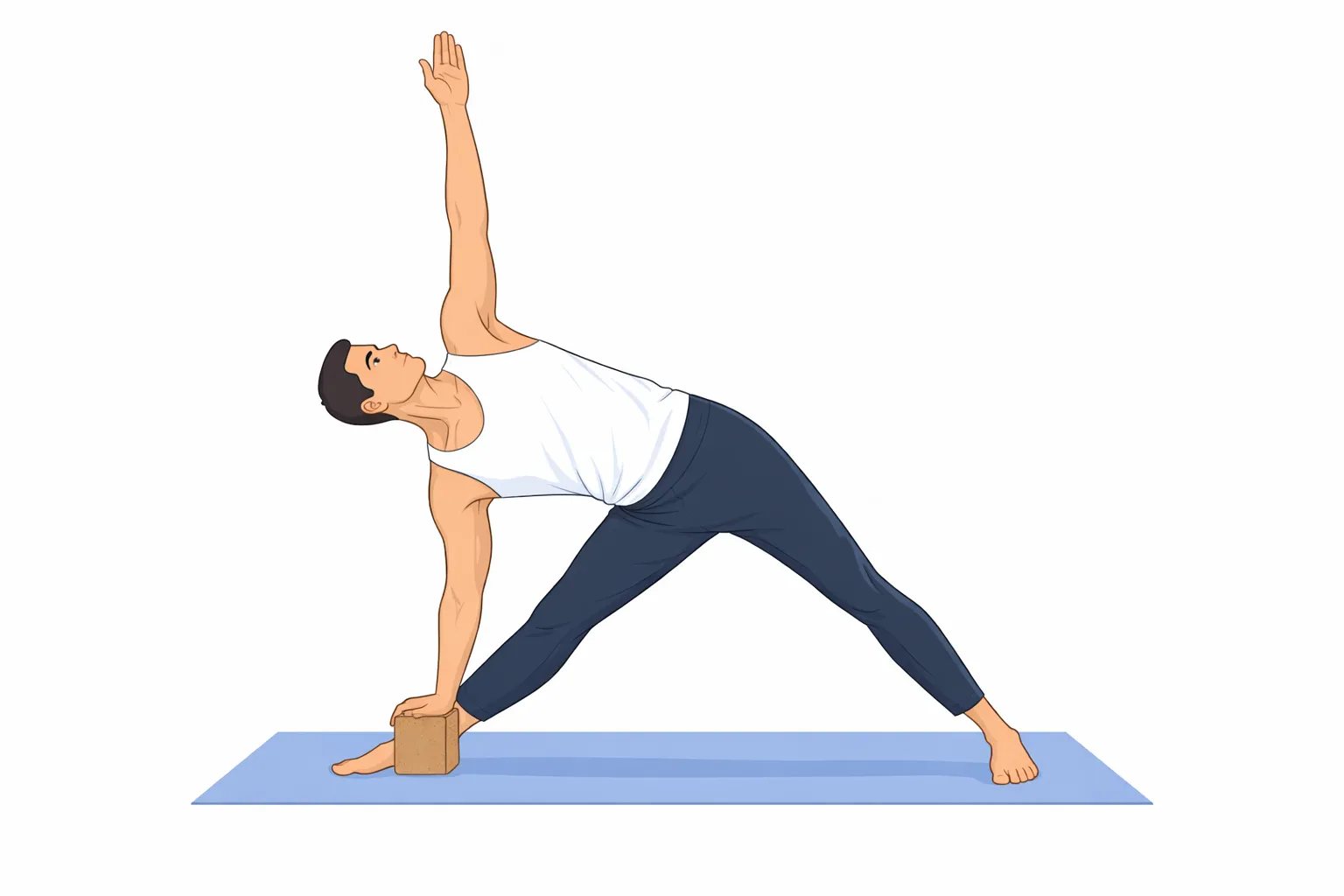
Triangle Pose with Yoga Block Support
The lower hand rests lightly on the shin, ankle, floor, or a block. The upper arm extends upward, stacking the shoulders vertically and helping maintain balance through the upper body.
The spine remains long from the tailbone to the crown of the head. The intention of the pose is not depth, but length, openness, and stability through the spine.
The shoulders are stacked vertically, one above the other. The chest stays open and faces sideways rather than downward. The neck remains neutral, with the head turning upward only if it feels comfortable.
Angles are approximate and may vary according to body flexibility, age, and experience level.
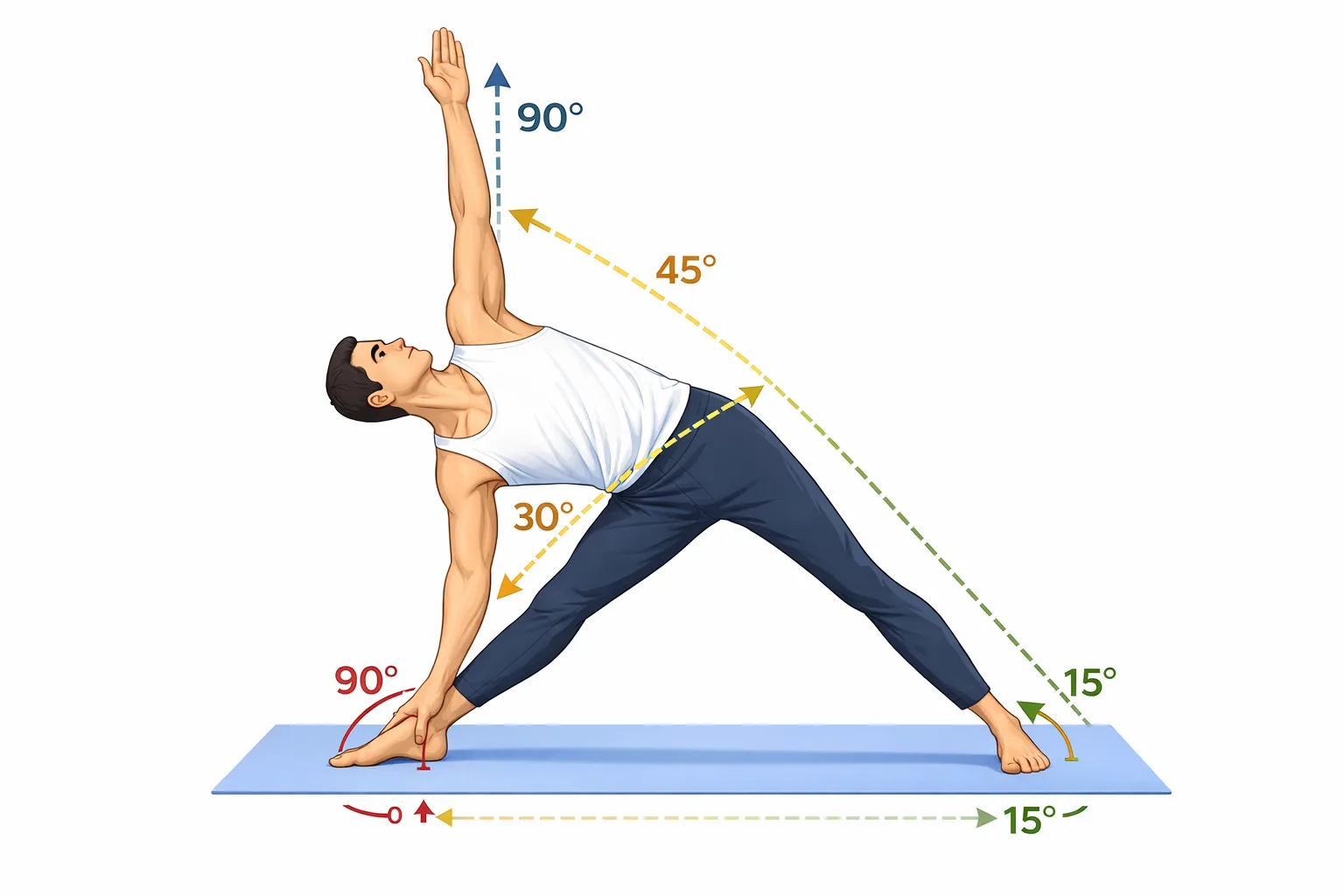
Triangle Pose: Proper Alignment and Angle Structure
A common misunderstanding is that Trikonasana is a side bend. In reality, it is a side extension. The aim is not to compress one side of the waist, but to lengthen both sides of the spine evenly.
Maintaining length in the torso allows the rib cage to open, supporting smoother breathing. It also reduces tension in the neck and shoulders. Over time, this awareness improves posture, especially for those who spend long hours sitting.
Breath supports stability in Trikonasana. As the chest opens, the lungs gain more space to expand, allowing smoother inhalation and exhalation. Natural breathing helps maintain balance and reduces tension during the posture.
Instead of controlling the breath, practitioners are encouraged to let it flow naturally. This connection between alignment and breathing helps calm the nervous system and improves focus during practice.
● Stand upright and step the feet wide apart.
● Turn one foot outward and angle the other slightly inward.
● Extend both arms at shoulder height.
● Shift the torso sideways from the hip, keeping the spine long.
● Place the lower hand on the shin, ankle, floor, or a block.
● Lift the upper arm upward, stacking the shoulders.
● Keep the chest open and the neck relaxed.
● Hold for a few steady breaths, then switch sides.
The posture is complete when balance and length are maintained—not when the hand reaches the floor.
For comfortable and stable practice, a non-slip yoga mat and a yoga block can help maintain balance and proper alignment in Trikonasana.
👉 Yoga mat
● Leaning weight into the lower hand, causing the side body to collapse
● Locking the front knee, increasing joint pressure
● Forcing the head upward, leading to neck strain
● Allowing the chest to fall forward, reducing breathing space
Small corrections in these areas make the pose safer and more effective.
Yoga blocks, chairs, or wall support help maintain alignment when flexibility is limited. Props allow the spine to remain long and the breath to stay steady, making the posture accessible for beginners and those with tight hamstrings.
With consistent practice, Trikonasana (त्रिकोणासनम्) offers several benefits:
● Improves postural awareness
● Supports calm breathing and mental focus
● Strengthens the legs and core muscles
● Increases flexibility in the hips, hamstrings, and spine
● Enhances balance and coordination
These benefits develop gradually and are often noticed first in daily movement, not just during yoga practice.
For practitioners seeking greater challenge, variations such as Revolved Triangle (Parivrtta Trikonasana) introduce gentle twisting and deeper engagement. These variations should be practiced only after the basic alignment feels stable and comfortable.
For those interested in deepening their understanding of yoga alignment and practice, structured teacher training programs from Jiva Yoga Academy can provide guided learning and professional certification.
People with knee problems, significant back pain, or neck sensitivity should practice with modifications and move slowly. Paying attention to how the body responds is an important part of safe practice.
Trikonasana fits naturally into standing sequences. It works well alongside poses such as Warrior II and Extended Side Angle Pose, preparing the body for deeper side stretches and twists.
Trikonasana can be held for 20 to 40 seconds on each side, depending on comfort and experience. Beginners may start with shorter holds and gradually increase the duration as stability improves.
Yes, regular practice of Trikonasana helps improve postural awareness by strengthening the legs, opening the chest, and encouraging proper spinal alignment, which is especially beneficial for people who sit for long hours.
Trikonasana can be practiced daily as part of a balanced yoga routine, provided it is done mindfully and without discomfort. Regular practice supports flexibility, balance, and overall body awareness.
People with knee injuries, severe back pain, neck issues, or balance difficulties should modify the posture or practice under professional guidance. Listening to the body and avoiding force is essential for safe practice.
Yes, Trikonasana is suitable for beginners when practiced with proper guidance and alignment. Using props such as yoga blocks can help beginners maintain balance and spinal length without strain.
Trikonasana is not about achieving a perfect shape or pushing the body into depth. Its true value lies in learning how stability and movement can work together through correct alignment and awareness. By grounding the legs and creating space along the spine, the posture encourages balance that extends beyond the mat. When practiced with patience and attention, Trikonasana becomes a practical tool for improving posture, breathing, and body awareness in everyday life.
For those looking to build strength, improve posture, and maintain mobility with age, this program can be a supportive next step.
Helpful Resources for Improving Flexibility
👉 Flexible Yoga Practice Guide (Recommended)
View Recommended Products for Practice
Disclosure: This page may contain affiliate links. If you choose to purchase or enroll through these links, we may earn a small commission at no extra cost to you.
Disclaimer: The information provided on this website is for educational purposes only and should not be considered medical advice. Please consult a qualified professional before starting any new yoga or wellness practice.

Ajay Jaswal is the founder of Fitness Dose Club, where he shares beginner-friendly guides on posture improvement, fitness training, and responsible supplement use. His goal is to make healthy living simple, practical, and safe for everyday people.