Physical Address
304 North Cardinal St.
Dorchester Center, MA 02124
Physical Address
304 North Cardinal St.
Dorchester Center, MA 02124

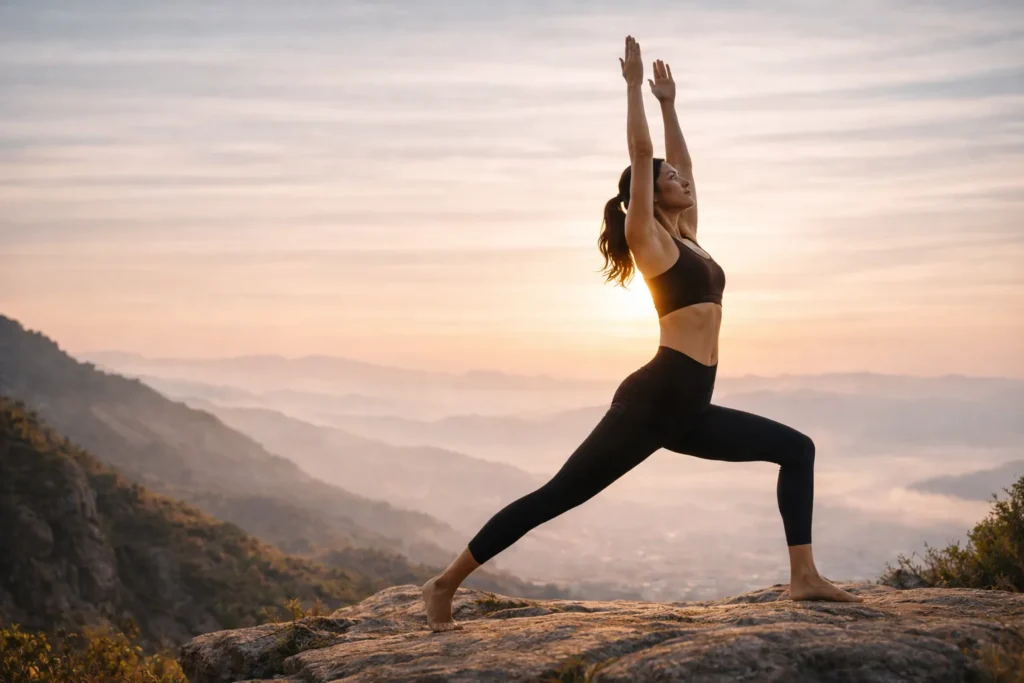
Starting yoga often begins with simple standing poses that build strength, balance, and body awareness. The Warrior I yoga pose (Virabhadrasana I / वीरभद्रासन I) is one of the most important foundational postures for beginners. It is widely considered one of the most important standing poses for beginners learning yoga.
Also known as Virabhadrasana I, this powerful standing pose is named after the mythical warrior Virabhadra and symbolizes strength, stability, and determination. Although it appears strong and intense, Warrior I is very accessible for beginners when practiced with proper alignment and mindful breathing.
In this guide, you’ll learn step-by-step instructions, benefits, common mistakes, and safety tips to practice Warrior 1 Pose correctly.
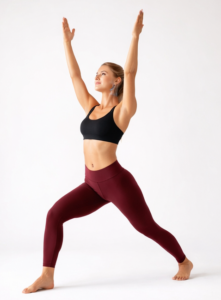
Proper Alignment for Warrior 1 Pose
Warrior I is commonly taught early in yoga practice because it helps beginners build a strong foundation for advanced standing and balance poses. This posture strengthens the legs, improves posture, enhances balance, and gently stretches the hips, chest, and shoulders.
In the step-by-step guide below, you will learn how to practice Warrior I safely and correctly, helping you gain confidence and progress smoothly in your yoga journey.
Before practicing Warrior I, it is helpful to warm up the body with a few basic poses:
Gentle lunges – Slow and controlled lunges help warm up the hips, thighs, and knees while improving balance and preparing the legs for Warrior I.
These preparatory poses warm up the legs, hips, and spine, making Warrior I more comfortable, effective, and safe for beginners.
This step-by-step guide will help you practice Warrior I with clarity and confidence.
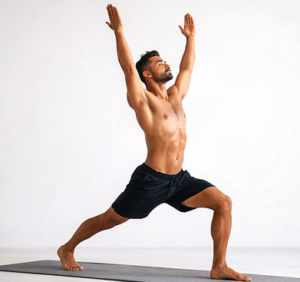
Begin in a lunge position with your right foot forward and left foot back. Keep your left heel grounded and turn your back foot slightly outward. Gently square your hips toward the front of the mat to create a stable foundation.
Bend your right knee so it stays directly above your ankle without moving past the toes. Press firmly through both feet and distribute your weight evenly. Lift your torso upright while maintaining a long, neutral spine.
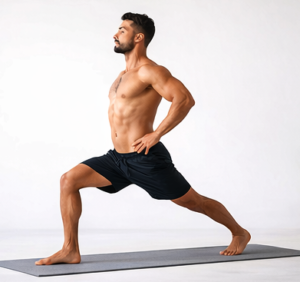
Raise your arms overhead, keeping them aligned with your ears. Allow your shoulders to relax and avoid tension in the neck. Engage your core by gently drawing the navel inward to support the lower back and maintain stability.
Maintain a lifted chest and elongated spine throughout the pose. Focus on growing taller rather than bending backward.
Once you are in the full pose, focus on slow and steady breathing. Inhale to lengthen your spine and lift the chest, and exhale to ground firmly through both feet. Hold Warrior I for 3–5 deep breaths, then release gently and repeat on the other side.
If you are new to Warrior I (Virabhadrasana I), try a shorter stance to reduce strain on the hips or lower back. Keep your back leg strong and gently draw your ribs in to support proper alignment and prevent over-arching of the spine.
● Improves concentration, focus, and balance
● Strengthens legs, ankles, and hips
● Opens the hips, chest, and lungs
● Improves posture and spinal alignment
● Builds overall body stability
● Increases endurance and stamina
● Improves flexibility in the hips and lower body
● Activates core muscles for better balance and support
● Helps reduce stress and builds mental confidence
● Overarching the lower back: Engage your core and gently draw your ribs down to protect your spine.
● Front knee collapsing inward: Keep your knee aligned directly over your toes for proper joint support.
● Lifting the back heel: Press the back heel firmly into the mat to maintain stability and balance.
● Tensing the shoulders: Relax your shoulders away from your ears to avoid neck and shoulder strain.
Learn Warrior 1 with Proper Guidance?
If you are interested in exploring yoga beyond personal practice, Yoga Teacher Training in Rishikesh offers a deeper understanding of traditional yoga, including foundational postures such as Warrior 1, along with breath awareness and alignment principles. 👉 Jiva Yoga Academy – Teacher Training in Rishikesh
Warrior 1 Pose (Virabhadrasana I) is generally safe for most people, but beginners and those with physical limitations should practice mindfully.
● If you have knee pain, avoid bending the front knee too deeply and keep proper alignment
● Avoid Warrior 1 Pose if you have a severe knee injury or recent knee surgery unless cleared by a doctor.
● If you experience lower back discomfort, reduce the depth of the lunge and engage your core
● People with high blood pressure should keep the arms lowered and avoid holding the pose for long durations
● Avoid deep lunges if you suffer from hip injury or sciatica
● If you have shoulder pain, keep hands on hips instead of raising arms
● Use a wall or chair for balance support if stability feels challenging
● Pregnant women should practice under guidance and use a wider stance
Always listen to your body and avoid forcing the posture beyond your comfort level. If you have any medical condition or ongoing injury, consult a qualified yoga instructor or healthcare professional before practicing Warrior 1 Pose.
According to Yoga Journal, proper alignment is essential for practicing Warrior I safely.
Beginners may find Warrior I more comfortable and stable when using simple yoga props. These tools support proper alignment and reduce strain during practice.
Yoga Blocks
Beginner-friendly yoga blocks can help improve balance and support proper alignment, especially if your hips or hamstrings feel tight.
Yoga Towel
A quick-dry yoga towel is useful for absorbing sweat and preventing slipping, especially during longer practice sessions.
Yoga Bolster
A yoga bolster for support can be helpful during rest breaks or modifications, allowing beginners to practice comfortably without strain.
Yoga Mat
A non-slip yoga mat for beginners provides better grip and stability, helping you maintain balance during standing poses like Warrior I.
Yoga Strap
A yoga strap for beginners helps improve flexibility and shoulder alignment while maintaining correct posture.
Warrior I is usually practiced after warm-up poses and before balance poses. It works well in beginner sequences and sun-salutation variations.
It also acts as a bridge between basic standing poses and more challenging warrior variations.
After mastering Warrior I, the natural next step is Warrior II(Virabhadrasana II), which builds further leg strength, hip openness, and stability while keeping the body grounded.
Warrior I yoga pose (Virabhadrasana I) is a strong foundational posture that improves balance, stability, and confidence while supporting steady breathing and proper alignment. Beginners can practice more safely and comfortably by using supportive yoga props, such as a non-slip yoga mat or yoga blocks. Remember, yoga is a personal journey—practice mindfully and stay consistent for long-term benefits.
Practice Warrior 1 Pose regularly to build strength, balance, and inner stability, one step at a time.
Warrior 1 Pose is an essential posture in our Yoga Flexibility Guide for improving flexibility, strength, and balance.
Q. What is Warrior 1 yoga pose?
Ans: Warrior 1 is a standing yoga posture that builds strength, balance, and focus.
Q. Is Warrior I suitable for beginners?
Ans: Yes, Virabhadrasana I is suitable for beginners when practiced with proper alignment and a comfortable stance.
Q. How long should beginners hold Warrior I?
Ans: Beginners can hold Warrior I for 20–30 seconds or 3–5 slow breaths on each side.
Q. Can I practice Warrior I every day?
Ans: Yes, Warrior I can be practiced daily as part of a balanced yoga routine, provided there is no pain or discomfort.
Q. What should I do if I feel lower back strain in Warrior I?
Ans: Reduce the depth of the lunge, engage your core, and avoid arching the lower back. Using yoga blocks can also help.
Q. What muscles does Warrior I work?
Ans: Warrior I strengthens the legs, hips, core, shoulders, and improves spinal stability.
Q. Who should avoid Warrior 1 pose?
Ans: People with knee or lower back injuries should practice with caution.
Disclosure: This post may contain affiliate links. If you purchase through these links, we may earn a small commission at no extra cost to you.

Ajay Jaswal is the founder of Fitness Dose Club, where he shares beginner-friendly guides on posture improvement, fitness training, and responsible supplement use. His goal is to make healthy living simple, practical, and safe for everyday people.