Physical Address
304 North Cardinal St.
Dorchester Center, MA 02124
Physical Address
304 North Cardinal St.
Dorchester Center, MA 02124

Warrior II (Virabhadrasana II / (वीरभद्रासन II) is a foundational yoga pose that builds strength, focus, and stability. It is widely practiced in both beginner and intermediate yoga classes because it helps improve posture, strengthen the lower body, and develop proper body alignment.
By following this comprehensive guide, you will learn what Warrior II is, how to practice it step by step, its benefits, common mistakes, and helpful beginner tips, allowing you to practice the pose comfortably and with confidence.
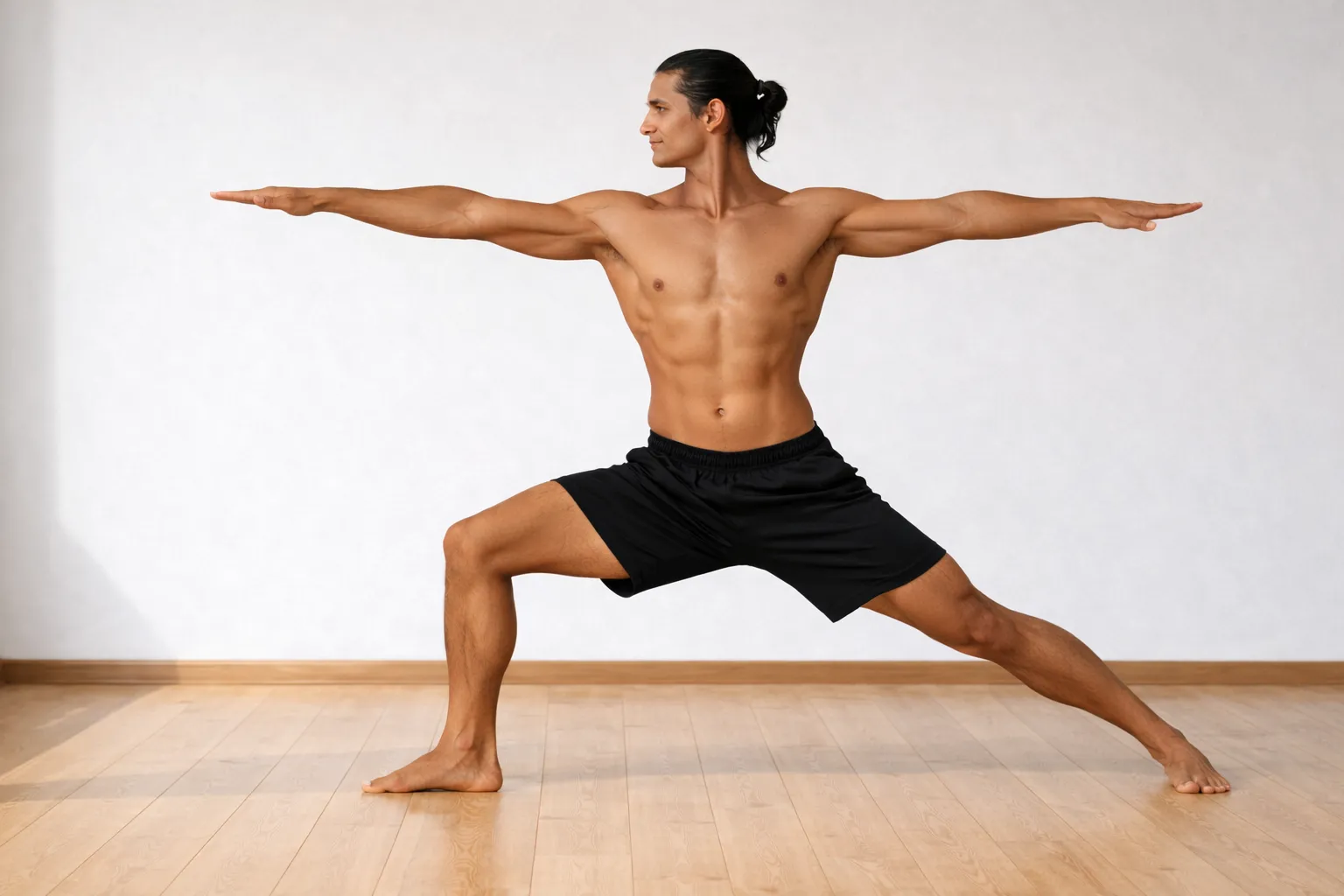
Warrior II (Virabhadrasana)
Warrior II is a traditional standing yoga pose in which the legs are spread wide, one knee is bent, the arms are extended out to the sides, and the chest remains open.
The pose represents strength, balance, and steady focus, like a warrior standing firm and calm. This pose is commonly included in Hatha Yoga, Vinyasa Yoga, and Ashtanga Yoga practices. It prepares the body for more advanced standing and balancing poses by building a strong foundation in the legs and hips.
Unlike fast movements, Warrior II emphasizes maintaining proper posture, deep breathing, and a grounded stance. This makes it beneficial for improving both physical strength and mental awareness.
Warrior II is a foundational pose commonly practiced in basic yoga routines. Beginners may benefit from learning general yoga principles first through our Understanding Yoga: A Comprehensive Beginner’s Guide.
Start in Mountain Pose: Stand tall with feet together, spine straight, shoulders relaxed, and take a few deep breaths.
Step into a Wide Stance: Step your feet about 3.5–4 feet apart for a stable base.
Position Your Feet: Turn the front foot out 90° and the back foot slightly inward.
Bend the Front Knee: Keep the front knee directly over the ankle, aligned with the second toe.
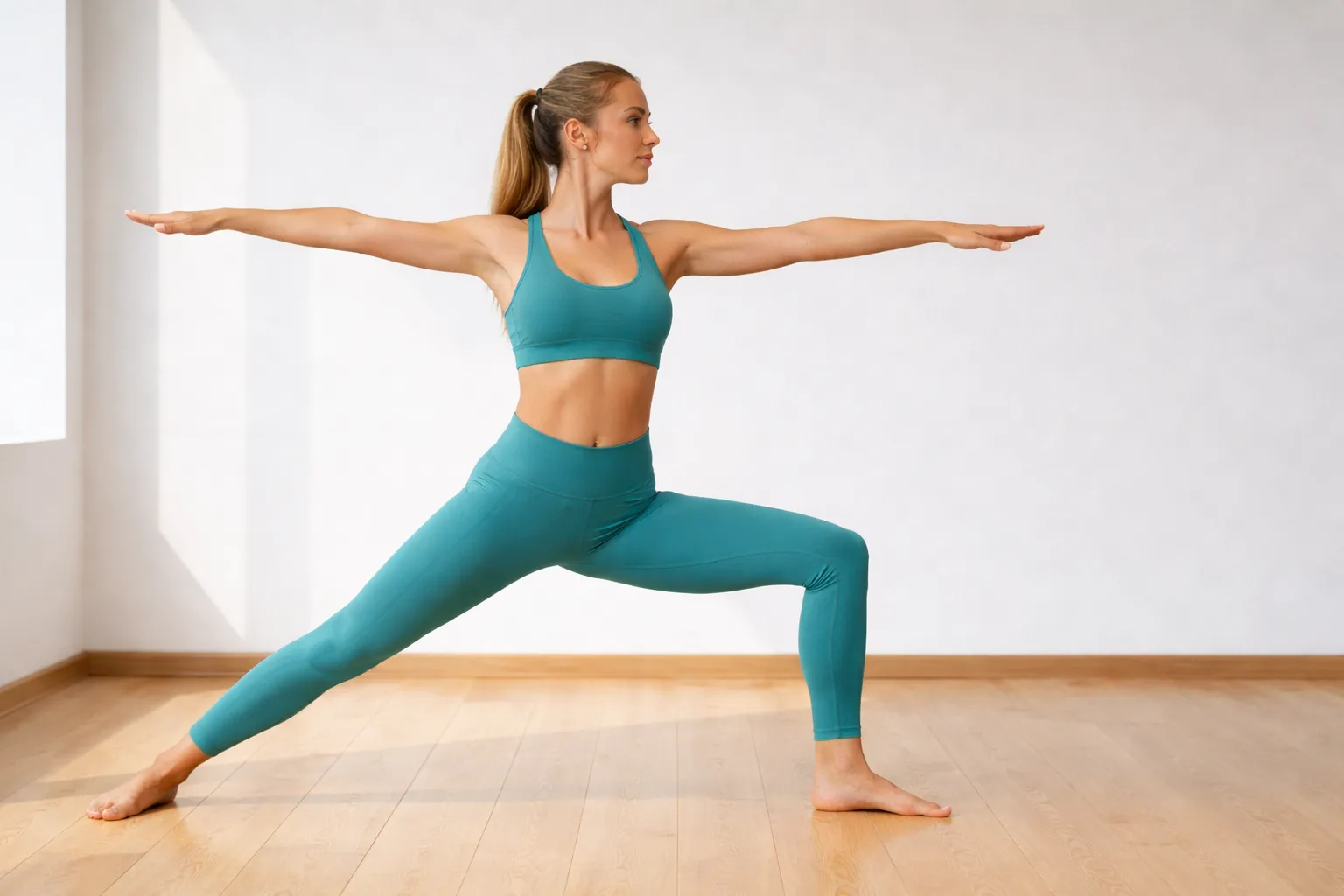
Warrior II – Proper Alignment
Start in Mountain Pose (Tadasana): Stand tall with feet together, spine straight, shoulders relaxed, and take a few deep breaths.
Gently engage your core to support balance and stability.
● Open the Torso: Rotate the torso to the side while keeping hips level.
● Extend the Arms: Stretch arms out at shoulder height, palms facing down, reaching actively in opposite directions.
● Gaze Over the Front Hand: Look softly over your front hand while keeping your neck relaxed.
● Breathe Deeply: Hold the pose for 5–9 slow, steady breaths.
● Switch Sides: Gently release and repeat on the opposite side to balance your practice.
Regular practice of Warrior II offers several physical and mental benefits. It strengthens the legs, hips, and core muscles while improving balance and endurance. The pose also opens the chest and shoulders, which helps counteract poor posture caused by long hours of sitting.
Mentally, Warrior II encourages focus, calmness, and confidence. Holding the pose while maintaining steady breathing helps build patience and body awareness, making it especially beneficial for beginners.
Small mistakes can reduce the benefits of the pose or cause discomfort:
● Letting the front knee collapse inward
● Locking the back knee
● Lifting the shoulders toward the ears
● Leaning the torso forward
● Overstretching instead of maintaining stability
Tip: Focus on alignment first, Comfort and stability are more important than how deep the pose appears. If you feel pain in the knees or hips, come out of the pose gently and adjust your stance. Practicing with awareness is more important than holding the pose for a long time.
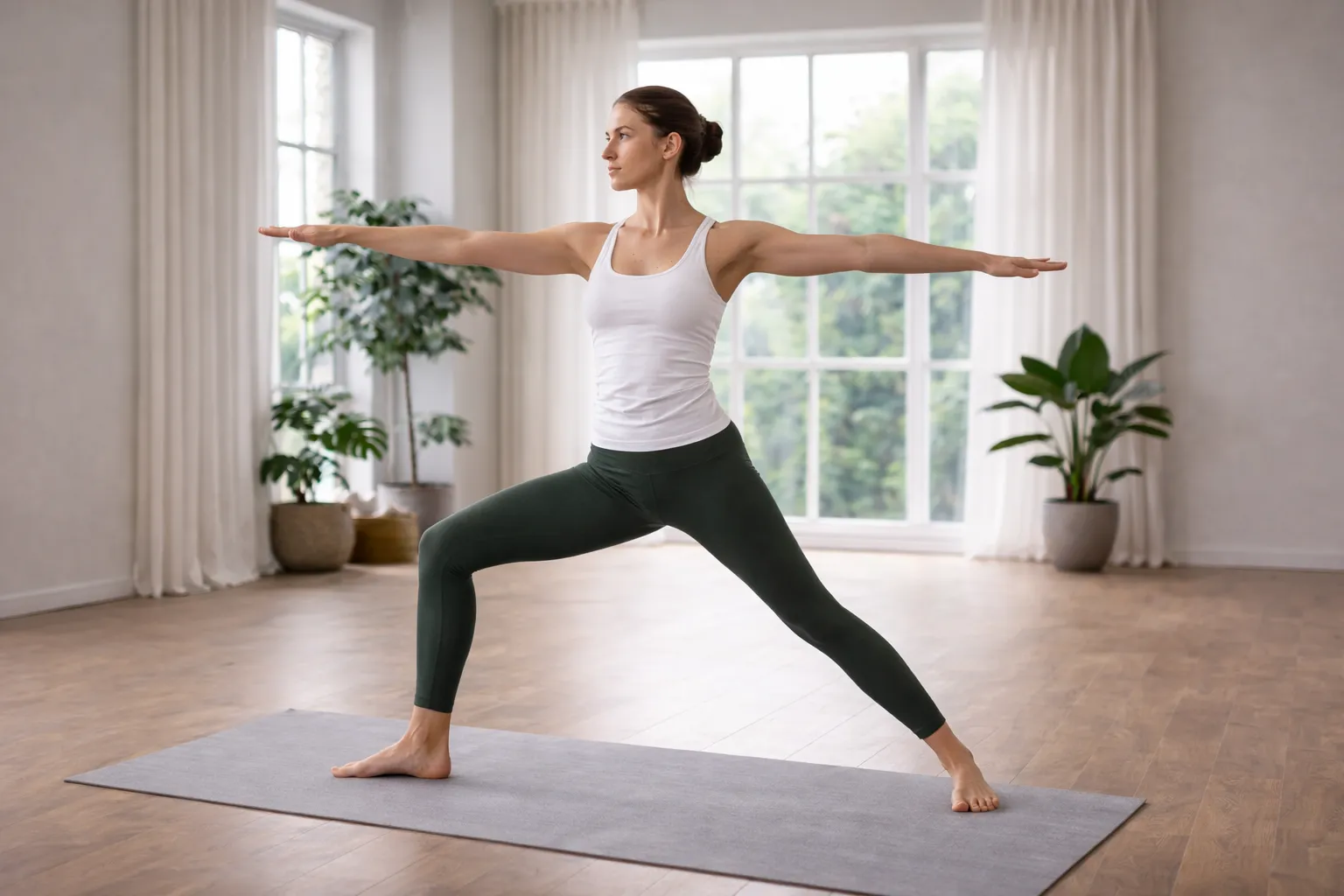
Visual example of common beginner mistakes in Warrior II.
Keep your shoulders relaxed and your neck long while grounding firmly through both feet, and focus on aligning your hips and torso to enhance stability.
Note: Use a chair or shorten your stance if balance feels challenging.
Recommended Yoga Props for Warrior II
Practicing Warrior II becomes more comfortable and stable when using the right yoga accessories, especially for beginners.
Yoga Mat: A non-slip yoga mat helps maintain balance and proper foot alignment.
Yoga Blocks: Useful for balance support and maintaining correct posture.
👉 Check beginner-friendly yoga blocks
Yoga Strap: Helps improve flexibility without overstretching.
👉 Explore yoga straps for beginners
● Beginners: 20–30 seconds
● Progress gradually to 40–60 seconds
● Focus on steady breathing rather than time
● During strength, posture, or flexibility-focused sessions
● In morning yoga routines
● In the middle of a yoga flow sequence
👉 Once you feel comfortable and stable in Warrior II, you can progress to Warrior III (Virabhadrasana III), which further enhances balance, core strength, and body control.
If you are interested in exploring yoga beyond personal practice, Yoga Teacher Training in Rishikesh offers a deeper understanding of traditional yoga, including foundational postures such as Warrior 1, Warrior 2, along with breath awareness and alignment principles.
Warrior II (Virabhadrasana II) is a powerful yet beginner-friendly yoga pose that supports strength building, posture improvement, and mental focus. When practiced regularly with proper alignment and mindful breathing, it helps develop stability, flexibility, and confidence over time. Approach the pose with patience and awareness, allowing your body to progress naturally for safe and long-term yoga benefits.
Beginners should focus on proper alignment and gradual progress rather than depth, ensuring a safe and enjoyable yoga practice.
Ans: Knee discomfort usually occurs due to poor alignment. Ensure your front knee stays directly over the ankle and does not collapse inward.
Ans: Yes, Warrior II strengthens the legs, core, and upper body while encouraging proper spinal alignment, which helps improve posture over time.
Ans: Yes, Warrior II can be practiced daily as part of a balanced yoga routine, as long as it is done with correct alignment and without strain.
Ans: Shorten your stance, engage your core, and focus on grounding through both feet. Using a yoga mat or practicing near a wall can also help.
Ans: Beginners can hold Warrior II for 20–30 seconds on each side. As strength and stability improve, the duration can be increased gradually.
Ans: People with knee or hip concerns should practice Warrior II gently, avoid deep bending, and consult a yoga instructor or healthcare professional if needed.
Disclosure: This post may contain affiliate links. We may earn a small commission at no extra cost to you.

Ajay Jaswal is the founder of Fitness Dose Club, where he shares beginner-friendly guides on posture improvement, fitness training, and responsible supplement use. His goal is to make healthy living simple, practical, and safe for everyday people.