Physical Address
304 North Cardinal St.
Dorchester Center, MA 02124
Physical Address
304 North Cardinal St.
Dorchester Center, MA 02124

Ardha Matsyendrasana, often referred to as the Seated Spinal Twist or Half Lord of the Fishes Pose, is a foundational seated posture that focuses on restoring natural movement to the spine. Rooted in classical Hatha Yoga and inspired by the teachings of the yogi Matsyendranath, this asana is designed to create a balanced twist through the spine while keeping the body stable and supported. The main purpose of practicing Ardha Matsyendrasana is to improve spinal mobility and gently activate the internal organs through controlled rotation and conscious breathing.
In the context of modern living, where long hours of sitting, limited movement, and mental stress are common, the spine often becomes stiff and digestion sluggish. Ardha Matsyendrasana helps counter these effects by encouraging spinal rotation, improving circulation, and supporting healthy digestive function. The posture can be adapted to suit different body types and experience levels, making it accessible to beginners while still offering depth for advanced practitioners. When practiced with awareness and proper alignment, it contributes not only to physical flexibility but also to mental calmness and overall body balance.
The term Ardha Matsyendrasana is derived from Sanskrit, where “Ardha” means half, “Matsyendra” refers to the legendary yogi known as the Lord of the Fishes, and “Asana” means posture. Together, the name describes the Half Lord of the Fishes Pose.
Ardha Matsyendrasana is practiced as a seated spinal twist in which the upper body rotates around the spine while the pelvis stays firmly rooted on the ground. This stable foundation allows the twist to remain controlled and safe. Unlike postures that primarily target surface muscles, this asana works more deeply by stimulating the spinal nerves, abdominal organs, and subtle energy pathways (nadis), supporting both physical balance and internal awareness.
The human spine is designed to twist. However, modern habits limit this natural movement. Ardha Matsyendrasana:
• Improves posture
• Restores spinal rotation
• Balances the nervous system
• Detoxifies internal organs
That’s why it is often included in daily yoga routines, therapeutic yoga, and pranayama preparation sequences.
Ardha Matsyendrasana massages the abdominal organs, liver, pancreas, stomach, and intestines, enhancing digestive fire (Agni). It is highly beneficial for:
• Constipation
• Sluggish metabolism
• Indigestion
The twisting action compresses and releases internal organs, helping flush out toxins. This natural detox effect supports liver function and blood purification.
This pose gently twists each vertebra, helping the spine stay flexible, strong, and youthful. Regular practice reduces stiffness in the neck, upper back, and lower back.
The spinal twist stimulates spinal nerves, improving communication between the brain and body. This leads to better coordination, focus, and nervous system balance.
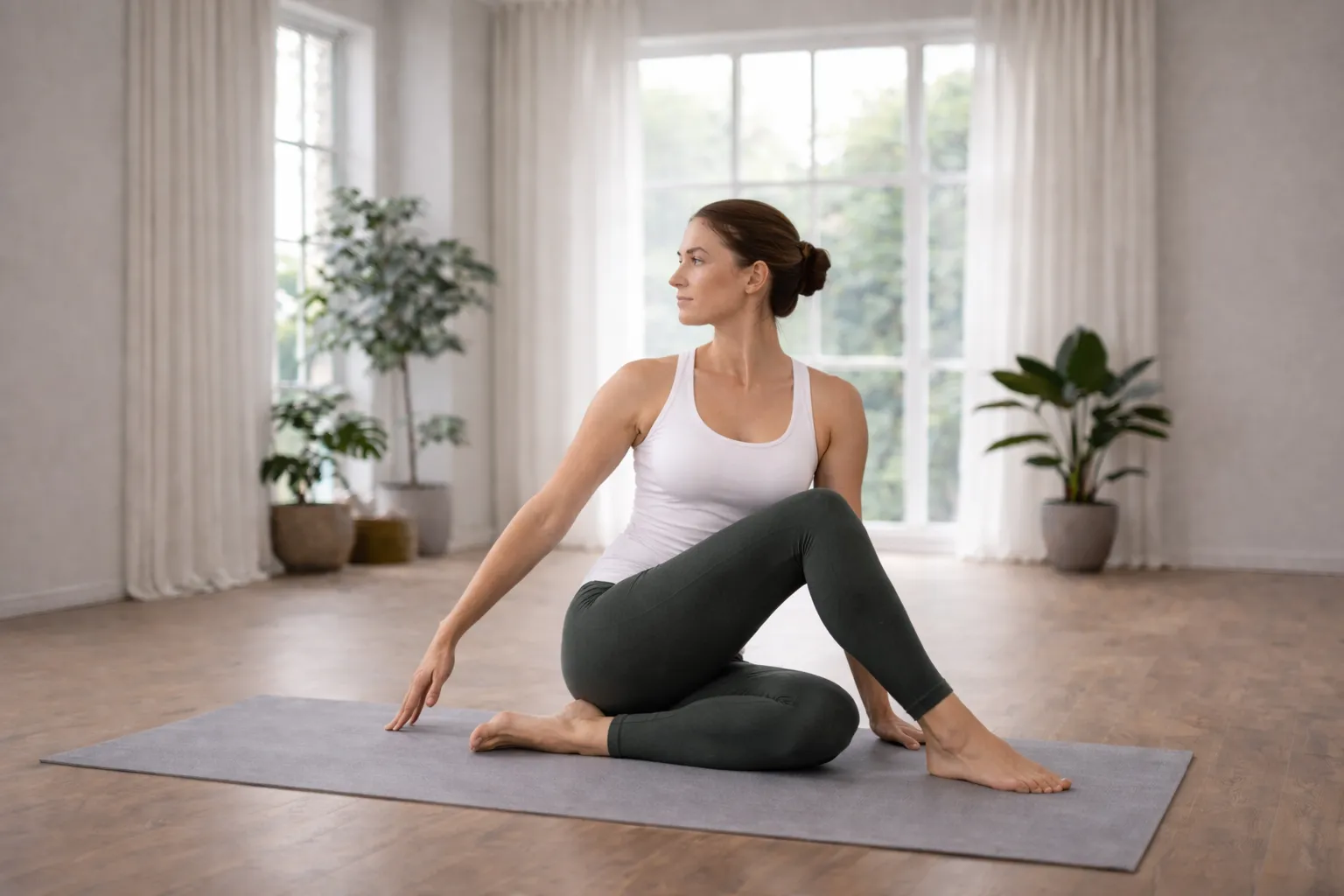
Ardha Matsyendrasana (Seated Spinal Twist) posture
By engaging the abdominal muscles and spinal stabilizers, Ardha Matsyendrasana helps correct rounded shoulders and slouched posture.
The deep twist combined with slow breathing activates the parasympathetic nervous system, reducing stress, anxiety, and mental fatigue.
When practiced correctly, this asana relieves mild lower back pain and sciatica symptoms by improving spinal alignment and releasing muscle tension.
Move with slow, natural breathing throughout the posture.
👉 According to Yoga Journal, Naukasana helps strengthen core muscles and supports overall body stability.
Follow these steps carefully for safe and effective practice:
Starting Position
• Sit on the floor with both legs stretched forward
• Keep your spine upright and shoulders relaxed
Bend the Right Leg
• Bend your right knee and place the right foot outside the left thigh.
• Keep the left leg straight or bend it so the left heel comes near the right hip (beginner-friendly option: keep it straight).
Lengthen the Spine
• Inhale deeply and lift the crown of your head upward.
• Feel the spine elongating before twisting.
Twist the Torso
• Place your right hand on the floor behind your back
• Exhale slowly and twist your torso to the right
• Bring your left elbow outside the right knee (or hug the knee)
Hold the Pose
• Keep both sitting bones grounded.
• Gaze over your right shoulder.
• Breathe normally and hold for 20–40 seconds.
Release and Repeat
• Inhale and slowly return to center.
• Repeat the same steps on the left side.
Best Time to Practice
• Early morning on an empty stomach
• Or evening, 4–5 hours after meals
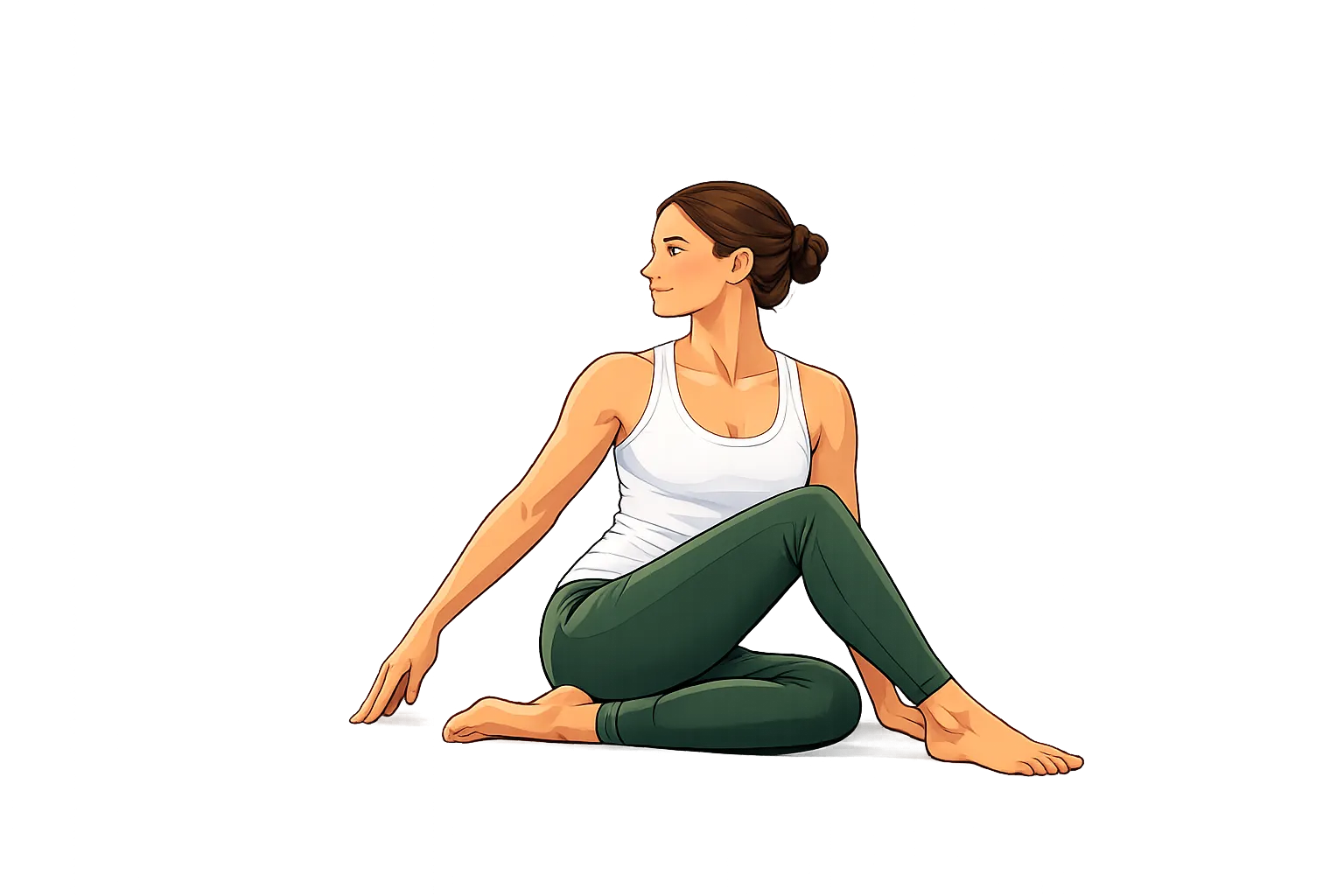
Step-by-step alignment in Ardha Matsyendrasana
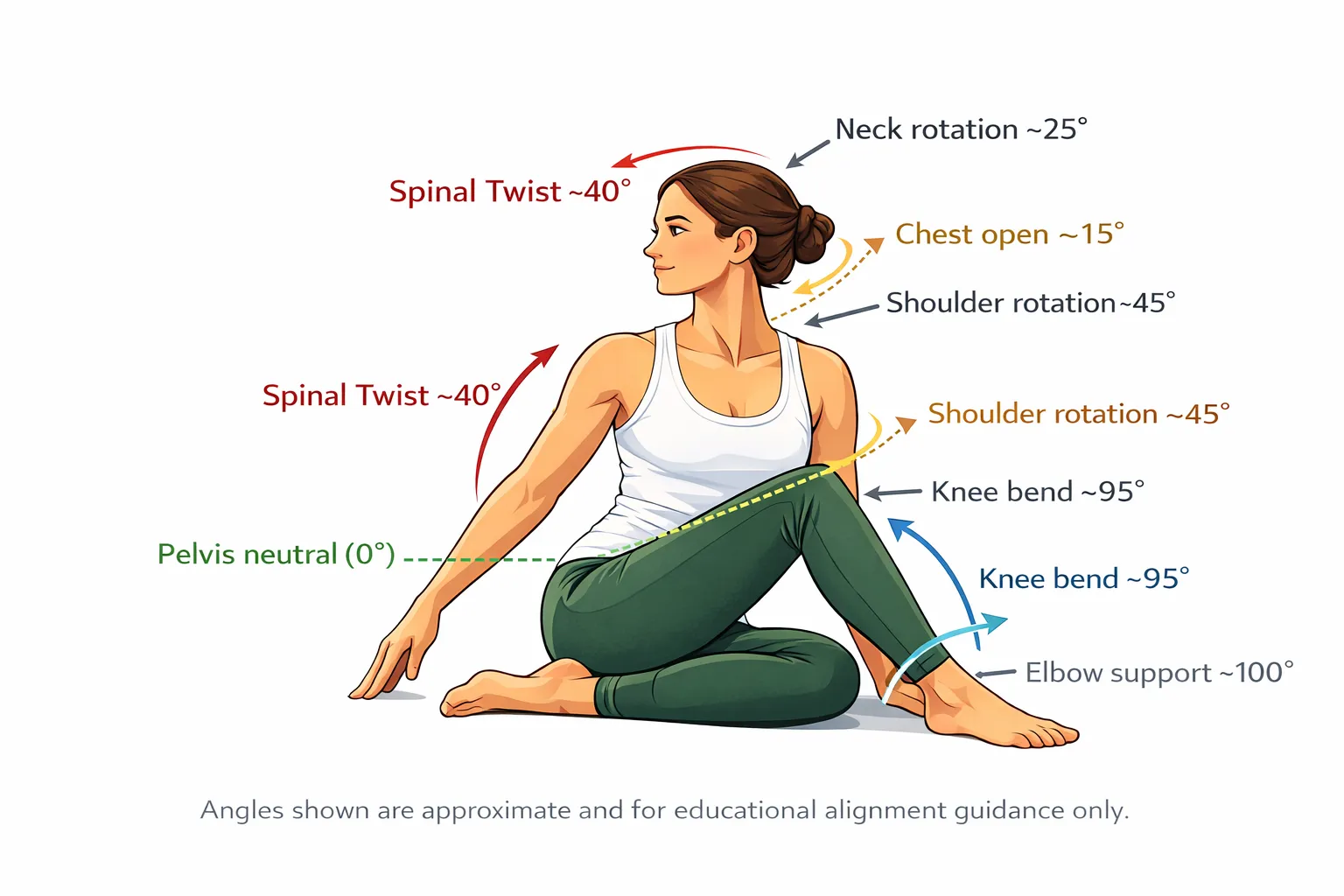
Angles may vary based on individual flexibility and experience.
While practicing Ardha Matsyendrasana, try not to round your back or lean forward. Avoid twisting too hard or forcing your body into the pose. Keep both hips resting on the floor for better balance, and remember to breathe normally throughout the posture. It’s more important to sit tall and move gently than to twist deeply.
• Inhale: Lengthen the spine
• Exhale: Deepen the twist
• Keep breathing slow and rhythmic
• Avoid holding the breath
Breath control enhances the therapeutic effects of this pose.
• Office workers
• Students
• People with mild digestive issues
• Yoga beginners (with modifications)
Avoid or practice only under guidance if you have:
• Severe back injury
• Slip disc or hernia
• Recent spinal surgery
• Pregnancy (advanced stages)
• Sit on a folded blanket
• Keep the bottom leg straight
• Hug the knee instead of using the elbow
These modifications make the pose accessible and safe.
Advanced practitioners may:
• Bind the arms behind the back
• Hold the pose longer with deeper awareness
Only attempt advanced versions after mastering the basics.
Want to learn yoga with proper guidance? Many beginners explore structured yoga education in Rishikesh (India), known as the Yoga Capital of the World.👉 Explore Beginner-Friendly Jiva Yoga Academy Teacher Training in Rishikesh
Ardha Matsyendrasana (अर्ध मत्स्येन्द्रासन) is a complete spinal rejuvenation pose that benefits the body, mind, and internal organs. With regular practice, it improves flexibility, digestion, posture, and mental clarity.
If you’re looking for one yoga pose that delivers multiple benefits, this spinal twist deserves a permanent place in your daily routine.
Practicing this pose daily for even 30–60 seconds per side can help maintain spinal health.
For those looking to build strength, improve posture, and maintain mobility with age, this program can be a supportive next step.
Q: Is Ardha Matsyendrasana suitable for beginners?
Yes, Ardha Matsyendrasana is suitable for beginners when practiced gently and with proper alignment. Beginners should avoid forcing the twist and can use simple modifications for comfort and safety.
Q: How long should Ardha Matsyendrasana be held?
The pose can be held for 30–40 seconds on each side while breathing normally. Beginners may start with a shorter hold and gradually increase the duration.
Q: Can Ardha Matsyendrasana help with digestion?
Yes, the twisting action gently stimulates the abdominal organs, which may support better digestion and help relieve mild digestive discomfort when practiced regularly.
Q: Should I practice Ardha Matsyendrasana on an empty stomach?
Yes, it is best practiced on an empty stomach, preferably in the morning. If practiced in the evening, wait at least 4–5 hours after meals.
Q: Who should avoid Ardha Matsyendrasana?
People with severe back injuries, slip disc, recent spinal surgery, or advanced pregnancy should avoid this pose or practice only under professional guidance.
Along with gentle yoga practices like Ardha Matsyendrasana, guided back-care programs can help people better understand posture correction and pain management.
This posture plays an important role in any yoga flexibility guide, especially for maintaining spinal mobility.
View Recommended Products for Practice
Disclosure: This page may contain affiliate links. If you choose to purchase or enroll through these links, we may earn a small commission at no extra cost to you.
Disclaimer: The information provided on this website is for educational purposes only and should not be considered medical advice. Please consult a qualified professional before starting any new yoga or wellness practice.

Ajay Jaswal is the founder of Fitness Dose Club, where he shares beginner-friendly guides on posture improvement, fitness training, and responsible supplement use. His goal is to make healthy living simple, practical, and safe for everyday people.