Physical Address
304 North Cardinal St.
Dorchester Center, MA 02124
Physical Address
304 North Cardinal St.
Dorchester Center, MA 02124

Most people don’t think much about their back until stiffness, discomfort, or fatigue becomes part of daily life. Bridge Pose / सेतु बन्धासन alignment is the key to practicing Setu Bandhasana safely, comfortably, and with maximum benefit for your back and posture. Long hours of sitting, using mobile phones, or working at a desk slowly affect posture and spinal support. The shoulders round forward, the chest collapses, and the lower back either feels tight or weak.
Setu Bandhasana, commonly known as Bridge Pose, is a yoga posture that gently addresses these everyday issues. It does not require extreme flexibility or strength, yet it offers meaningful benefits when practiced with awareness. Rather than focusing on how high the hips lift, Bridge Pose works best when the body feels supported, steady, and comfortable.
This guide explains Bridge Pose in a practical way—how it feels in real practice, how to perform it safely, and how it fits into everyday life.
At first glance, Bridge Pose looks very simple. You lie on your back, bend your knees, and lift your hips. But the real value of this posture lies in how the body works together during the movement.
In regular practice, Bridge Pose reconnects areas that often stop cooperating, feet, legs, hips, spine, and breath. Instead of forcing flexibility, the posture builds strength and awareness gradually. This is why many yoga teachers continue to use it even with experienced practitioners.
With consistent practice, people often notice:
Many practitioners also report feeling taller, lighter, and less compressed after coming out of the pose.
When you lift into Bridge Pose, several muscle groups begin working together. The legs and hips provide stability, the muscles along the back support the spine, and the front of the body gently opens.
Unlike deeper backbends, Bridge Pose creates a controlled and supported spinal extension. The key is that the lift comes from the legs and hips, not from forcing the lower back. This makes the posture suitable for beginners and for people returning to movement after a long break.
Breathing also changes naturally in this pose. As the chest opens slightly, the lungs have more space to expand. Many people notice that their breath slows down without effort, which sends a calming signal to the nervous system.
Setu Bandhasana is also recommended as a gentle backbend in many traditional yoga sequences.
Focus on these alignment points before and during the lift to keep Bridge Pose safe and effective:
Lie comfortably on your back. Bend your knees and place your feet flat on the floor, about hip-width apart. Bring your heels close enough that you can almost touch them with your fingertips.
Let your arms rest alongside your body with palms facing down. Take a few breaths here and allow your shoulders and lower back to relax into the mat.
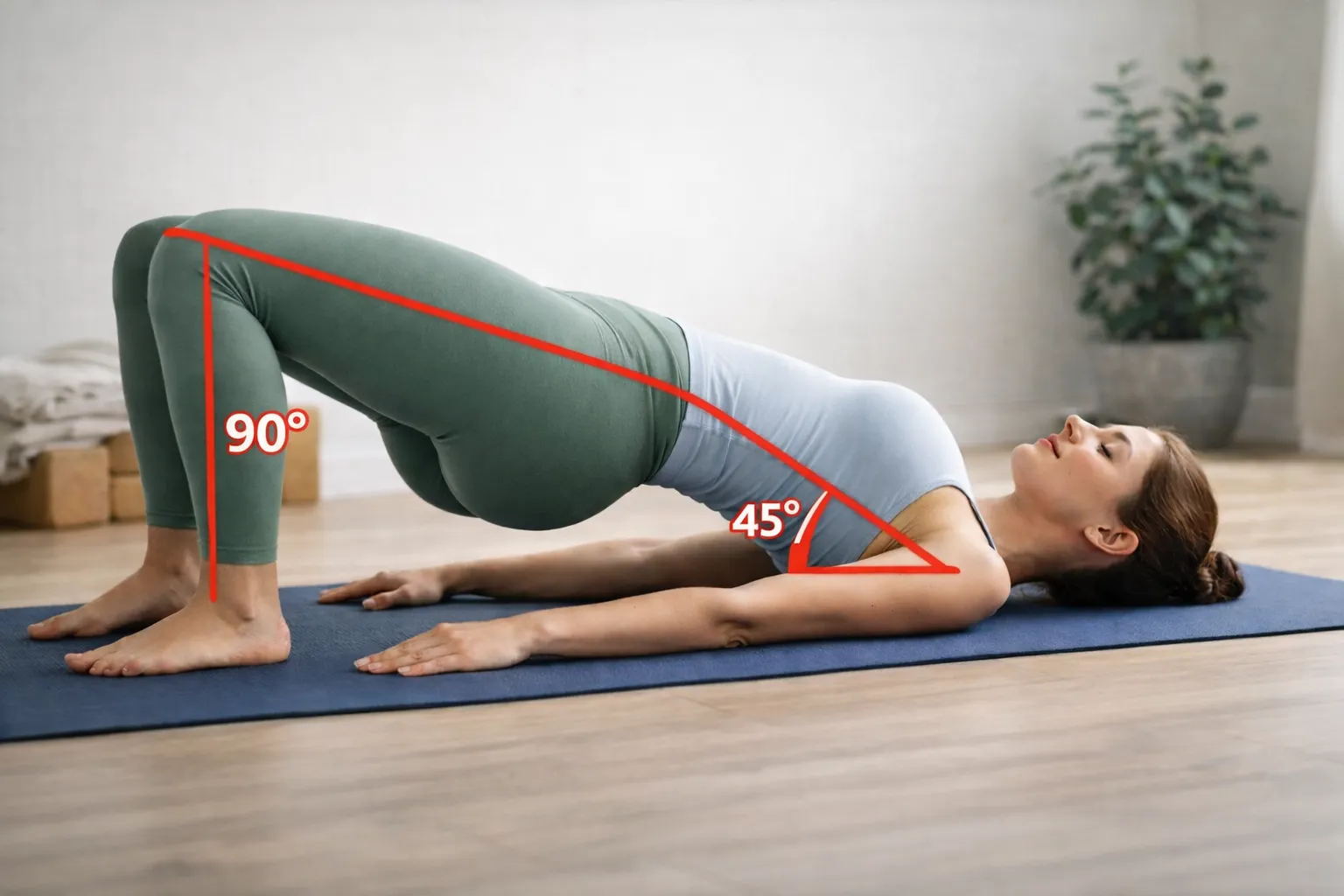
Setu Bandhasana (Bridge Pose) Proper Alignment
Before lifting, gently lengthen the back of your neck and keep your gaze pointing upward. Allow your shoulders to soften toward the floor instead of forcing them underneath you. This helps protect the neck during the pose.
Press evenly through both feet. As you exhale, slowly lift your hips. Imagine guiding the hips forward and upward smoothly, rather than pushing them as high as possible.
Keep your knees pointing forward and avoid letting them fall outward. The movement should feel steady, not rushed.
Once lifted, allow the chest to open naturally. If it feels comfortable, you may gently roll the shoulders underneath and interlace your fingers under the back, pressing the arms lightly into the floor for support.
There should be space across the collarbones, not tension in the neck.
Stay in the pose for 20 to 45 seconds, depending on your comfort level. Keep the breath smooth and even. If breathing becomes shallow or strained, slightly lower the hips.
The quality of the breath matters more than the height of the lift.
To come out, release your hands if they are clasped. On an exhale, slowly lower your spine back to the mat, one vertebra at a time. Pause for a moment and notice how your back feels.
Angles are approximate and may vary according to body flexibility, age, and experience level.
This usually means the lift is coming mostly from the lower back. Engage the glutes more and keep the ribs soft rather than flared.
This usually means the lift is coming mostly from the lower back. Engage the glutes more and keep the ribs soft rather than flared.
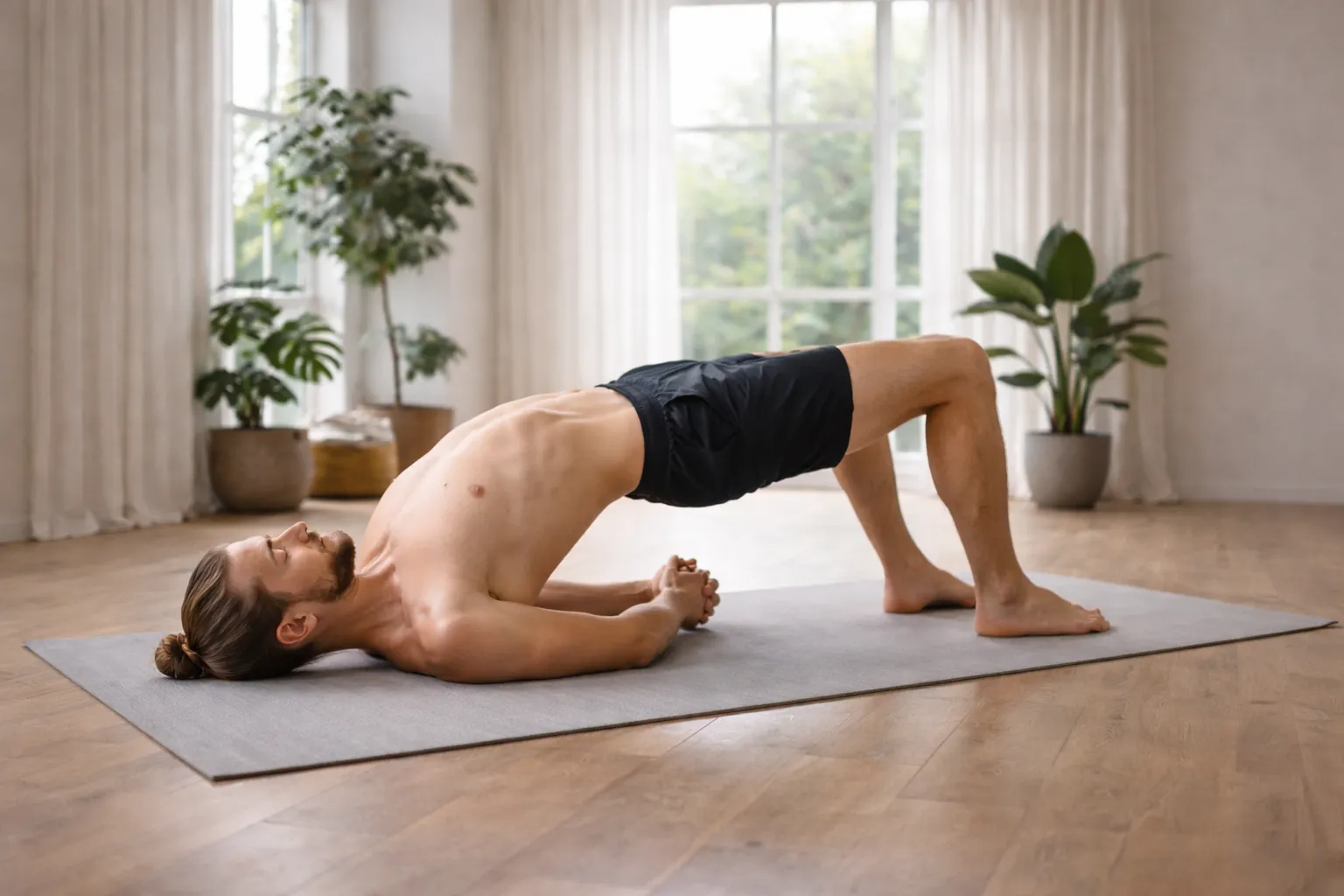
Bring the feet slightly closer together and press evenly through both feet to improve stability.
Avoid turning your head while the hips are lifted. Reduce the height of the pose if tension continues.
When the heels are far away, the lower back works harder. Move the feet closer to allow the legs to assist the lift.
Supported Bridge Pose is an excellent option. Place a yoga block under the sacrum (the flat bone at the base of the spine) and rest your weight onto it. This version removes most of the effort and allows the body to relax.
You can stay here for 2 to 5 minutes, focusing on slow, comfortable breathing.
Instead of one long hold, practice multiple shorter holds of 20 to 30 seconds. This builds strength in the glutes and back without overloading the spine. Small, controlled pulses can also help activate muscles safely.
One of the most overlooked benefits of Bridge Pose is how grounding it feels. Because the shoulders, arms, and feet remain connected to the floor, the body receives constant feedback of support.
Practicing the pose slowly encourages longer exhales, helping the body shift out of stress mode. Many people notice that their jaw relaxes and their breathing becomes more rhythmic.
For evening practice, the supported version is especially calming and prepares the body for rest.
Bridge Pose is especially helpful for:
Because it is easily adjustable, it suits a wide range of bodies and experience levels.
For beginners or those seeking a simple daily routine, Bridge Pose can be comfortably paired with Vajrasana to balance spinal support and relaxation.
While Bridge Pose is generally safe, mindful practice is important:
If anything feels sharp or painful, come out of the pose and adjust.
You can include Bridge Pose in a short home practice:
This routine takes less than 10 minutes and works well after a long day.
If you are interested in exploring yoga beyond personal practice, Yoga Teacher Training in Rishikesh offers a deeper understanding of traditional yoga, including foundational postures such as Warrior 1, Sukhasana, Setu Bandhasana (Bridge Pose), Vajrasana (Thunderbolt Pose) along with breath awareness and alignment principles.
Q: Is Bridge Pose suitable for beginners?
Yes. When practiced with proper setup and awareness, it is one of the safest backbends for beginners.
Q: How often can I practice Setu Bandhasana?
It can be practiced daily, especially in its gentler or supported form.
Q: Does Bridge Pose help with posture?
With regular practice, it encourages chest openness and strengthens the muscles that support upright posture.
Q: What if I feel discomfort in my lower back?
Lower the height of the pose, engage the legs more, or switch to supported Bridge.
For those looking to build strength, improve posture, and maintain mobility with age, this program can be a supportive next step. 👉 View Fitness After 40 Program
Setu Bandhasana shows that effective yoga does not need to be complicated or extreme. When practiced with patience and awareness, it supports the back, improves posture, and encourages calmer breathing. Over time, Bridge Pose can become a dependable part of daily movement—helping the body feel steadier and the mind feel more at ease.
If you practice Bridge Pose at home, supportive props can make alignment easier
Disclaimer: Practice yoga within your comfort level. If you experience pain or discomfort, stop and seek guidance from a qualified professional.
Disclosure: Some links on this page may be affiliate links, meaning we may earn a commission at no extra cost to you.

Ajay Jaswal is the founder of Fitness Dose Club, where he shares beginner-friendly guides on posture improvement, fitness training, and responsible supplement use. His goal is to make healthy living simple, practical, and safe for everyday people.