Physical Address
304 North Cardinal St.
Dorchester Center, MA 02124
Physical Address
304 North Cardinal St.
Dorchester Center, MA 02124

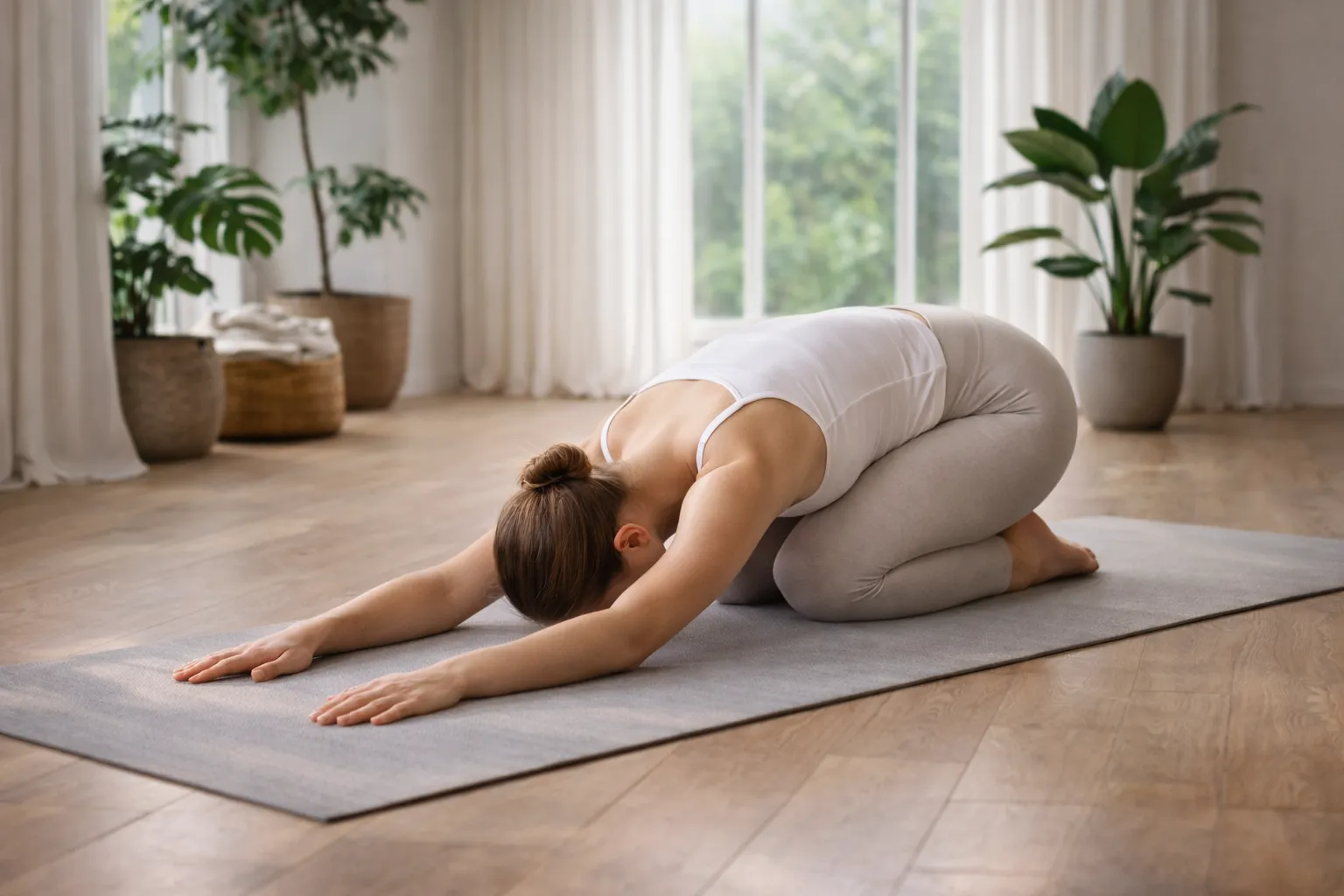
Child’s Pose (Balasana) is a gentle resting yoga posture commonly practiced by beginners to relax the body, calm the nervous system, and release physical and mental tension. Modern life rarely gives us a chance to slow down. Long hours at desks, constant screen exposure, and mental pressure quietly build tension in the body and mind. Over time, this stress shows up as stiffness, poor sleep, anxiety, and back discomfort.
Yoga offers natural and effective solutions to these modern lifestyle problems, and one of the simplest yet most powerful yoga poses is Child’s Pose (Balasana). This posture helps release tension from the spine and shoulders while calming the nervous system. Whether you are a beginner, an office worker, or someone recovering from physical or mental fatigue, Child’s Pose provides instant comfort and long-term benefits when practiced regularly.
Often used as a resting posture during yoga sessions, Balasana helps reset the body and mind, making it an essential pose for stress relief, recovery, and mindfulness. With minimal effort and no special equipment, this pose can be practiced at home, at the office, or as part of a daily yoga routine, making it ideal for modern lifestyles.
In yoga practice, Child’s Pose (Balasana) acts as a pause button for the body, encouraging rest, gentle folding, and mindful breathing. It softens the spine, releases shoulder tension, and calms the mind.
This restorative pose helps reduce stress, ease lower back tightness, and relieve fatigue caused by long periods of sitting, making it ideal for beginners and office workers.
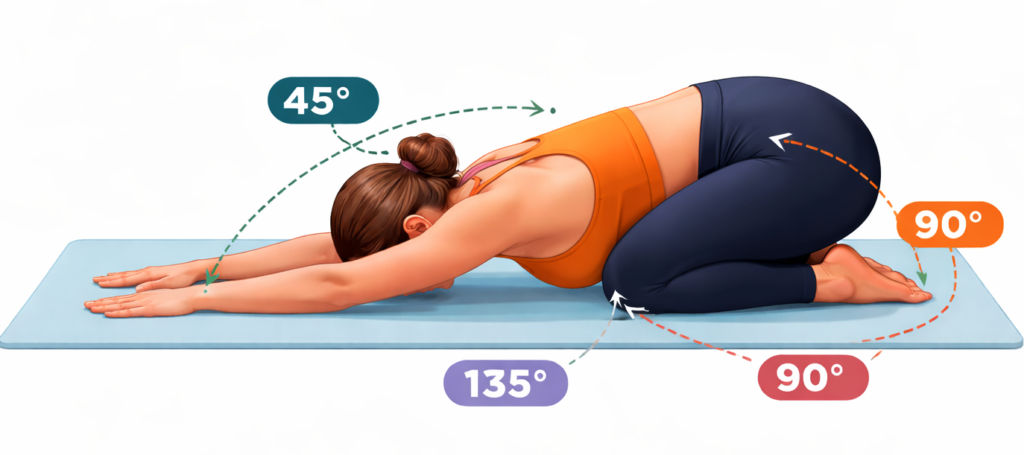
View the step-by-step guide to practice Child’s Pose (Balasana)
For beginners, yoga should feel safe, supportive, and approachable, not intimidating. Child’s Pose plays a key role in creating that experience. Often referred to as a natural resting posture, it allows new practitioners to pause, recover, and reconnect with their breath at any point during practice.
When starting yoga, many beginners face challenges such as limited flexibility, balance concerns, or fear of doing poses incorrectly. Child’s Pose removes this pressure by offering a low-effort, grounded position where the body feels secure and supported. It allows beginners to focus on relaxation and breathing rather than performance.
• Gentle on the body: Places minimal stress on joints and muscles
• Highly adaptable: Can be easily modified using cushions, blocks, or folded blankets
• Supports mindful breathing: Encourages slow, deep breaths that calm the nervous system
• Builds body awareness: Helps beginners tune into physical sensations safely
• Boosts confidence: Creates a sense of comfort and control during practice
Because the body is naturally supported in this posture, beginners can fully relax without worrying about perfect alignment. Over time, this sense of ease helps build confidence, making it easier to explore other yoga poses with greater awareness and comfort.
👉 Want to become more flexible with yoga?
Read our detailed Yoga & Flexibility Guide to learn safe and effective stretches for beginners.
Child’s Pose (Balasana) offers multiple physical and mental benefits, especially for beginners who need a safe and restorative posture. This pose gently supports the body while calming the mind, making it an essential part of any beginner yoga routine.
• Deep relaxation: Helps calm the nervous system and reduce stress, anxiety, and mental fatigue
• Spinal relief: Gently stretches the spine, easing lower back tension and stiffness
• Neck and shoulder relaxation: Releases tightness caused by desk work and poor posture
• Improved breathing: Encourages slow, deep breaths that support mindfulness and relaxation
• Beginner-friendly support: Requires minimal flexibility and can be easily modified with props
• Better body awareness: Helps beginners reconnect with their body without strain or pressure
Regular practice of Child’s Pose helps beginners feel more comfortable and confident on the mat while supporting overall physical and mental well-being.
The Problem
Difficulty falling asleep, frequent night awakenings, and bedtime anxiety have become increasingly common due to stress, excessive screen time, and irregular routines. Poor sleep quality not only affects energy levels but also impacts mood, focus, and overall health.
How Child’s Pose Helps
Practicing Child’s Pose (Balasana) before bedtime can gently prepare the body and mind for restful sleep by:
• Calms the nervous system by slowing heart rate and breath
• Encourages physical stillness, helping the body enter rest mode
• Reduces racing thoughts and bedtime anxiety
When combined with slow, mindful breathing, Child’s Pose becomes a simple yet effective relaxation tool that supports better sleep and can help manage mild insomnia naturally.
The Problem:
Modern life often keeps the mind in a constant state of alertness. Stress, anxiety, emotional fatigue, and overthinking are common results.
How Child’s Pose Helps:
• Helps the nervous system shift into a relaxed state
• Naturally slows the breath and heart rate
• Reduces mental chatter and emotional tension
Why You Should Practice It:
Child’s Pose activates the body’s relaxation response, helping the mind shift from “fight or flight” mode to a state of calm and safety.
The Problem:
Neck stiffness and shoulder tightness are common due to desk work, mobile phone use, and stress-related muscle tension.
How Child’s Pose Helps:
• Improves blood circulation to the upper body
• Relaxes the shoulders away from the ears
• Releases tension in the neck muscles
Why You Should Practice It:
The supported position of Child’s Pose allows gravity to gently ease tension rather than forcing a stretch.
The Problem:
Prolonged sitting, poor posture, and lack of movement often lead to lower back pain and spinal tightness.
How Child’s Pose Helps:
• Releases tension in the lower back
• Gently stretches the spine
• Promotes healthy spinal alignment
Why You Should Practice It:
Balasana allows the spine to lengthen naturally without pressure, making it ideal for people experiencing mild back discomfort.
The Problem:
Slouching, rounded shoulders, and misaligned posture are common results of sedentary habits.
How Child’s Pose (Balasana) Helps:
• Supports healthy alignment over time
• Encourages spinal awareness
• Gently resets posture patterns
Why You Should Practice It:
Regular relaxation of the spine helps counteract postural stress caused by daily activities.
The Problem:
Physical exhaustion and mental burnout reduce productivity and motivation.
How Child’s Pose (Balasana) Helps:
• Allows the body to recover
• Restores energy without stimulation
• Provides deep muscular relaxation
Why You Should Practice It:
Unlike active poses, Balasana allows recovery without draining physical energy, making it perfect during breaks or after workouts.
Follow these simple steps to safely and comfortably practice Child’s Pose:
Start on Your Knees
Kneel on the floor with your big toes gently touching and your knees slightly apart. Slowly sit back, resting your hips on your heels. If this feels uncomfortable, place a cushion or folded blanket between your hips and heels.
For better comfort and knee support, practicing Child’s Pose on a non-slip yoga mat or with a soft cushion can make a big difference.
Fold the Torso Forward
As you exhale, gently lower your torso between your thighs. Allow your chest and abdomen to relax downward without forcing the stretch.
Relax the Spine and Neck
Lengthen your tailbone away from the pelvis while softly lifting the base of your skull, creating space in the neck. Let your forehead rest on the mat or a block for added comfort.
Position the Arms Comfortably
Stretch your arms forward with palms facing down to deepen the stretch through the shoulders. Alternatively, let your arms rest alongside your legs with palms facing upward for a more restorative, calming variation.
Breathe and Hold
Remain in this pose for 30 seconds to several minutes, breathing slowly and deeply. With each exhale, allow your body to soften and your mind to quiet.
Release the Pose Gently
To come out, press lightly through your hands, engage your core, and slowly lift your torso upright, stacking your spine one vertebra at a time.
Child’s Pose can be easily adjusted to suit different body needs:
• For neck strain: Support the forehead with a block or cushion
• For tight hips or back: Use a pillow or bolster between thighs and chest
• For knee discomfort: Place a folded blanket under the knees
Using simple yoga props like blocks or bolsters helps beginners relax fully into Child’s Pose without strain.
• Holding the breath
• Allowing tension to remain in shoulders
• Forcing the hips down to the heels
• Ignoring pain or discomfort
Regular practice of Child’s Pose (Balasana) helps beginners relax the body, calm the mind, and support spinal comfort.
Child’s Pose can be practiced:
• After workouts, to support muscle recovery and release tension
• Before bedtime, to calm the nervous system and improve sleep
• During yoga sessions, as a resting pose between active postures
If you are new to yoga, explore our beginner yoga poses guide to build a safe and consistent practice.
Q1. How long should beginners hold Child’s Pose?
Ans: Beginners can hold Child’s Pose for 30 seconds to 2 minutes. As comfort and relaxation improve, the pose can be held longer while maintaining slow, steady breathing.
Q2. Can Child’s Pose help reduce stress and anxiety?
Ans: Yes, Child’s Pose helps calm the nervous system, slow the breath, and reduce mental tension. Regular practice supports relaxation and can help manage stress and anxiety naturally.
Q3. Is Child’s Pose helpful for back pain?
Ans: Child’s Pose gently stretches the spine and releases tension in the lower back. It is helpful for mild back discomfort, especially caused by prolonged sitting or poor posture. People with serious back conditions should practice with guidance.
Q4. Is Child’s Pose (Balasana) suitable for complete beginners?
Ans: Yes, Child’s Pose (Balasana) is one of the safest and most beginner-friendly yoga poses. It requires minimal flexibility, places very little strain on the body, and can be easily modified using cushions or blocks for comfort.
Q5. When should Child’s Pose be avoided or modified?
Ans: Child’s Pose should be avoided or modified if you have:
• Recent knee injuries
• Severe hip or ankle pain
• Pregnancy (without proper modification)
Using props or consulting a qualified yoga instructor is recommended in such cases.
Q6. Can I practice Child’s Pose before sleeping?
Ans: Absolutely. Practicing Child’s Pose before bedtime can help relax the body and mind, making it easier to unwind and prepare for restful sleep.
For those looking to build strength, improve posture, and maintain mobility with age, this program can be a supportive next step. 👉 View Fitness After 40 Program
For deeper guidance beyond self-practice, traditional institutions like Jiva Yoga offer structured programs that include Shavasana and other relaxation techniques.
Child’s Pose (Balasana) offers deep relaxation and gentle support for both body and mind. For beginners, it creates a safe space to slow down, release tension, and breathe mindfully. Practicing Child’s Pose along with other beginner yoga poses can help build comfort, balance, and long-term consistency.
Disclaimer: This content is for informational purposes only. Please consult a qualified yoga instructor or healthcare professional before practicing yoga, especially if you have any medical conditions or injuries.
Disclosure: This page may contain affiliate links. If you choose to purchase or enroll through these links, we may earn a small commission at no extra cost to you.

Ajay Jaswal is the founder of Fitness Dose Club, where he shares beginner-friendly guides on posture improvement, fitness training, and responsible supplement use. His goal is to make healthy living simple, practical, and safe for everyday people.