Physical Address
304 North Cardinal St.
Dorchester Center, MA 02124
Physical Address
304 North Cardinal St.
Dorchester Center, MA 02124

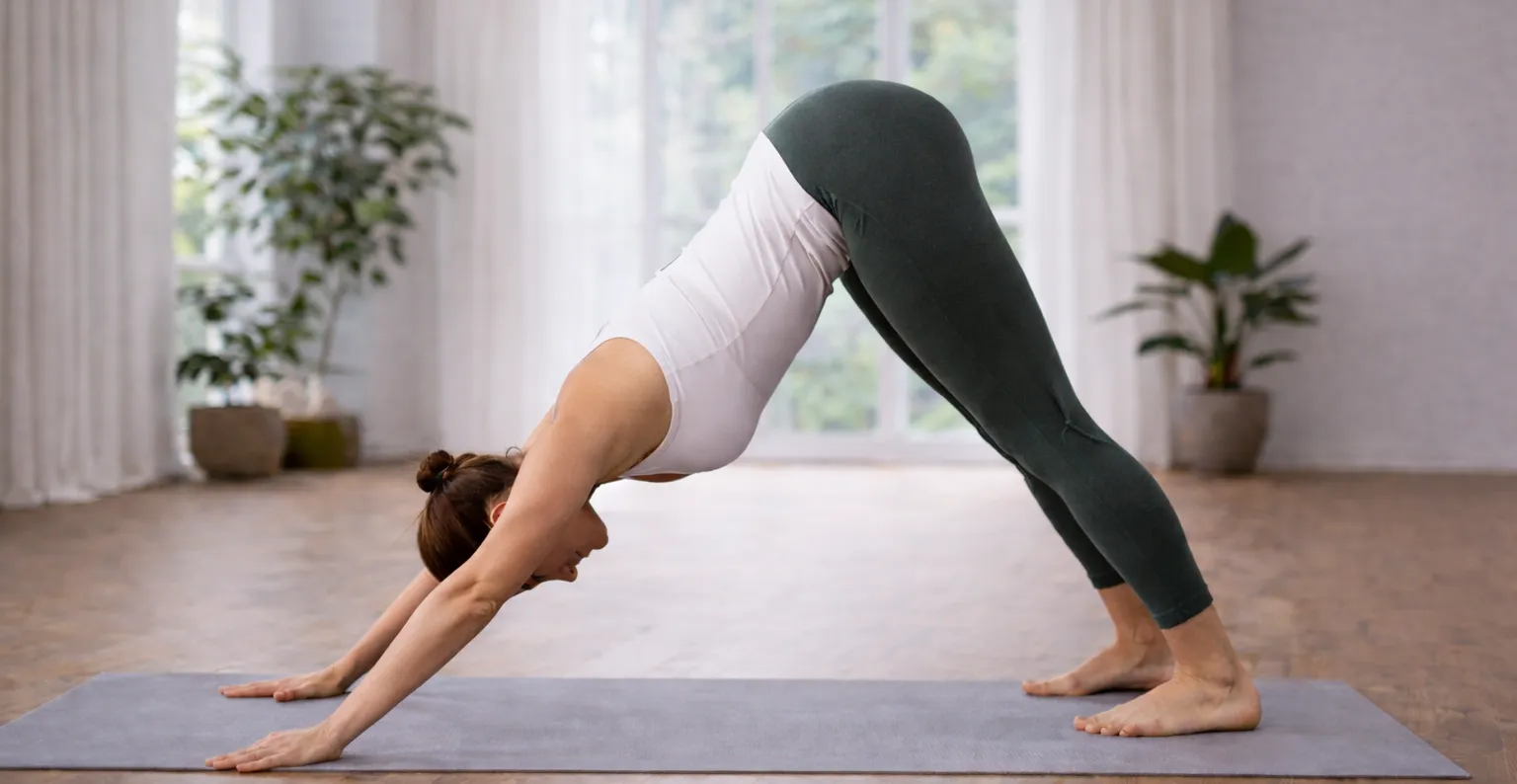
Back pain, body stiffness, and poor posture are increasingly affecting people who spend long hours sitting at desks or using digital screens. Limited movement and prolonged sitting place constant stress on muscles and the spine, gradually reducing mobility and overall comfort.
Downward Dog (Adho Mukha Svanasana) is a widely practiced yoga pose known for its ability to gently stretch the spine, relax tight muscles, and restore energy throughout the body. Its adjustable nature makes it especially suitable for beginners and individuals practicing yoga at home.
When performed with mindful alignment and controlled breathing, this pose supports spinal lengthening, eases tightness in the shoulders and hamstrings, and promotes stronger posture. It also encourages healthy circulation and mental relaxation, improving overall body awareness.
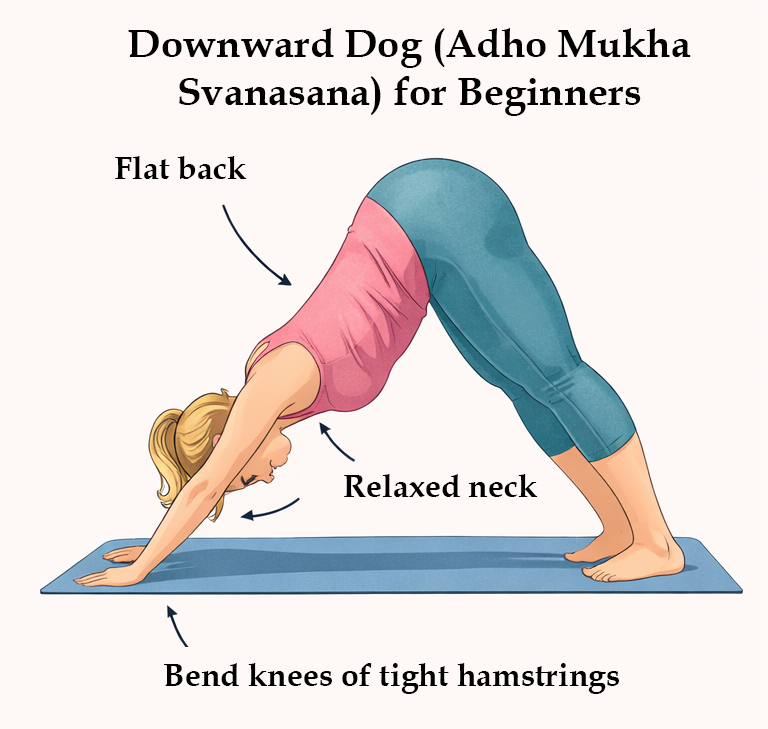
Read the step-by-step instructions for Downward Dog
In this guide, you’ll learn how Downward Dog supports back health and posture, how to practice it safely, common beginner mistakes, and simple modifications for stiffness or limited flexibility.

Long hours of sitting and poor posture commonly lead to back pain and spinal stiffness. Downward Dog helps counter these effects in several ways:
As the hips lift upward, gravity gently encourages spinal elongation. This reduces compression between the vertebrae and helps relieve built-up pressure caused by prolonged sitting.
Lower back pain is often linked to tight hamstrings and hips. Downward Dog stretches the back of the legs, reducing strain on the lower back and improving overall comfort.
This mild inversion increases blood flow to the spine and surrounding muscles, supporting tissue recovery and reducing stiffness.
By engaging the shoulders, arms, and core, Downward Dog strengthens the muscles that support proper posture and spinal stability.
Downward Dog (Adho Mukha Svanasana) is a fundamental yoga posture where the body moves into an inverted “V” shape. The hands and feet press into the mat as the hips lift upward, creating space along the spine and relieving compression.
Although the pose appears gentle, it delivers full-body engagement. It activates the spine, shoulders, arms, legs, and core while promoting steady, rhythmic breathing. Because of this balance between effort and relaxation, Downward Dog is frequently included in yoga flows as both a transition and recovery posture.
For beginners, this pose helps build flexibility, strength, and coordination simultaneously, making it an essential foundation for developing a consistent yoga practice.
To practice Downward Dog, begin on your hands and knees and follow these steps for proper alignment and maximum benefits:
● Begin on all fours in a tabletop position
● Place your wrists directly under your shoulders and knees under your hips
● Spread your fingers wide and press firmly into the mat
● Tuck your toes and lift your hips upward and back
● Keep your spine long and chest gently moving toward the thighs
● Bend your knees slightly if hamstrings feel tight
● Relax your neck and let your head hang naturally
● Hold the pose for 5–8 deep breaths, then rest
Repeat the pose 2–3 times, focusing on smooth breathing and controlled movement.
👉 Buy Recommended Non-Slip Yoga Mat
Beginners often need small adjustments to maintain comfort and alignment. These adaptations help protect the spine and improve posture:
● Bend the Knees: Softening the knees helps keep the spine neutral and reduces strain on the lower back and hamstrings.
● Engage the Core: Gently activate the lower belly to support the spine and protect the lower back.
● Externally Rotate the Upper Arms: Rotate the upper arms slightly outward to broaden the upper back and improve shoulder stability.
These refinements allow you to practice the pose more effectively while improving posture over time.
👉 View Beginner-Friendly Yoga Blocks
Body stiffness often develops due to inactivity, stress, or repetitive daily movements. Downward Dog addresses stiffness by stretching and activating multiple muscle groups simultaneously.
● Shoulders & Neck: Releases built-up tension caused by long hours of desk work or screen use
● Hamstrings & Calves: Improves lower-body flexibility and mobility
● Spine: Encourages smooth, pain-free movement
When practiced with slow breathing and mindful holds, the body gradually softens without forcing or strain.
Poor posture commonly results from weak back muscles, tight hips, and rounded shoulders. Downward Dog helps correct these imbalances by:
● Promoting a neutral, well-aligned spine
● Strengthening the upper back and shoulder muscles
● Stretching the chest and shoulders to counter slouching
● Enhancing body awareness and balance
With regular practice, this pose can help you stand taller, sit more comfortably, and move with better alignment in everyday life.
With regular practice, Downward Dog helps strengthen the muscles that support proper posture and spinal alignment. Over time, this can help you stand taller and sit more comfortably.
👉 Read more on Yoga for Posture Correction
Beginners often make small alignment mistakes in Downward Dog that can reduce its benefits or cause discomfort. Avoid these common errors to practice safely and effectively:
● Rounding the lower back
● Locking the knees forcefully
● Collapsing weight into the shoulders
● Holding the breath
● Forcing heels flat before flexibility develops
Correct alignment, mindful breathing, and controlled movement are essential for gaining the full benefits of Downward Dog while preventing unnecessary strain or injury.
If you feel stiffness or mild discomfort while practicing Downward Dog, these simple adjustments can help you maintain comfort and stability:
● Soften the Knees: Allows the spine to remain long and reduces pressure on the lower back.
● Support the Hands with Blocks: Elevating the hands decreases load on the wrists and shoulders.
● Allow the Heels to Stay Lifted: Prevents calf strain while maintaining proper spinal length.
● Limit Hold Duration: Begin with short holds and increase gradually as your body adapts.
These modifications help beginners practice Downward Dog with confidence while safely building strength, flexibility, and postural awareness.
Recommended support tool
Beginners should hold Downward Dog for 20–30 seconds, focusing on steady breathing and proper alignment. As strength and flexibility improve, the hold time can gradually increase to 45–60 seconds.
Always prioritize correct form and comfort over duration to gain maximum benefits and avoid strain.
● Morning: Helps awaken the spine, improve circulation, and reduce morning stiffness
● Evening: Releases tension and tightness built up from daily activities
● After Long Periods of Sitting: Restores spinal mobility and refreshes the body
● Practice Consistently: Aim for 3–5 sessions per week to build flexibility and strength over time.
● Warm Up Gently: Pair the pose with light stretches to prepare the muscles and reduce stiffness.
● Focus on Slow, Deep Breathing: Steady breathing improves relaxation and supports proper alignment.
● Combine with Other Beginner Poses: Balance your routine by adding gentle poses for overall mobility and posture support.
Avoid practicing Downward Dog or consult a qualified professional if you have any of the following conditions:
● Severe wrist or shoulder injuries
● Recent spinal surgery or acute back issues
● Uncontrolled high blood pressure
● Frequent dizziness or vertigo
Always listen to your body, avoid pushing into pain, and practice gently with proper modifications when needed.
Q1: Can beginners practice Downward Dog daily?
Ans: Yes, with proper form and short holds, it is safe for daily practice.
Q2: Do heels need to touch the floor?
Ans: No. Keeping heels lifted is completely acceptable, especially for beginners.
Q3: Is Downward Dog good for lower back pain?
Ans: Yes, when practiced correctly, it gently stretches and decompresses the lower back.
Incorporating Downward Dog (Adho Mukha Svanasana) into your routine can significantly reduce back stiffness and support better posture. By practicing with proper alignment, mindful breathing, and suitable modifications, beginners can enjoy its benefits safely and comfortably.
With regular practice, this foundational pose helps improve flexibility, posture, and overall spinal health, making it an essential part of a balanced yoga routine.
making it an essential part of a balanced yoga routine.
Disclosure: This article may contain affiliate links. If you purchase through these links, we may earn a small commission at no extra cost to you.

Ajay Jaswal is the founder of Fitness Dose Club, where he shares beginner-friendly guides on posture improvement, fitness training, and responsible supplement use. His goal is to make healthy living simple, practical, and safe for everyday people.