Physical Address
304 North Cardinal St.
Dorchester Center, MA 02124
Physical Address
304 North Cardinal St.
Dorchester Center, MA 02124

Discover 5 simple techniques, effective exercises, and daily habits to reduce neck and back pain naturally.
Many people today are looking for ways to improve posture at home due to long sitting hours and digital screen use. In today’s digital world, posture problems have become extremely common. In today’s work culture, many individuals spend extended hours sitting in offices, driving for long periods, teaching in classrooms, or working continuously on laptops and mobile devices, often without realizing the strain these habits place on their spine. These daily habits may seem harmless at first, but over time they gradually weaken muscles, tighten joints, and disturb natural spinal alignment.
Poor posture does not only affect appearance, it directly impacts physical health and daily comfort. Neck stiffness, back pain, headaches, and fatigue often begin as small posture issues that worsen if ignored. The good news is that posture correction does not require expensive equipment or professional therapy in most cases. With proper awareness, simple exercises, and consistent daily habits, anyone can improve posture naturally at home.
This guide explains posture in simple terms, helps you identify bad habits, and provides practical solutions to restore a healthy spine safely and effectively.
Good posture refers to maintaining proper body alignment while sitting, standing, or moving. When posture is correct, the spine maintains its natural curves, the shoulders remain relaxed, and the head stays balanced directly above the body.
Maintaining proper posture allows muscles and joints to work efficiently without unnecessary strain. It reduces pressure on the spine and helps prevent long-term pain. Good posture also improves breathing because the lungs have enough space to expand fully, allowing better oxygen flow.
Additionally, posture influences mental confidence. Standing or sitting upright naturally improves body language, making a person appear more energetic and confident. Therefore, posture plays a vital role in both physical health and psychological well-being.

Correct Standing Posture Alignment
Many people unknowingly develop poor sitting habits during daily activities. One of the most common mistakes is slouching forward while working on a laptop or using a smartphone. In this position, the head moves ahead of the shoulders, creating extra pressure on the neck and upper back. This problem is also commonly seen when people bend forward excessively while studying, driving for long periods, or performing desk-related tasks that require continuous focus in a forward-leaning position.
Another frequent habit is leaning back without proper lower-back support. This flattens the natural curve of the spine and increases strain on the lower back muscles. Crossing legs for long periods also disturbs body balance and causes uneven pressure on the hips.
These habits may not cause immediate pain, but over time they gradually lead to stiffness, fatigue, and chronic posture problems.
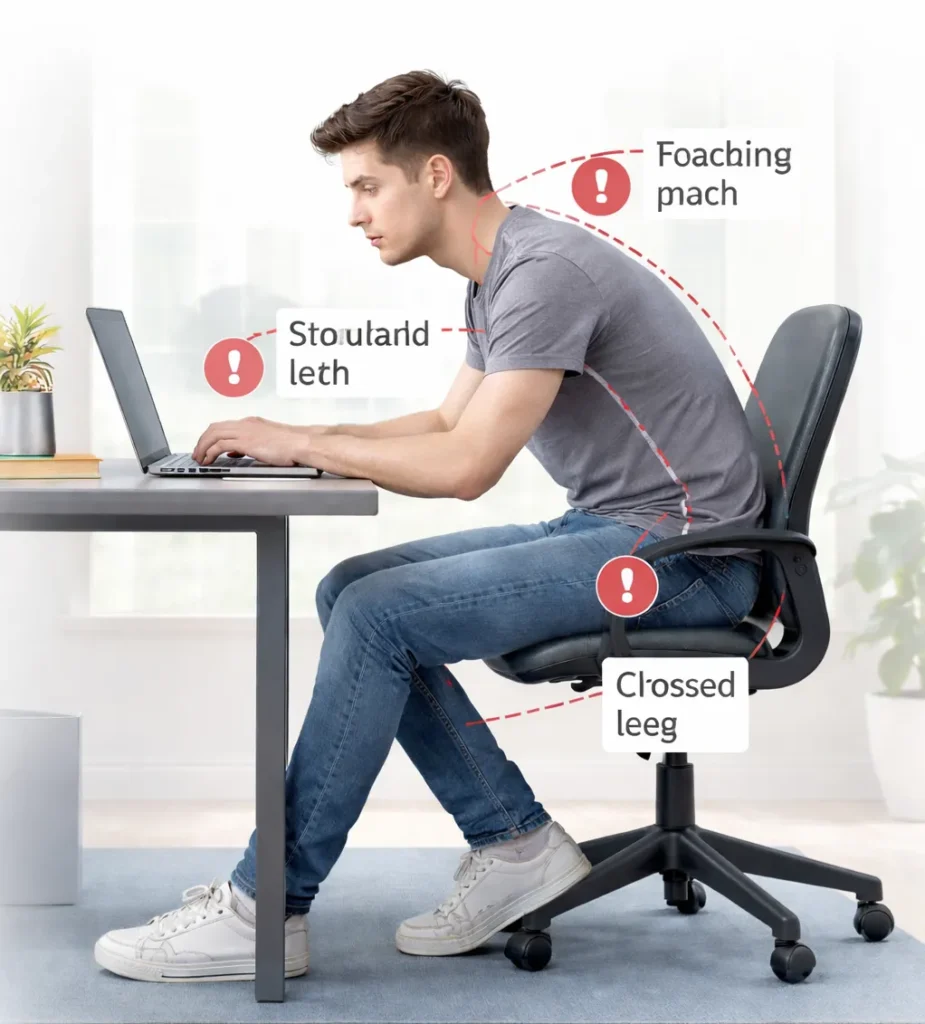
Incorrect Sitting Habit
Maintaining proper sitting posture is simple when you follow basic alignment rules. Sit with your back straight and shoulders relaxed rather than stiff. Your feet should remain flat on the floor, and your knees should be at the same level as your hips.
Your computer screen should be positioned at eye level to keep your neck in a neutral position. Keep your elbows close to your body and avoid leaning forward unnecessarily. Taking short standing or stretching breaks every 30 to 45 minutes helps prevent muscle stiffness and maintains spinal health.
Developing these simple habits can significantly reduce posture-related discomfort. A proper desk setup can improve posture at home faster.
Poor posture often develops slowly, making it difficult to notice early. Some common signs include neck stiffness, shoulder tightness, frequent lower-back pain, and feeling tired after sitting for long periods.
Another common indicator is a forward-leaning head position while using digital devices. Rounded shoulders and constant slouching also suggest weakened posture muscles. Recognizing these signs early allows you to correct posture before serious problems occur.
It is also important to learn How to Sit Correctly at a Desk for Long Hours to prevent back and neck strain.
Posture issues usually develop due to daily habits accumulated over time. Prolonged sitting is one of the biggest causes, especially when working without proper back support or movement breaks.
Weak core muscles also contribute significantly to poor posture because they support spinal stability. Frequent mobile phone use causes “text neck,” where the head remains bent forward for extended periods.
Poor sleeping positions, lack of physical activity, and improper workstation setup further worsen posture alignment.
Improving posture does not require complicated routines or expensive equipment. By following a few simple and practical techniques consistently, you can gradually restore natural spinal alignment and reduce daily discomfort. These small changes, when practiced regularly, create long-term improvements in posture and overall body balance.
One of the most effective ways to improve posture is by correcting how you sit during daily activities. Sit with your back straight, shoulders relaxed, and feet flat on the floor. Avoid slouching forward or leaning excessively backward without support.
Keep your computer screen at eye level so your neck stays in a neutral position. Maintaining proper sitting alignment helps reduce strain on the spine and prevents neck and lower-back pain.
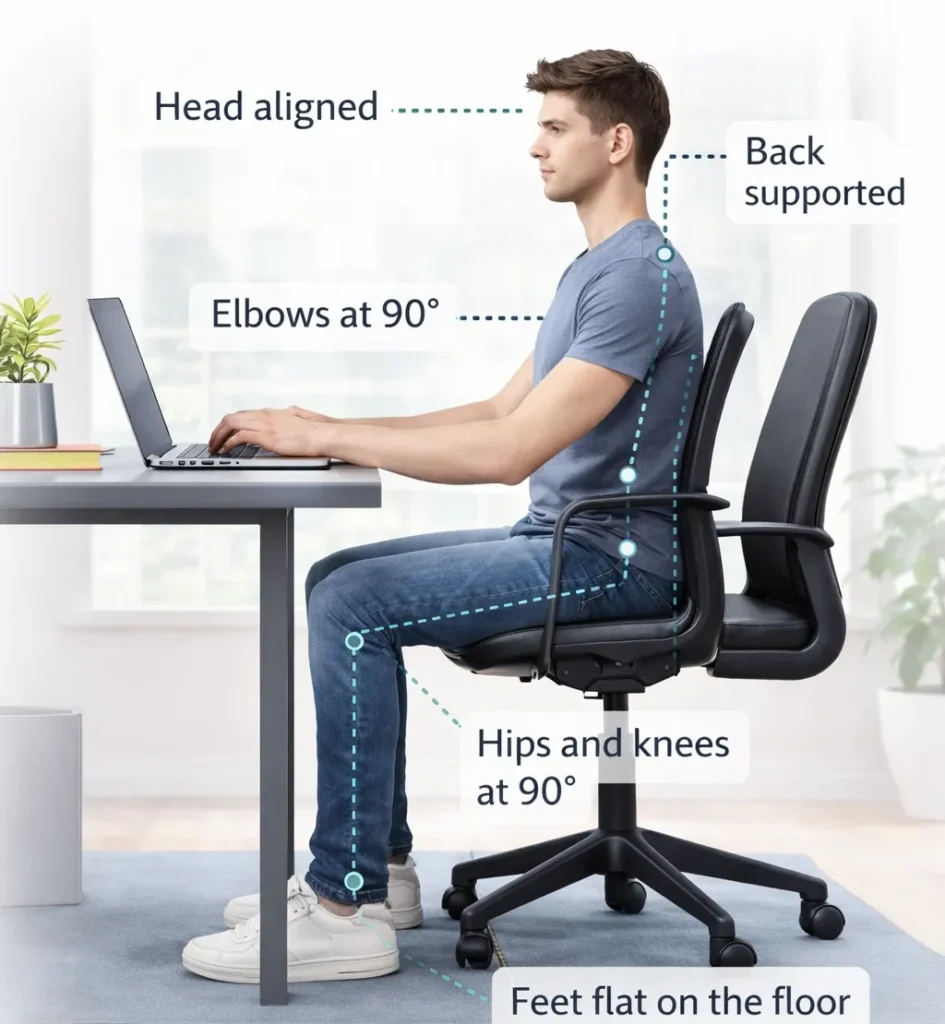
Correct Sitting Posture at Desk
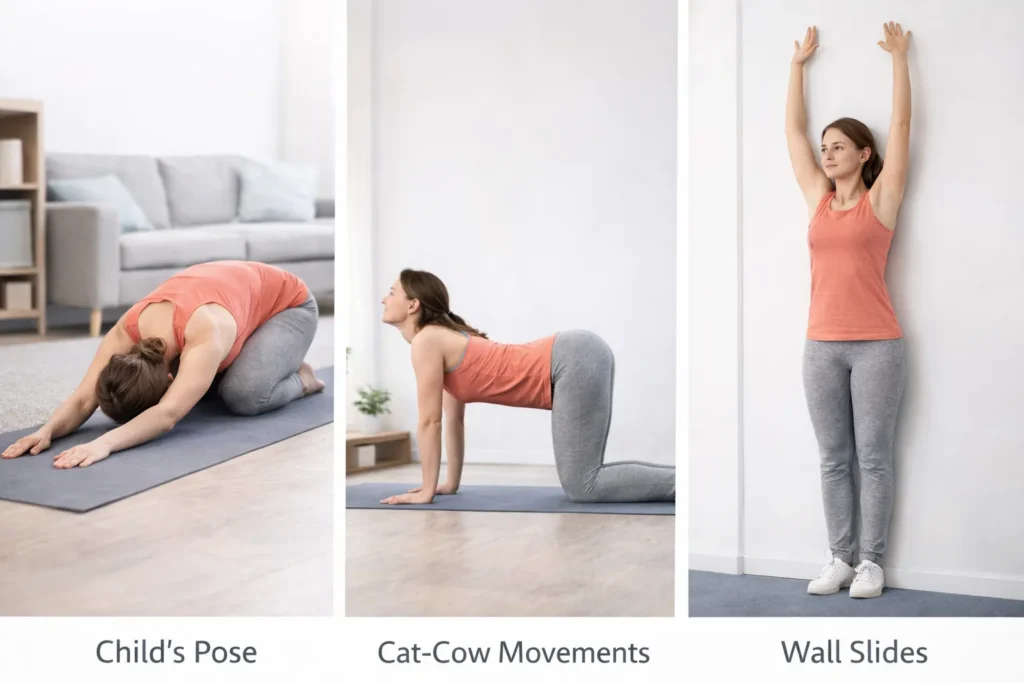
Regular stretching helps release muscle tightness caused by prolonged sitting and restores flexibility. Gentle stretches such as Child’s Pose, Cat-Cow movements, and wall slides help lengthen the spine and improve shoulder alignment.
Practicing these exercises for just a few minutes each day can significantly reduce stiffness and gradually retrain muscles to maintain better posture.
Strong core muscles play a vital role in maintaining proper posture. They support the spine and help keep the body balanced during movement.
Exercises such as modified planks and glute bridges strengthen abdominal and lower-back muscles, which are essential for spinal stability. Activities like yoga and Pilates also improve posture awareness and muscle coordination.
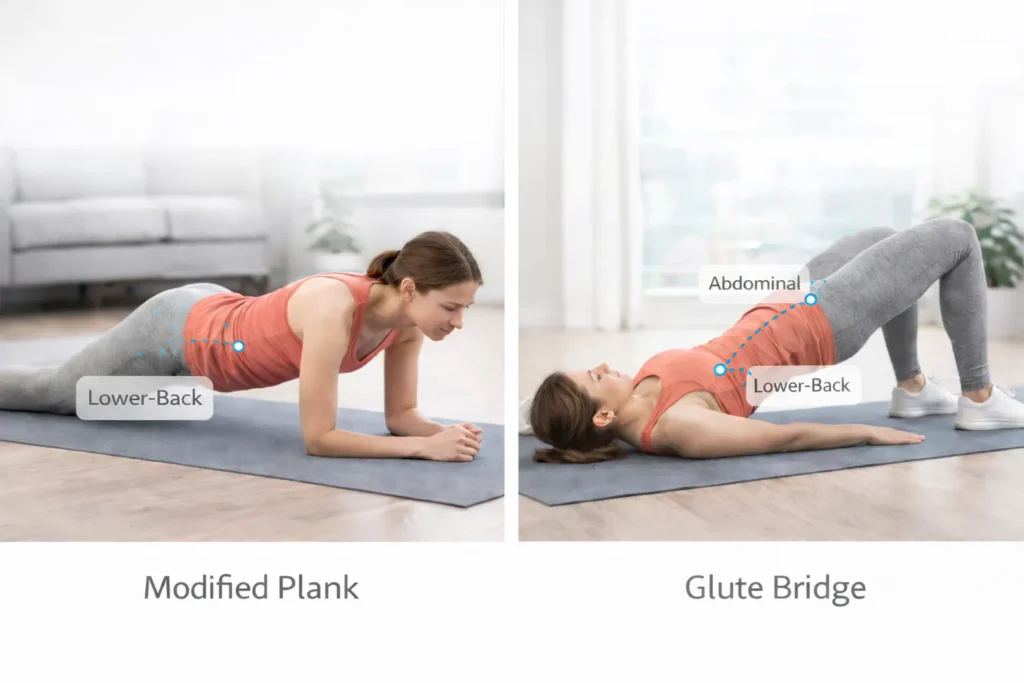
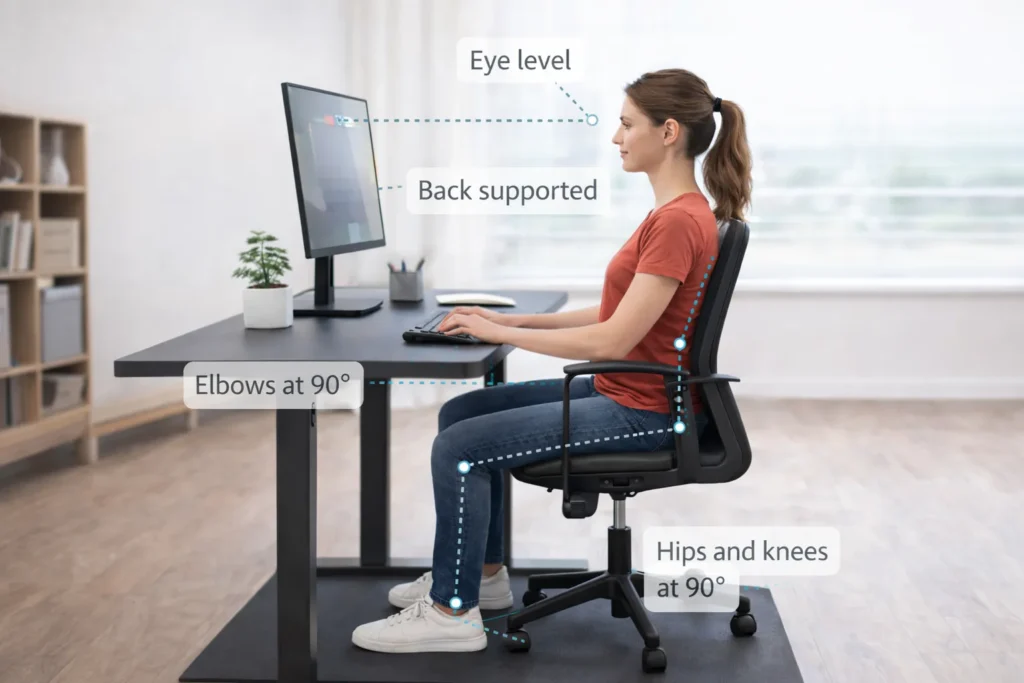
Proper Desk Sitting Position
An ergonomic workspace helps prevent posture strain during long working hours. Your chair should support your lower back, and your feet should rest flat on the floor.
Position your computer screen at eye level to avoid neck bending. Keeping your keyboard and mouse within comfortable reach reduces shoulder tension and promotes a healthy working posture.
Daily habits strongly influence posture improvement. Taking short breaks from sitting, maintaining proper walking posture, and using supportive sleeping positions all contribute to spinal health.
Consistency in these habits gradually trains the body to maintain proper alignment naturally throughout daily activities.
Regular stretching helps improve posture at home effectively.
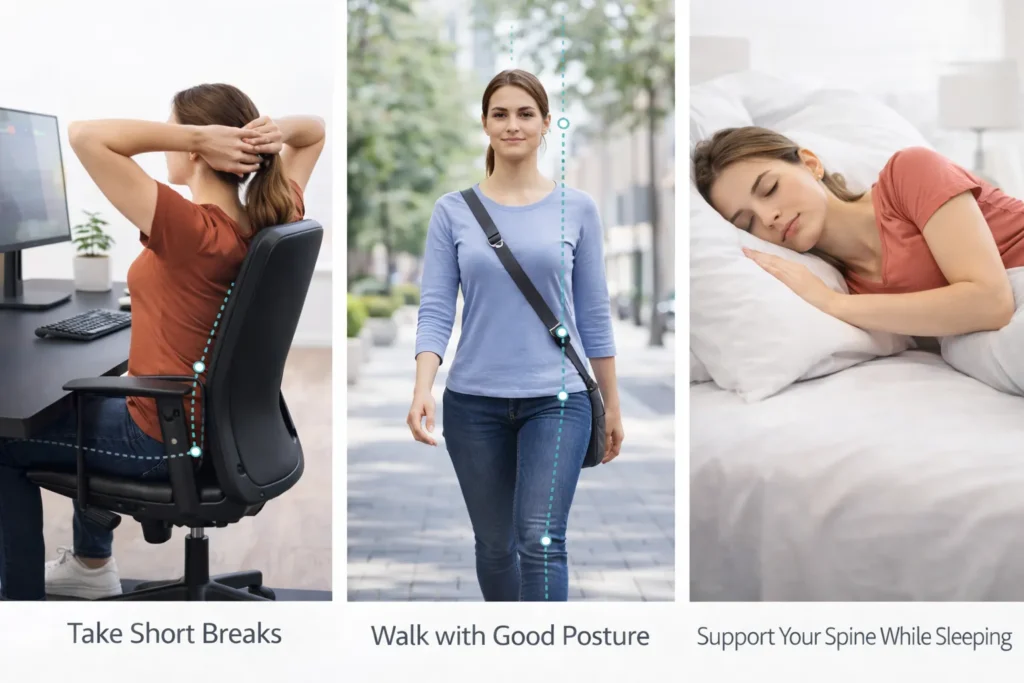
Improving posture requires a balanced approach that includes flexibility, ergonomic awareness, and muscle strengthening.
Stretching helps release muscle tightness caused by prolonged sitting and restores natural spinal mobility. Gentle daily stretches are essential for posture improvement.
The Child’s Pose stretch relaxes back muscles and lengthens the spine. The Cat-Cow stretch improves spinal mobility by alternating between arching and rounding movements. Wall slides help open the chest and strengthen shoulder alignment.
Practicing these stretches regularly can gradually retrain muscles to maintain proper posture.
Maintaining an ergonomic workspace is crucial for posture health. Your chair should support your lower back while allowing your feet to rest flat on the floor.
The computer screen should be placed at eye level to prevent neck bending. Keeping the keyboard and mouse within comfortable reach reduces shoulder tension.
Creating an ergonomic setup ensures that posture remains protected during daily activities.
Strong core muscles act as the foundation for proper posture. They support the spine and maintain balance during movement.
Modified planks strengthen abdominal muscles, while glute bridges activate lower-back stabilizers. Activities like yoga and Pilates improve body awareness and posture control.
Regular strengthening exercises help maintain long-term spinal alignment.
Strengthening your core muscles also supports overall body strength. You can follow a Beginner Muscle Building Guide to improve muscle stability and posture support.
👉 Beginner Muscle Building Guide
Small daily habits play a major role in posture correction. Sitting upright, avoiding slouching, and taking movement breaks help prevent stiffness.
Maintaining proper sleeping posture with supportive pillows also supports spinal alignment. Walking with the head aligned over the shoulders reinforces natural posture awareness.
Consistency in these habits leads to lasting improvements. Daily habits play a big role to improve posture at home long-term.
If you work long hours at a desk, you can also try simple Desk Exercises for Office Workers to reduce stiffness and improve posture.
You can easily test your posture at home using a wall alignment method. Stand against a wall with your heels, hips, shoulders, and head touching it.
If your head does not comfortably touch the wall or your shoulders round forward, it may indicate posture imbalance. This test helps monitor improvement over time.
Posture correction is a gradual process that depends on consistency and lifestyle habits. Most people notice reduced stiffness within two to three weeks of regular practice.
Significant improvements usually appear within two to three months. Patience and persistence are essential for achieving lasting results.
Many people try to force a rigid posture, which can lead to muscle strain. Relying solely on posture braces without strengthening exercises is another common mistake.
Ignoring movement breaks and continuing poor habits can slow progress. A balanced approach combining awareness, exercise, and ergonomic adjustments is the most effective strategy.
Creating a simple daily routine ensures long-term success. A short routine including stretching, strengthening exercises, and posture awareness checks can produce noticeable improvements.
Combining these practices with healthy nutrition, proper hydration, and regular physical activity provides strong support for spinal health.
Consistency is the key to improve posture at home naturally.
Posture correction is not a quick fix but a gradual journey requiring awareness and consistency. By understanding posture principles, practicing daily exercises, maintaining ergonomic habits, and developing healthy routines, anyone can improve posture at home.
With patience and steady effort, small daily changes can lead to lasting spinal health, reduced pain, and improved confidence.
According to global health guidelines, maintaining proper posture is essential for preventing long-term spinal problems.
Yes, most posture problems can be improved at home with regular exercises, proper sitting habits, and ergonomic adjustments. Consistency in daily routines plays the biggest role in long-term posture improvement.
Most people notice reduced stiffness within 2 to 4 weeks of regular practice. Significant posture improvement usually takes 2 to 3 months depending on lifestyle habits and consistency.
Posture braces can help remind you to maintain proper alignment, but they should not replace exercises. Long-term posture improvement requires strengthening muscles and developing healthy habits.
Sitting straight helps, but staying in one position for long periods can still cause stiffness. Taking regular movement breaks and stretching is equally important.
Exercises like Cat-Cow stretch, planks, and shoulder-opening stretches are among the most effective for improving posture and spinal alignment.
The fastest way is to combine daily stretching, core strengthening exercises, and proper sitting posture. Making small daily habit changes helps speed up posture correction.
If you’re over 40 and want to improve posture, flexibility, and overall fitness safely, this program is designed for you.
👉 View Fitness After 40 Program
View Recommended Posture Correction & Support Tools
Health Disclaimer: This article is for educational purposes only and is not intended as medical advice. Always consult a qualified healthcare professional before starting any exercise or posture correction routine, especially if you have existing health conditions, pain, or injuries.
Disclaimer: This content is for informational and educational purposes only and should not be considered medical advice. Always consult a qualified healthcare professional before starting any exercise or posture correction routine, especially if you have existing health conditions or injuries.
Disclosure: Some links on this page may be affiliate links. This means we may earn a small commission at no extra cost to you if you make a purchase through these links. We only recommend products that we believe are helpful and relevant to our readers.

Ajay Jaswal is the founder of Fitness Dose Club, where he shares beginner-friendly guides on posture improvement, fitness training, and responsible supplement use. His goal is to make healthy living simple, practical, and safe for everyday people.