Physical Address
304 North Cardinal St.
Dorchester Center, MA 02124
Physical Address
304 North Cardinal St.
Dorchester Center, MA 02124

Yoga is a practice that supports both physical and mental health. One of the most fundamental poses in yoga is Mountain Pose, or Tadasana (pronounced tah-DAH-sana / ताड़ासन). This pose plays a crucial role in improving posture, balance, and body awareness. Beginners can start with Tadasana to develop proper alignment and mindful breathing.
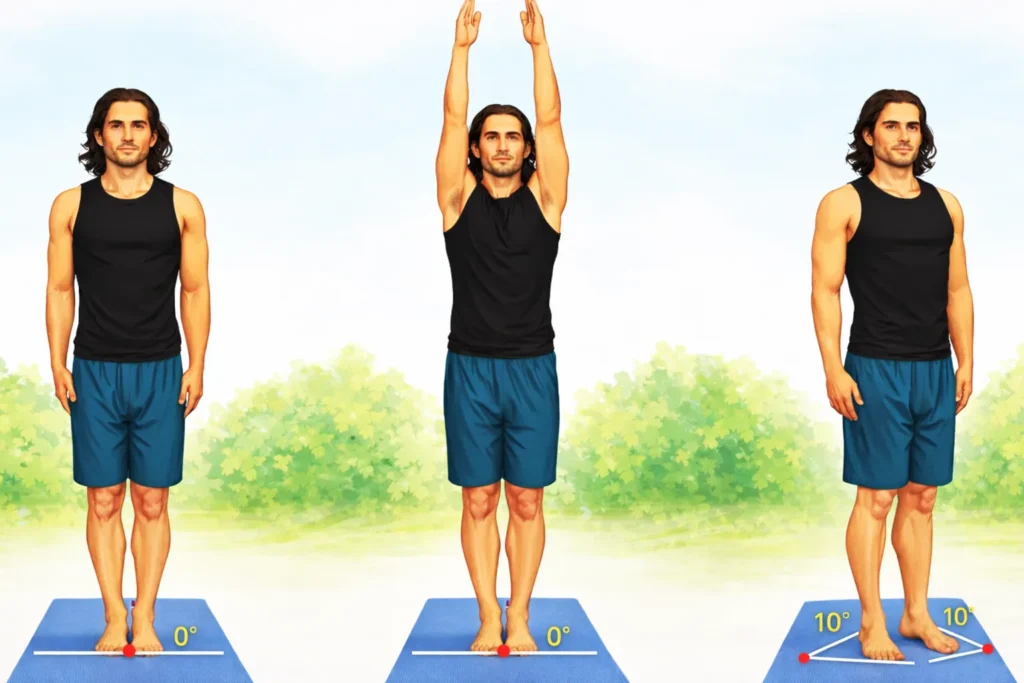
Mountain Pose, or Tadasana, is the foundation of all standing yoga poses. Although it may seem straightforward, it has a profound impact on establishing proper alignment and body awareness. It is similar to standing with intention, creating a strong base for other poses. This makes it an excellent starting point for beginners who want to begin practicing yoga.
Mountain Pose (Tadasana) is often recommended as the first yoga posture for beginners because it teaches correct posture, even weight distribution, and mindful breathing. Regular practice helps strengthen the legs, improve spinal alignment, and promote a sense of calm focus. Over time, Tadasana encourages better posture in daily activities and prepares the body for more advanced yoga movements.
Regular practice of Mountain Pose offers several physical and mental benefits:
According to yoga experts, Tadasana helps improve posture and body alignment. When practiced regularly with proper alignment, Mountain Pose supports long-term posture correction and overall body stability. It also builds a strong foundation for performing other standing yoga poses safely and confidently.
Step 1: Stand Tall
Begin by standing with your feet together or hip-width apart. Distribute your weight evenly across both feet.
Step 2: Body Alignment
Engage your thighs slightly without locking the knees. Tuck your tailbone in and lift your chest.
Step 3: Relax Your Shoulders
Roll your shoulders back and down, away from your ears.
Step 4: Position Your Hands
Let your arms hang alongside the body with palms facing forward.
Step 5: Breathing and Hold
Breathe slowly and deeply. Hold the pose for 20 to 60 seconds, maintaining steady breathing.
Step 6: Engage the Core
Gently engage your abdominal muscles to support your stance.
Step 7: Focus Your Gaze
Keep your chin parallel to the ground and gaze forward.
Mountain Pose (Tadasana) is often practiced before other standing yoga poses such as Uttanasana and Parsva Tadasana.
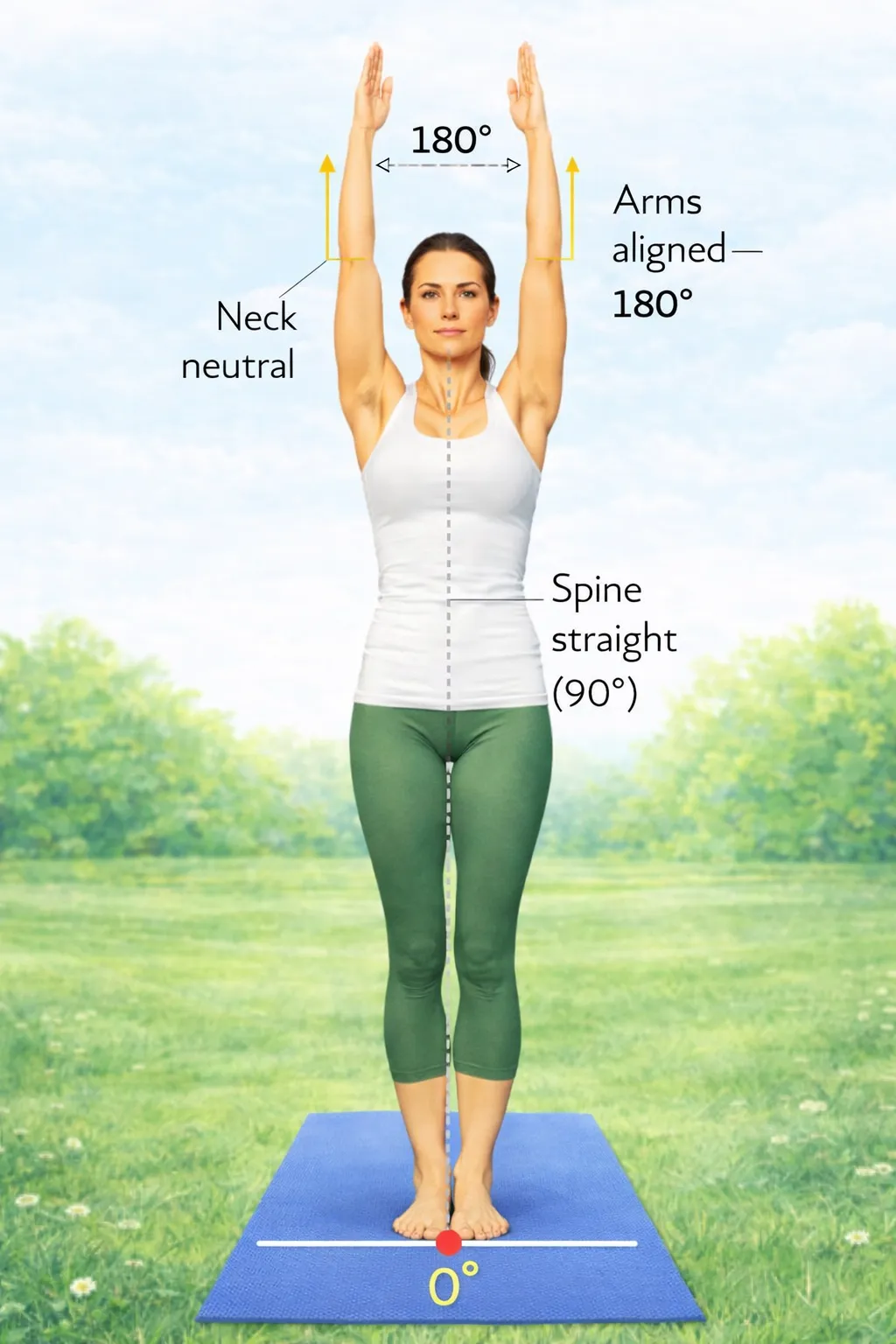
Visual reference showing correct alignment in Mountain Pose (Tadasana).
For daily practice essentials, explore my recommended yoga products.
Avoid drinking large amounts of water during practice, but keep a water bottle close for after the session.
Breathing deeply and steadily is a must when holding Tadasana. Inhale deeply through your nose, feel the expansion in your chest, and exhale slowly to further relax your body. This breathing technique enhances both stability and focus.
Beginners should avoid the following mistakes:
While Tadasana is generally safe, individuals with specific conditions such as dizziness, balance issues, or migraines should perform this pose with caution. Adjustments can be made for those with physical limitations.
Tadasana can be practiced at any time of the day. Hold the pose for 30 seconds to 1 minute, repeating for several cycles to deepen the benefits. It serves well as a warm-up or a cool-down pose.
For best results, practice Tadasana on an empty stomach or at least 3–4 hours after meals.
For those seeking to vary their practice, here are a few modifications:
Disclosure: This post may contain affiliate links. We may earn a small commission at no extra cost to you.
Mountain Pose (Tadasana) is a simple yet powerful yoga posture that improves posture, balance, and mindfulness. When practiced regularly with correct alignment and breathing, it builds a strong foundation for more advanced yoga poses.
Yes, regular practice of Mountain Pose helps improve posture by promoting proper spinal alignment and body awareness. Tadasana teaches you how to stand evenly on both feet, engage core muscles, and relax the shoulders, which reduces slouching habits. Over time, this pose strengthens postural muscles and supports a naturally upright and balanced posture, especially beneficial for people who sit or stand for long hours.
Beginners can start by holding Tadasana for 20–30 seconds and gradually increase the duration.
Yes, Mountain Pose is safe and suitable for daily yoga practice.
Yes, Mountain Pose helps improve posture and spinal alignment, which can reduce mild back discomfort when practiced regularly.
No, props are usually not required, but practicing near a wall can help beginners maintain proper alignment.
Yes, it is generally safe if knees are kept soft and weight is evenly distributed on both feet.
Once you understand proper alignment in Mountain Pose, you can safely move into gentle forward bends.
Disclaimer: Some links on this page may be affiliate links. If you purchase through these links, we may earn a small commission at no extra cost to you. We only recommend products we believe are helpful for daily yoga practice.

Ajay Jaswal is the founder of Fitness Dose Club, where he shares beginner-friendly guides on posture improvement, fitness training, and responsible supplement use. His goal is to make healthy living simple, practical, and safe for everyday people.