
Introduction
Uttanasana (उत्तानासन), also known as Standing Forward Bend, is an essential yoga posture that naturally follows Mountain Pose (Tadasana). This calming forward fold helps release tension, stretch the back of the body, and promote mental relaxation.
This posture is beginner-friendly, safe, and highly effective for stretching the spine and lower body. Regular practice of Uttanasana improves flexibility in the hamstrings and hips while supporting better posture and circulation. When performed with slow, steady breathing, it also helps calm the mind and reduce daily stress.
Why to Perform Uttanasana ?
When practiced immediately after Mountain Pose, Uttanasana allows for a smooth and natural transition, making it ideal for beginners. This pose helps reduce tension in the back and legs while providing a gentle stretch to the spine and hamstrings.
It encourages both physical relaxation and mental calmness.
How to Perform Uttanasana
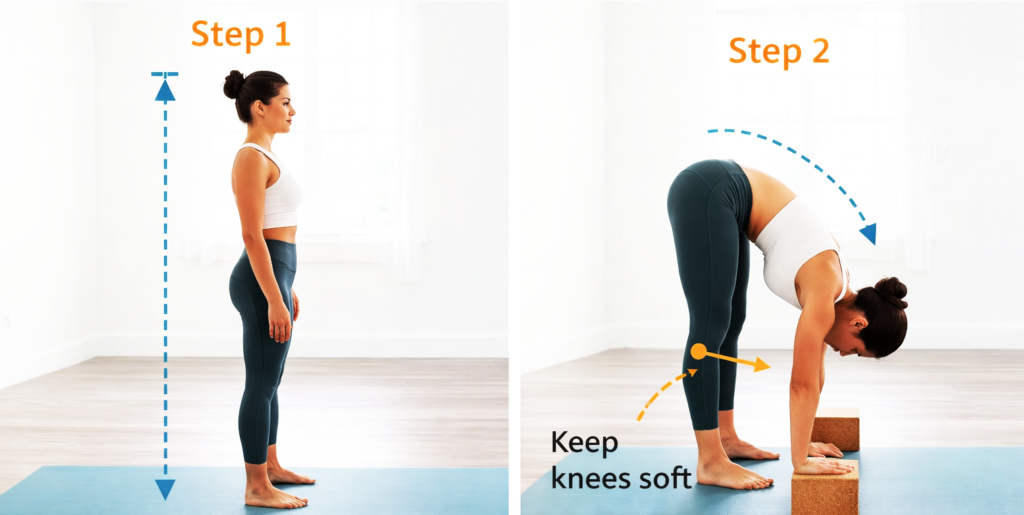
- Stand with your feet hip-width apart and distribute your weight evenly between both feet.
- Engage your core. Inhale and lengthen your spine, reaching upward through the crown of your head.
- Exhale, hinge at your hips with a straight spine, and fold forward, allowing your head and neck to relax.
- If needed, bend your knees slightly to maintain a flat back.
- Place your hands on the floor, your shins, or use yoga blocks if your hands don’t reach the floor.
- Hold the position for 3–4 slow, deep breaths, deepening the fold with each exhale.
Beginner Tip: Slightly bend your knees if your hamstrings feel tight.
Tip: If you’re a beginner, using yoga blocks can make Uttanasana safer and more comfortable.
Benefits of Uttanasana
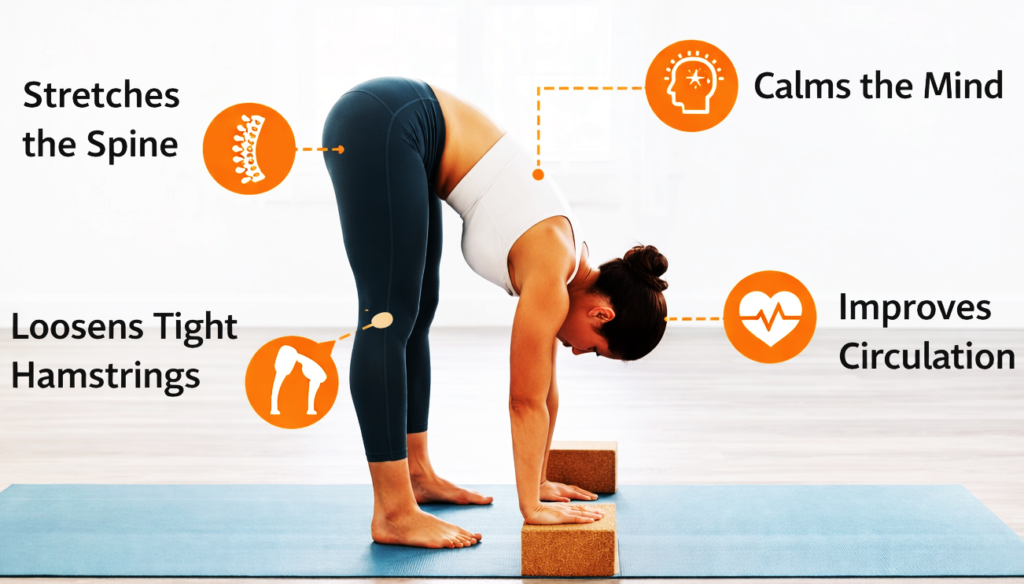
- Eases tension and helps relieve stress
- Enhances flexibility and posture
- Lengthens hamstrings, calves, and spine
- Supports digestion and blood circulation
Common Mistakes to Avoid
- Rounding the lower back instead of hinging at the hips
- Distributing weight unevenly on the heels or toes
- Forcing the body to touch the floor
- Moving too quickly instead of mindfully
- Locking the knees instead of keeping a soft bend
Safety Tips for Beginners
- Keep your knees slightly bent if you have tight hamstrings
- Use props such as yoga blocks for support if needed
- Avoid this pose or practice a modified version if you have acute back or hamstring injuries, glaucoma, or experience dizziness
Using yoga blocks provides extra support and helps maintain proper alignment.
When to Practice Uttanasana
- In the morning on an empty stomach
- At least 3–4 hours after meals
- After Tadasana or as part of Sun Salutation (Surya Namaskar)
Final Thoughts
Standing Forward Bend (Uttanasana) is a gentle yet effective posture that helps stretch the spine, release tension, and calm the mind. When practiced with proper alignment and mindful breathing, it becomes a safe and beneficial pose for beginners.
Standing Forward Bend is often experienced as a brief pause within a yoga routine, allowing the body to settle comfortably without pressure. Instead of focusing on depth, the emphasis stays on ease and controlled movement. Beginners may feel more relaxed by softening the knees or using simple support. With regular practice, Uttanasana becomes a grounding posture that encourages relaxation, balance, and better body awareness.
FAQs – Standing Forward Bend (Uttanasana)
Q1: What if my hands don’t reach the floor in Uttanasana?
Ans: If your hands don’t reach the floor, do not force the stretch. Use yoga blocks for support or place your hands on your shins or ankles. Focus on proper alignment rather than flexibility.
Q2: How long should I hold Standing Forward Bend?
Ans: Hold Uttanasana for 3–5 slow, deep breaths. Relax your neck and shoulders and maintain steady breathing for maximum benefit.
Q3: How should I adjust Uttanasana for tight hamstrings?
Ans: If you have tight hamstrings, keep your knees slightly bent and focus on lengthening the spine instead of touching the floor. This makes the pose safer and more effective for beginners.
Q4: Is Standing Forward Bend safe for beginners?
Ans: Yes, Uttanasana is safe for beginners when practiced with proper form. Move slowly, avoid forcing the stretch, and use props like yoga blocks if needed.
Q5: Can I practice Uttanasana if I have lower back pain?
Ans: If you have mild lower back discomfort, practice with bent knees and avoid deep forward folding. For chronic back pain or injuries, consult a qualified yoga instructor or healthcare professional before practicing.
Next Pose in the Sequence 👉 Half Forward Bend (Ardha Uttanasana)
Disclosure: This post may contain affiliate links. If you purchase through these links, we may earn a small commission at no extra cost to you.

Ajay Jaswal is the founder of Fitness Dose Club, where he shares beginner-friendly guides on posture improvement, fitness training, and responsible supplement use. His goal is to make healthy living simple, practical, and safe for everyday people.