Physical Address
304 North Cardinal St.
Dorchester Center, MA 02124
Physical Address
304 North Cardinal St.
Dorchester Center, MA 02124

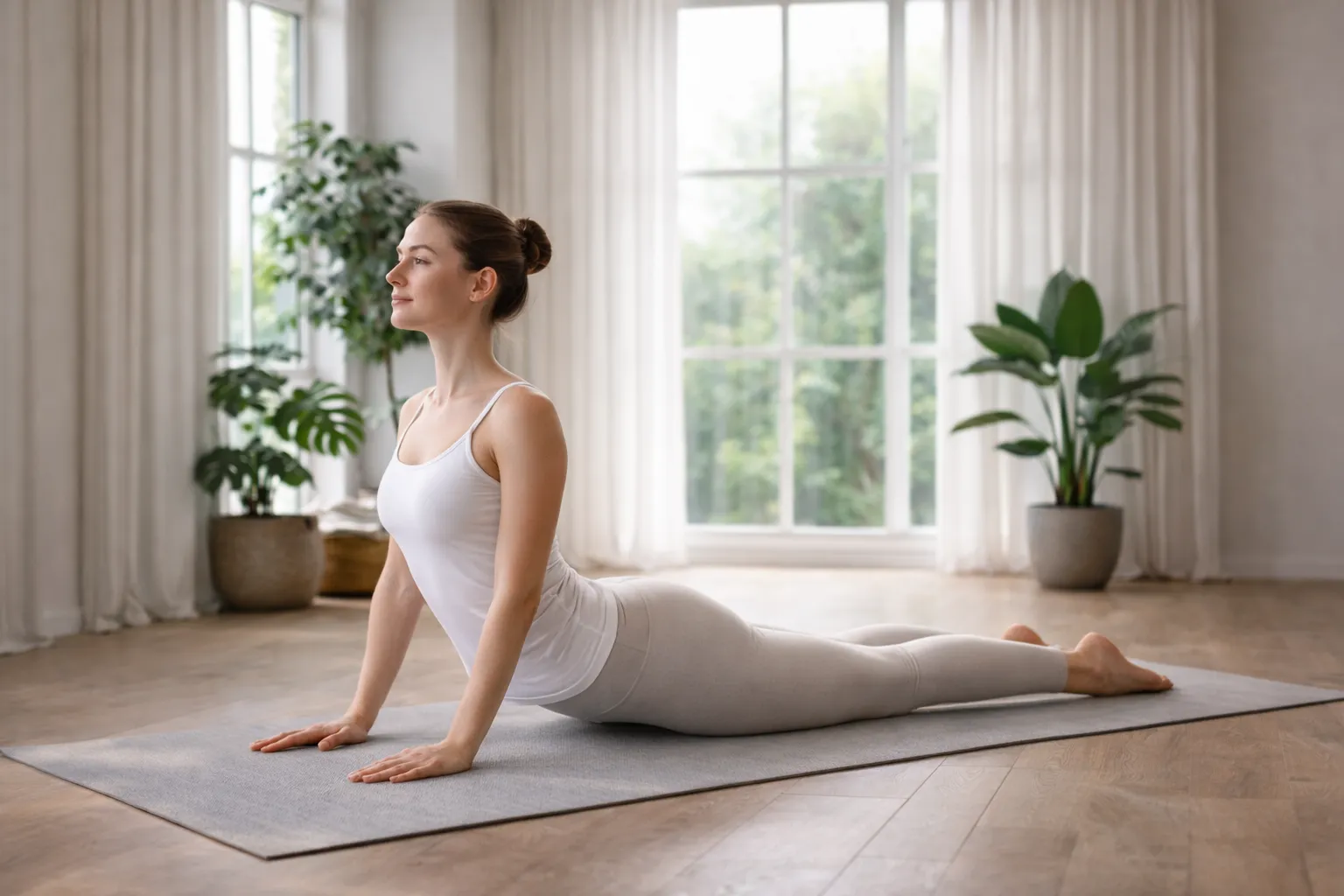
Jump to Step-by-Step Guide to Cobra Pose
Modern lifestyles quietly shape the way our bodies move, sit, and function. Long hours spent at desks, frequent mobile phone use, limited physical activity, and mental stress gradually train the body into unhealthy movement patterns. One of the most common results of these habits is persistent back discomfort combined with poor posture.Cobra Pose for beginners is a simple and effective yoga posture that helps improve posture and reduce back discomfort caused by prolonged sitting.
Over time, the spine adapts to prolonged sitting and forward bending. The chest collapses inward, the shoulders round forward, and the natural curves of the spine begin to lose balance. These changes may start as mild stiffness but often progress into recurring lower-back pain, upper-back tightness, and postural fatigue.
Yoga offers simple and effective tools to reverse these patterns. Among them, Cobra Pose (Bhujangasana / भुजंगासन) stands out as a safe, beginner-friendly posture that directly addresses the root causes of back pain and postural dysfunction. When practiced with proper alignment and control, Cobra Pose helps restore spinal mobility, improve posture, and support long-term back health.
This article follows a problem–solution approach, first explaining why back pain and posture problems develop, and then showing how Cobra Pose provides a practical and scalable solution for beginners.
Back pain is rarely caused by a single movement or incident. In most cases, it develops gradually due to repeated daily habits that place continuous stress on the spine.
Extended sitting shortens the hip flexors and weakens the muscles that support the lower back and core. When these muscles become underactive, the spine loses active support, making it more vulnerable to strain and stiffness.
Sitting also limits spinal movement throughout the day. Without regular extension, rotation, and lengthening, the spine becomes rigid and less adaptable.
Modern activities encourage forward head posture and rounded shoulders. Leaning toward screens shifts the head and upper body forward, increasing the load on the neck and upper back. Over time, this posture compresses the spine and overstretches key stabilizing muscles.
When spinal extensor muscles are weak, the body relies more on passive structures such as ligaments and discs for support. This imbalance increases the risk of mechanical back discomfort and reduced postural endurance.
Chronic stress often leads to muscle tension, especially in the shoulders, neck, and upper back. Stress also promotes shallow breathing, which limits rib cage movement and reduces oxygen delivery to spinal muscles, slowing recovery and increasing fatigue.
Most daily movements involve bending forward rather than backward. Without regular spinal extension, the spine gradually loses its ability to lengthen and open, contributing to stiffness and discomfort.
If these factors are not addressed, they may result in chronic back pain, reduced mobility, and decreased confidence in everyday movement.
Cobra Pose introduces a movement pattern that is largely missing from daily life: controlled spinal extension. This gentle backbend helps counteract prolonged flexion and supports healthier spinal mechanics.
Rather than forcing flexibility, Cobra Pose focuses on active muscle engagement, controlled range of motion, and gradual adaptation. This makes it particularly suitable for beginners.
These actions work together to restore balance between strength and mobility in the spine.
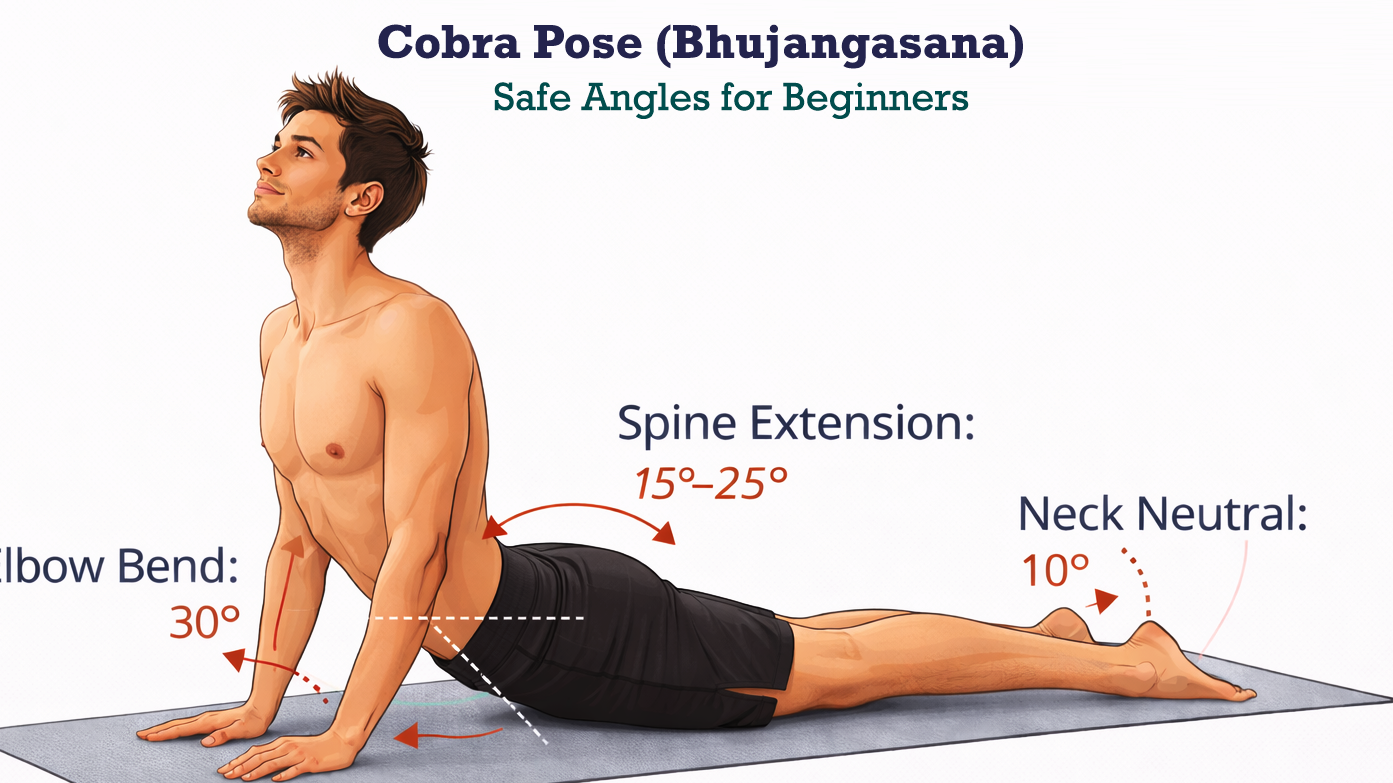
Practicing Cobra Pose with mindful alignment supports spinal strength while protecting the lower back. Rather than forcing the movement, emphasize control, stability, and steady breathing. You can follow our step-by-step Cobra Pose for beginners guide to learn safe alignment cues.
Lie flat on your stomach with both legs extended behind you. Let the tops of your feet rest naturally on the mat. Place your hands near your shoulders with elbows bent and gently drawn toward the body. Allow the forehead to rest down so the neck stays relaxed.
Before lifting, gently press the tops of the feet into the mat to activate the legs. Lightly engage the inner thighs and lengthen the tailbone toward the heels. This action stabilizes the pelvis and reduces unnecessary compression in the lower back.
Soften the shoulders away from the ears and gently widen across the chest. Keep the elbows pointing backward rather than outward. Proper shoulder placement allows the chest to open without straining the neck or shoulders.
As you inhale, begin lifting the chest by engaging the muscles along the mid and upper back. Let the hands assist lightly for balance, not for pushing. Rise only to a height where the breath remains steady and the spine feels long rather than compressed.
Hold the posture for 3–5 slow breaths. Keep the glutes gently active without clenching. Allow the gaze to remain forward or slightly downward so the neck stays neutral. Calm breathing helps release excess tension and supports spinal mobility.
Exhale slowly and bring the chest back down to the mat with control. Turn the head to one side and rest for a few breaths before repeating or transitioning to the next movement.
This controlled approach allows Cobra Pose to strengthen the spine safely while supporting better posture and comfort.
By strengthening the muscles along the spine and opening the chest, Cobra Pose trains the body to maintain a more upright posture without constant effort. Over time, this improved alignment carries into daily sitting and standing.
Cobra Pose activates deep spinal muscles that are often neglected during daily activities. Strengthening these muscles improves spinal stability and reduces reliance on passive structures.
Gentle spinal extension increases circulation to the back muscles and reduces stiffness caused by prolonged inactivity. This makes Cobra Pose particularly helpful for mild, non-specific back discomfort.
Opening the chest allows the rib cage to expand more freely, supporting deeper and more efficient breathing. Improved breathing helps reduce stress and muscular tension.
Forward-bent habits often create tightness across the chest and shoulders. Cobra Pose helps reverse this pattern, restoring balance to the upper body.
Improved posture and breathing often lead to increased energy levels and greater awareness of body alignment throughout the day.
Avoiding these errors helps keep the pose safe and effective.
With regular practice, many beginners notice better posture and reduced back stiffness within one to two weeks.
Cobra Pose should be practiced with caution or modified if you have:
Always prioritize comfort and avoid movements that cause pain.
Cobra Pose does not rely on depth or force. Its effectiveness comes from regular, controlled practice. Small, consistent movements gradually retrain muscles and restore spinal function without strain.
This makes Cobra Pose a sustainable long-term practice rather than a quick fix.
If you want to deepen your yoga practice or learn proper alignment from certified instructors, enrolling in a structured yoga course can be helpful.
👉 Recommended: Online Yoga Teacher Training & Beginner Courses
Equipment Needed: A non-slip yoga mat for comfort and stability.
👉 Recommended: Non-Slip Yoga Mat for Beginners
Cobra Pose is a practical and beginner-friendly yoga posture that supports better posture and helps ease mild, non-specific back discomfort when practiced with controlled alignment and mindful movement. By focusing on consistency, moderate effort, and correct technique, beginners can safely strengthen the spine, improve posture, and support long-term spinal health.
If you’re just starting out, you may also find relief with our beginner-friendly guide on Child’s Pose for back pain and relaxation.
👉 Child’s Pose for back pain and relaxation
For a complete foundation, explore our beginner’s guide to yoga postures and alignment basics.
👉 beginner’s guide to yoga postures and alignment
Ans: Cobra Pose may help ease mild, non-specific back discomfort by improving spinal mobility, increasing circulation, and strengthening the muscles that support the spine. It should not be practiced through sharp or severe pain.
Ans: Cobra Pose can be practiced 3–5 times per week as part of a balanced yoga or mobility routine. Consistency is more important than intensity for long-term benefits.
Ans: Beginners can hold Cobra Pose for 15–30 seconds or 3–5 slow breaths. The focus should be on comfort and steady breathing rather than duration.
Ans: In Cobra Pose, the pelvis and legs remain grounded, and the lift comes mainly from the back muscles. Upward Facing Dog lifts the thighs off the mat and places more load on the arms and shoulders, making it more demanding.
Ans: People with severe lower-back pain, recent spinal surgery, advanced pregnancy, or disc-related conditions should avoid or modify Cobra Pose unless guided by a qualified professional.
Ans: Yes, Cobra Pose is generally safe for beginners when practiced with proper alignment and controlled movement. Beginners should avoid forcing the lift and focus on gentle spinal extension and smooth breathing.
Disclosure: This page may contain affiliate links. If you choose to purchase or enroll through these links, we may earn a small commission at no extra cost to you.
Disclaimer: The information provided on this website is for educational purposes only and should not be considered medical advice. Please consult a qualified professional before starting any new yoga or wellness practice.

Ajay Jaswal is the founder of Fitness Dose Club, where he shares beginner-friendly guides on posture improvement, fitness training, and responsible supplement use. His goal is to make healthy living simple, practical, and safe for everyday people.