
Introduction
Warrior III for beginners is a powerful standing yoga pose that improves balance, core strength, and overall body stability. Ideal for beginners, this step-by-step guide helps you safely practice Warrior III while enhancing posture, coordination, and mindful focus during your yoga routine.
This beginner-friendly guide explains how to practice Warrior III step by step, along with its benefits, common mistakes, and simple modifications to improve balance and stability.
👉 Before practicing Warrior III, beginners can benefit from foundational poses like Mountain Pose (Tadasana) and Warrior I (Virabhadrasana I), which help build proper alignment, strength, and body awareness.
👉 Mountain Pose (Tadasana)
👉 Warrior I (Virabhadrasana I)
Understanding the Purpose of Warrior III
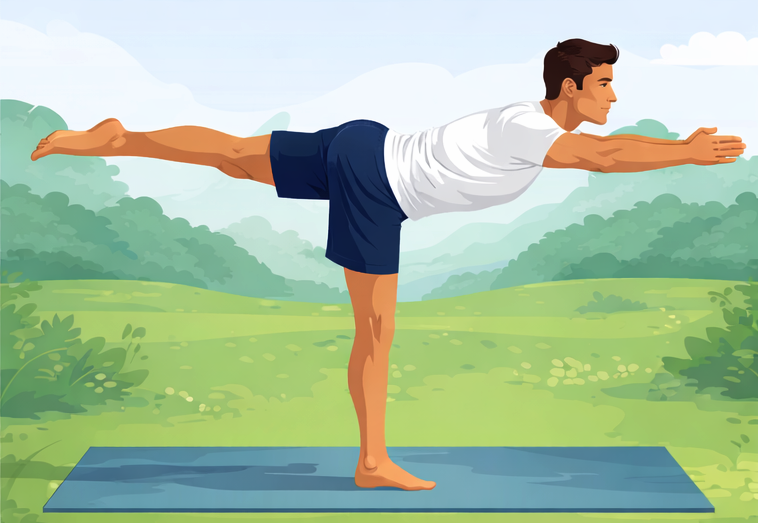
Warrior III is a single-leg balancing yoga pose in which the body forms a straight line from the head to the lifted heel, parallel to the ground. One leg supports the body while the other extends straight back, and the torso leans forward with control. This alignment builds balance, core strength, and body awareness while promoting a strong mind and body connection.
Warrior III represents strength practiced with calm focus. It challenges both physical balance and mental concentration, making it an effective yoga pose for improving coordination, posture, and inner stability. Although Warrior III may feel challenging for beginners at first, regular practice helps build strength, balance, and confidence over time.
Why Beginners Should Practice Warrior III
Although Warrior III may look advanced, it can be easily adapted for beginners. This pose benefits beginners by:
- Building full-body strength gradually
- Improving balance and coordination
- Enhancing posture and core awareness
- Developing focus and mental steadiness
Key Alignment Tips for Beginners
Step-by-Step Guide for Warrior III for Beginners
- Start Simple: Use a wall or chair for support as you begin exploring this pose.
- Focus on the Hip Hinge: Hinge forward from the hips rather than bending at the waist. Keep your spine long and your neck relaxed.
- Level the Hips: Keep both hips parallel to the ground, avoiding lifting one hip higher than the other.
- Engage the Core: Gently activate your abdominal muscles to support the lower back and maintain balance.
Position Your Arms
- Keep hands on your hips or
- Extend arms forward or
- Reach arms back alongside the body
Hold and Breathe
Hold the pose for 10–20 seconds while breathing slowly and steadily.
Release Slowly
Lower the lifted leg with control, return to standing, and repeat on the other side.
👉 To further support your practice, you can include simple balance improvement exercises and core-strengthening yoga poses to build stability and control for Warrior III.
👉 Balance improvement exercises
👉 Core-strengthening yoga poses
Breathing in Warrior III
- Inhale: Lengthen the spine and extend through the crown of the head
- Exhale: Engage the core to stabilize and maintain balance
- Breathe Slowly: Keep the breath smooth, steady, and controlled
Avoid holding your breath, as this can reduce stability. Calm, continuous breathing helps maintain balance and focus throughout the pose.
Benefits of Warrior III for Beginners
Regular practice of Warrior III improves muscular endurance, strengthens the core, and enhances overall balance. As confidence and stability increase, you can gradually reduce external support, allowing you to deepen the pose and develop a stronger connection to your body’s strength and control.
Common Mistakes Beginners Should Avoid
Be aware of these common mistakes that can diminish the benefits of Warrior III or cause discomfort.
- Opening the hips to the side instead of keeping them level
- Rounding the back rather than maintaining a long, neutral spine
- Locking the standing knee, which can strain the joint
- Lifting the back leg too high, leading to loss of balance
- Holding the breath, which increases tension and instability
Tip: Prioritize proper alignment and steady balance over height or perfection.
Beginner Modifications and Support Options
For Warrior III for beginners, using wall or chair support can improve balance and stability.
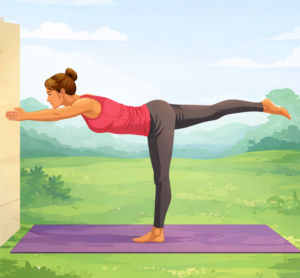
- Wall Support: Place your hands on a wall to improve balance and stability.
- Chair Support: Rest your hands on a chair while lifting the back leg for added support.
- Yoga Blocks: Use blocks under your hands if flexibility or balance is limited.
- Bent Standing Knee: Keep a slight bend in the standing knee to reduce strain and protect the joint.
👉 Recommended for beginners
Using the right yoga props can make Warrior III safer and more comfortable for beginners.
How Long Should Beginners Hold Warrior III?
- Beginner Hold Time: Hold Warrior III for 10–20 seconds per side.
- Focus on Quality: Proper alignment, steady balance, and calm breathing matter more than holding the pose longer.
- Progress Gradually: As strength and balance improve, increase the hold to 30–45 seconds.
When to Avoid or Modify Warrior III
Avoid practicing Warrior III or proceed with caution if you have any of the following conditions:
- Recent ankle, knee, or hip injuries
- Severe balance issues
- Lower back pain without professional guidance
Consult a qualified yoga instructor or healthcare professional if you are unsure whether this pose is suitable for you.
Mental Focus and Mindfulness
Warrior III is more than a physical yoga posture, it cultivates patience, focus, and self-awareness. Losing balance is a normal part of the learning process, and each attempt helps strengthen both the body and the mind. Remember, balance develops gradually with consistent practice, not force.
Warrior III offers a holistic approach to building strength and balance…
For a deeper foundation in yoga basics, check out our comprehensive beginner’s guide to yoga here:
According to yoga alignment principles, balance poses like Warrior III help improve posture and body awareness.
Conclusion
Warrior III offers a holistic approach to building strength and balance, highlighting yoga’s ability to connect the mind, body, and spirit. Practice this pose with patience and consistency to experience meaningful improvements both on and off the mat. Remember, every small step forward contributes to lasting progress. With regular practice, Warrior III for beginners becomes an effective way to build strength, balance, and mental focus.Many yoga beginners find that Warrior III for beginners helps improve balance, posture, and confidence when practiced consistently.
FAQs: Warrior III (Virabhadrasana III)
Q1. How long should beginners hold Warrior III?
Ans: Beginners should hold the pose for 10–20 seconds per side. As balance and strength improve, this can be increased gradually to 30–45 seconds.
Q2. What muscles does Warrior III work?
Ans: Warrior III strengthens the legs, glutes, core, lower back, hips, ankles, and feet, while also engaging shoulder and arm muscles depending on arm position.
Q3. Can I practice Warrior III if I have balance issues?
Ans: Yes, but use support. Practicing near a wall, holding a chair, or keeping hands on hips helps maintain stability while building balance safely.
Q4. Is Warrior III good for posture improvement?
Ans: Absolutely. Warrior III promotes spinal alignment, strengthens postural muscles, and improves body awareness, which helps correct poor posture over time.
Q5. Should I keep my arms forward or back in Warrior III?
Ans: Beginners can keep hands on hips for better balance. As confidence improves, arms can extend forward or reach back alongside the body.
Q6. When should Warrior III be avoided?
Ans: Avoid or modify the pose if you have recent ankle, knee, hip, or lower back injuries, or if you experience dizziness. Always practice under guidance if unsure.
Q7. Is Warrior III (Virabhadrasana III) suitable for beginners?
Ans: Yes. Virabhadrasana III can be practiced by beginners using wall, chair, or block support. Start slowly and focus on balance rather than depth.Warrior III for beginners should always be practiced with proper alignment and controlled breathing.
Disclaimer: This article is for informational purposes only. Please consult a qualified professional before practicing yoga. Some links may be affiliate links.

Ajay Jaswal is the founder of Fitness Dose Club, where he shares beginner-friendly guides on posture improvement, fitness training, and responsible supplement use. His goal is to make healthy living simple, practical, and safe for everyday people.