
10 Daily Habits to Improve Posture at Home Naturally

Why Poor Posture Is a Common Problem Today
Poor posture has quietly become one of the most common health problems among working professionals today. People who spend long hours sitting or bending forward, such as IT professionals, office and banking workers, students, teachers, doctors, dentists, drivers, and factory machine operators, often experience neck pain, back stiffness, and muscle strain due to incorrect posture.
When the body remains in the same position for extended periods, the spine gradually loses its natural alignment, muscles become tight, and everyday discomfort can develop into long-term health issues. Over time, poor posture may lead to headaches, reduced concentration, fatigue, and chronic back pain. If you are wondering how to improve posture at home, these simple daily habits can help you fix your posture naturally.
The good news is that posture problems can be improved naturally without expensive treatments. By developing a few simple daily habits, you can strengthen your spine, improve body alignment, and prevent pain in your daily routine.
In this guide, you will discover 10 easy and effective habits that anyone can follow at home to improve posture and maintain a healthy body for years to come. These simple habits can help you improve posture at home and maintain a healthy spine.
Signs That Your Posture Needs Improvement
You Feel Neck or Shoulder Pain After Work
If your neck feels tight or your shoulders feel heavy at the end of the day, especially after sitting for long hours, poor posture could be the reason.
You Often Slouch Without Realizing It
If people frequently remind you to “sit straight,” or you catch yourself leaning forward, it’s a clear sign that your posture needs attention.
You Get Lower Back Pain After Sitting
Feeling stiffness or discomfort in your lower back after long periods of sitting often indicates poor sitting posture.
You Feel Tired Even Without Heavy Work
Bad posture forces your muscles to work harder than necessary, which can leave you feeling tired even without doing physically demanding tasks.
Your Head Naturally Moves Forward
If your head appears slightly forward instead of aligned with your shoulders, you may be developing forward head posture.
You Experience Frequent Headaches
Tight neck and shoulder muscles caused by improper posture can sometimes lead to regular tension headaches.
How to Improve Posture at Home: 10 Daily Habits That Work
Sit Tall Instead of Slouching
Many people develop poor posture because they sit for long hours without paying attention to their body position. Try to sit upright with your shoulders relaxed and your back supported. This simple habit can reduce pressure on your spine.
Try this: Hold a 30-second plank to learn more about beginner core exercises here.

Plank Exercise
Move Your Body Every Hour
Remaining in the same position for a long time can make muscles tight and stiff. Taking short breaks during the day helps your body stay active and balanced.
Try this: Do a simple standing back stretch by raising your arms upward and gently stretching your body.

Standing Back Stretch
Strengthen Your Core Muscles
Your core muscles help keep your body stable and upright. When these muscles are weak, it becomes harder to maintain correct posture.
Try this: Add plank or bird-dog exercises to your daily routine.
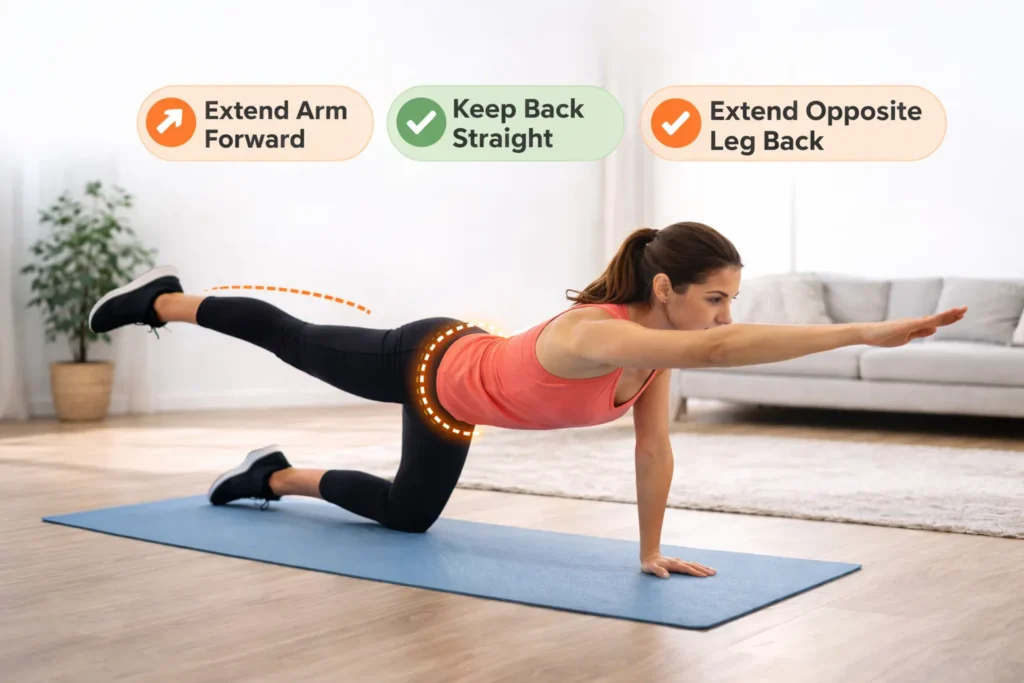
Planks & Bird-Dog Exercises
Stretch Your Chest to Improve Posture
Spending long hours sitting or working on a computer can tighten the chest muscles and pull your shoulders forward. Stretching your chest helps open the upper body and improve alignment.
Try this: Perform a doorway chest stretch for about 20 seconds.

Chest Stretch
Keep Your Screen at Eye Level
Looking down at your phone or laptop for long periods can lead to “text neck.” Adjust your screen so that your eyes look straight ahead instead of downward.
Try this: Practice chin tuck exercises to relax neck tension.

Chin Tuck Excercises
Keep Both Feet on the Floor
While sitting, placing both feet flat on the floor helps maintain better balance and posture. Crossing your legs for long periods may affect your natural alignment.
Try this: Do seated leg lifts to activate your lower body muscles.
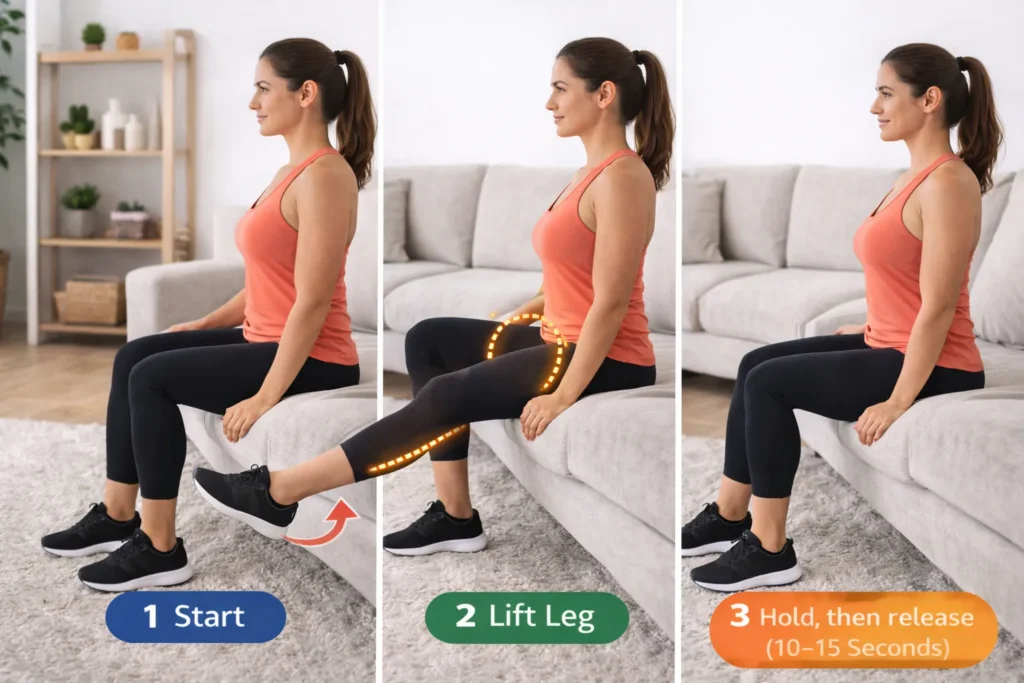
Seated Leg Lift Workout
Stay Active Throughout the Day
Regular movement helps keep muscles flexible and prevents stiffness. Even light physical activity can gradually improve posture.
Try this: Take a 15-minute daily walk while keeping your chest open and shoulders relaxed.

Daily Walking for Better Posture
Check Your Posture Using a Wall
Standing against a wall can help you understand whether your body is properly aligned. Your head, shoulders, and hips should lightly touch the wall.
Try this: Perform wall angel exercises to improve shoulder mobility.

Check Your Posture Using a Wall
Choose the Right Sleeping Position
Your sleeping posture also plays a role in spinal health. Using a supportive pillow helps keep your neck and spine in a neutral position.
Try this: Do a morning back stretch after waking up.

Morning Stretch for Your Back
Hold Your Phone at Eye Level
Constantly looking down at your phone can create unnecessary strain on your neck. Try lifting the phone closer to eye level when reading or texting.
Try this: Do gentle neck side stretches for about 10 seconds on each side.

Neck Stretch for Better Posture
If you struggle with maintaining proper posture during long sitting hours, using a posture corrector belt can also help support your upper back and remind your body to stay upright.
👉 Check the Best Posture Corrector Belts in India
Common Posture Mistakes to Avoid
In today’s sedentary lifestyle, many individuals experience neck pain, back stiffness, and muscle fatigue due to poor posture habits. Poor posture often develops slowly through small mistakes repeated throughout the day. By recognizing these common posture mistakes, you can protect your spine and prevent long-term discomfort.
One of the most common mistakes is slouching while sitting. When you sit with rounded shoulders and a curved back, extra pressure is placed on the spine and surrounding muscles. Over time, this can lead to back pain and reduced flexibility. Try to sit upright with your shoulders relaxed and your back supported by the chair.
Another frequent mistake is looking down at your phone or laptop for long periods. This habit can cause “text neck,” a condition where the neck muscles become strained from constantly bending forward. To avoid this, keep your screen at eye level and take short breaks to stretch your neck.
Many people also sit for too long without moving. Staying in the same position for hours can cause muscles to become tight and weak. Standing up, stretching, or taking a short walk every hour helps keep your body active and improves posture naturally.
Sleeping in an unsupported position is another factor that affects spinal alignment. Using a pillow that properly supports your neck can help maintain a healthy posture even while you sleep.
Finally, ignoring regular stretching and strengthening exercises can make posture problems worse. Simple exercises like planks, chest stretches, and gentle back stretches help strengthen the muscles that support good posture.
By avoiding these common mistakes and making small adjustments in your daily routine, you can maintain better posture, reduce pain, and keep your body healthy in the long run.
According to Healthline, maintaining good posture can reduce muscle strain and improve spinal health.
How Long Does It Take to Improve Posture?
Improving posture takes time and consistent effort. Most people begin to notice small improvements within a few weeks if they practice healthy habits every day. However, building strong muscles and correcting long-term posture problems may take a few months of regular practice and awareness.
Key factors that affect posture improvement:
Consistency of daily habits – Practicing good posture every day makes the biggest difference.
Muscle strength – Strong core and back muscles help support proper alignment.
Daily activities – Long hours of sitting or looking down at screens can slow progress.
Regular stretching and exercise – Exercises like planks, chest stretches, and wall angels help improve posture faster.
Posture awareness – Paying attention to how you sit, stand, and walk helps your body adapt to better alignment.
You can also read our beginner yoga guide to learn simple exercises that help strengthen your core and improve posture.
Final Tips for Maintaining Good Posture Daily
Maintaining good posture is not about making big changes overnight. It is about developing small, healthy habits that you practice consistently every day. When you stay aware of how you sit, stand, and move throughout the day, it becomes easier to keep your spine properly aligned and reduce unnecessary strain on your muscles.
To maintain better posture in daily life, follow these simple tips:
- Stay mindful of your sitting position and keep your back straight with relaxed shoulders.
- Adjust your screen to eye level to avoid bending your neck forward.
- Take short movement breaks if you sit for long periods during work or study.
- Strengthen your core muscles with exercises like planks or gentle back stretches.
- Stretch regularly to keep your chest, shoulders, and back flexible.
- Choose a supportive pillow and mattress to help maintain proper spinal alignment while sleeping.
By practicing these small habits consistently, you can protect your spine, reduce discomfort, and maintain healthy posture over time. With consistent practice, anyone can improve posture at home naturally.
By following these habits consistently, you can easily improve posture at home and protect your spine.
You can also read our posture correction guide to learn how to fix poor posture naturally.
FAQs
Can poor posture cause back pain?
Yes, poor posture can put extra pressure on the spine and muscles, which may lead to back pain, neck stiffness, and discomfort over time.
What is the fastest way to improve posture?
Practicing good sitting habits, keeping your screen at eye level, and doing strengthening exercises like planks can help improve posture faster.
Can walking help improve posture?
Yes, regular walking helps strengthen muscles, improve balance, and support better posture.
How many minutes should I exercise daily for better posture?
Even 10–15 minutes of stretching and posture exercises each day can help strengthen muscles and improve body alignment.
Is it possible to fix posture at home?
Yes, by developing healthy daily habits, stretching regularly, and maintaining correct sitting and standing positions, posture can gradually improve at home.
View Recommended Posture Corrector Products
Affiliate Disclosure: This website may contain affiliate links. This means that if you purchase a product through certain links on this site, we may earn a small commission at no extra cost to you. We only recommend products that we believe may provide value to our readers.
Medical Disclaimer: The information provided on this website is for educational and informational purposes only and is not intended as medical advice. Always consult a qualified healthcare professional before starting any exercise or health program.
Disclaimer: All information on this website is published in good faith and for general informational purposes only. We do not make any warranties about the completeness, reliability, or accuracy of this information.

Ajay Jaswal is the founder of Fitness Dose Club, where he shares beginner-friendly guides on posture improvement, fitness training, and responsible supplement use. His goal is to make healthy living simple, practical, and safe for everyday people.