
Sitting All Day? Do cobra pose

Yoga
Cobra Pose: Essential Guide
Long hours of sitting can often cause your back to feel stiff and uncomfortable. Cobra Pose, also known as Bhujangasana, is a gentle movement that stretches the front of the body while easing tension in the back and shoulders.
It is a simple practice where you lie face down and gently lift your upper body. Instead of pushing too hard, focus on moderate, controlled movement and natural breathing. This allows your body to gradually release stiffness and feel more open.
With continued practice, you may notice that your body moves more easily and feels less constrained throughout routine tasks. It also promotes proper spine alignment, and it opens the chest naturally, making breathing easier and more relaxing.
Insight into Cobra Pose
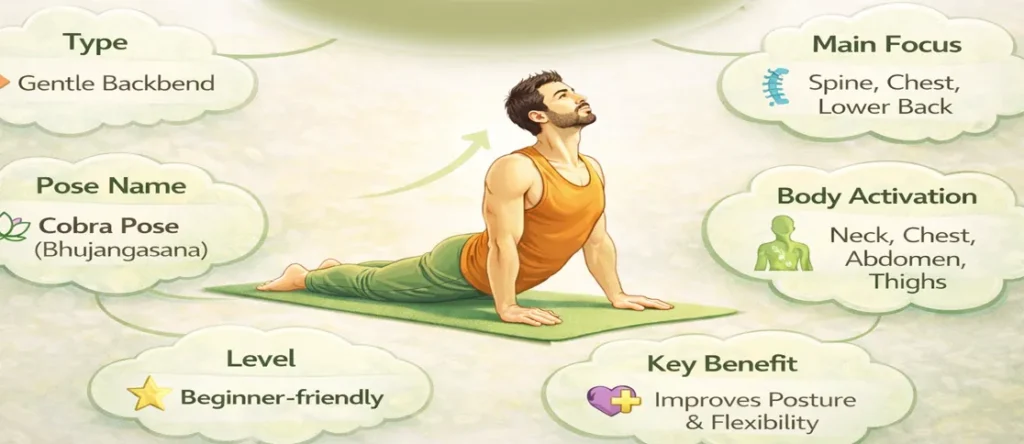
Bhujangasana
| Aspect | Details |
| Name | “Bhujanga” means “snake” in Sanskrit |
| Origin | Ancient Indian yoga |
| Style | Hatha Yoga |
| Form | Like a cobra raising its hood |
| Purpose | Improves spinal flexibility & posture |
Why Cobra Pose is Ideal for Beginners
● The movement is simple and controlled, so you can practise safely without putting too much strain on your body.
● You don’t need any prior flexibility or experience to start; just move slowly and stay comfortable.
● It also helps you connect your breathing with movement, making your practice feel more natural and relaxed.
● This position can help relax your back if sitting has made it stiff.
● It builds strength in your back and supports better posture.
Fix Your Back Pain in 7 Days
Combine Cobra Pose with these poses for better flexibility and a stronger spine.
Follow these poses step-by-step to support a stronger, pain-free spine.
Cobra Pose Step-by-Step Guide for Beginners
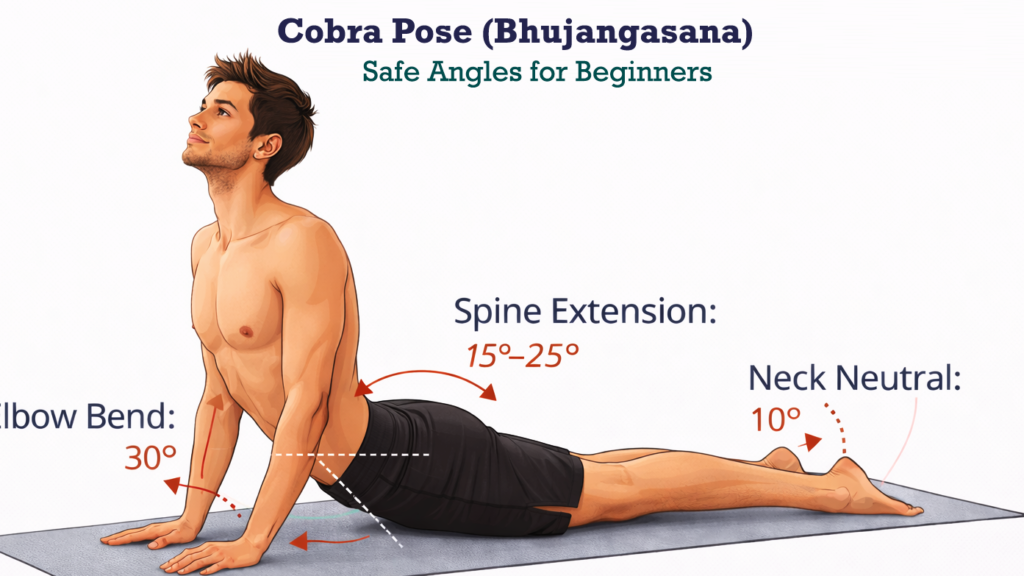
Before you start, take it slow and don’t try to lift too high. Keep your lower body relaxed, stay in control, and breathe normally. Then follow the steps below to do Cobra Pose the right way.
1. Get into Position
Lie on your stomach with your legs straight and hands under your shoulders.
2. Set your base
Press the tops of your feet into the mat and engage your legs.
3. Prepare your upper body
Relax your shoulders and keep them away from your ears.
4. Lift your chest
Slowly lift your chest using your back, not just your hands. Don’t rush it.
5. Hold and breathe
Stay for a few breaths, keeping your body relaxed.
6. Release Slowly
Exhale and lower down with control.
Why Back Pain and Poor Posture Happen Today
Back pain usually doesn’t come from a single movement or injury. In most cases, it builds up over time due to daily habits that put constant stress on your spine.
1. Too much sitting
Long hours of sitting can tighten your hips and reduce spinal mobility.
2. Poor posture
Slouching makes your shoulders round and puts extra stress on your neck and upper back.
3. Weak back muscles
A weak back fails to support your spine properly
4. Stress breathing
Shallow breathing can create tension in your neck and shoulders.
5. Lack of movement:
Moving less limits your flexibility and overall mobility
How Cobra Pose Helps Fix These Problems
Have you ever felt your back get tighter or noticed that your posture was getting worse without realising it? It is often the result of daily habits that put your body slightly out of alignment over time. Cobra Pose (Bhujangasana) helps correct these issues by gently extending the spine and activating the muscles that support proper posture.
It is safe, effective, and suitable for beginners, and it focuses on controlled movement and awareness.
What Cobra Pose? Does of your Body
● Gently stretches the front body, reducing tightness
● Your back muscles become more active and stronger
● Opens the chest, helping improve posture
● The spine moves more freely and naturally
● Supports slow, steady, and relaxed breathing
Benefits of Cobra Pose for Beginners
● Improves posture by strengthening the back and opening the chest
● Strengthens the spine and supports better stability
● Helps relieve back stiffness and mild pain caused by daily habits
● Supports better breathing by opening the chest
● Relieves tightness in the chest and shoulders
● Boosts energy and improves body awareness
Common Mistakes Beginners Should Avoid
● Using too much arm strength instead of engaging the back muscles
● Lifting higher than the body can comfortably support
● Locking the elbows and creating unnecessary tension
● Letting the shoulders rise toward the ears
● Holding your breath instead of breathing steadily
How Often to Practice Cobra Pose?
● Hold Duration: 15–30 seconds
● Repetitions: 2–3 rounds
● Frequency: 3–5 times per week
Cobra Pose 7-Day Beginner Plan
Build Strength, Improve Posture & Reduce Back Pain
Cobra Pose Weekly Routine
| Day | Rounds | Hold Time | Focus |
| Day 1 | 3 rounds | 15–20 sec | Start slow, proper form |
| Day 2 | 3–4 rounds | 15 sec | Breathing control |
| Day 3 | 4 rounds | 15 sec | Chest opening |
| Day 4 | 4–5 rounds | 15–20 sec | Add strength, don’t overstretch |
| Day 5 | 5 rounds | 25 sec | Improve posture |
| Day 6 | 5 rounds | 30 sec | Deep stretch |
| Day 7 | 5–6 rounds | 30 sec | Full controlled flow |
Author Note:
This Cobra Pose (Bhujangasana) guide is designed for beginners who want to improve posture and reduce back pain safely. Always practise with proper form and listen to your body to avoid strain or injury.
Who Should Avoid or Modify Cobra Pose?
◆ Severe or sharp lower-back pain
◆ Disc-related conditions without professional guidance
◆ Recent spinal or abdominal surgery
◆ Advanced pregnancy
Final Thoughts
In terms of Cobra Pose, consistency is more important than intensity. You don’t have to work too hard; just do it the right way every time you practice. Slow and steady practice will improve your balance, flexibility, and overall comfort.
Elevate your yoga practice with a structured course.
Must-Have: Non-slip yoga mat for perfect stability.
Best Desk Exercises for Office Workers to stay active.
Frequently Asked Questions
Can Cobra Pose help reduce back pain?
Cobra Pose may help ease mild, non-specific back discomfort by improving spinal mobility, increasing circulation, and strengthening the muscles that support the spine. It should not be practiced through sharp or severe pain.
How often should Cobra Pose be practiced?
Cobra Pose can be practiced 3–5 times per week as part of a balanced yoga or mobility routine. Consistency is more important than intensity for long-term benefits.
How long should beginners hold Cobra Pose?
Beginners can hold Cobra Pose for 15–30 seconds or 3–5 slow breaths. The focus should be on comfort and steady breathing rather than duration.
What is the difference between Cobra Pose and Upward Facing Dog?
In Cobra Pose, the pelvis and legs remain grounded, and the lift comes mainly from the back muscles. Upward Facing Dog lifts the thighs off the mat and places more load on the arms and shoulders, making it more demanding.
Who should avoid Cobra Pose?
People with severe lower-back pain, recent spinal surgery, advanced pregnancy, or disc-related conditions should avoid or modify Cobra Pose unless guided by a qualified professional.
Is Cobra Pose safe for beginners?
Yes, Cobra Pose is generally safe for beginners when practiced with proper alignment and controlled movement. Beginners should avoid forcing the lift and focus on gentle spinal extension and smooth breathing.

Boost
Your Flexibility
with the Right Tools
Beginner Yoga Accessories
Disclosure: This page may contain affiliate links. If you choose to purchase or enroll through these links, we may earn a small commission at no extra cost to you.
Disclaimer: The information provided on this website is for educational purposes only and should not be considered medical advice. Please consult a qualified professional before starting any new yoga or wellness practice.

Ajay Jaswal is the founder of Fitness Dose Club, where he shares beginner-friendly guides on posture improvement, fitness training, and responsible supplement use. His goal is to make healthy living simple, practical, and safe for everyday people.